Films People Pull a Fast One Night Beat Reading Room On TV Shop
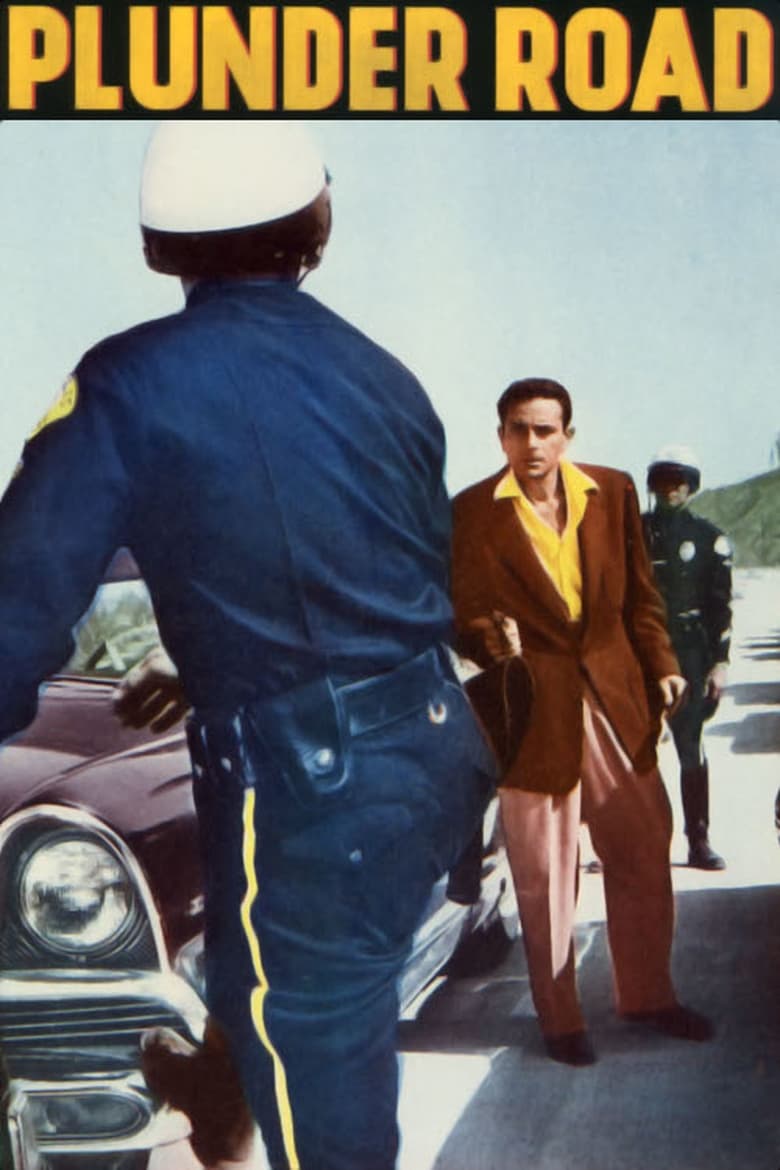
Plunder Road 1957
1957 Regal Films
★★★☆☆ Notable
Film Noir · 72 minutes · Black & White

Plunder Road

Directed by Hubert Cornfield
Year 1957
Runtime 72 min
Studio Regal Films
TMDB 7.0 / 10
"Five men move a fortune across a darkening country, and the road takes everything back."

In the predawn hours, a tight crew of five men executes a precisely timed robbery of a U.S. gold shipment from a rain-soaked railroad yard. Eddie Harris, the operation's cold-eyed architect, has planned each phase with the discipline of a military campaign. His crew – Commando Munson, the brute muscle; Skeets Jonas, the nervous wheelman; Roly Adams, the heavyset logistics man; and Frankie Chardo, the youngest and least seasoned – disperse across three separate vehicles and take different routes toward Los Angeles, where the melted-down gold is to be concealed inside the chrome fittings of an automobile and smuggled out of the country.

The film's tension lives almost entirely in transit. Each vehicle becomes its own sealed world, and the America the men cross – its highway patrol checkpoints, its roadside diners, its indifferent gas stations – registers as a surveillance apparatus waiting to close. Fran Werner, Eddie's woman, waits in Los Angeles with her own knowledge and her own fear, a figure who measures what the heist has already cost before it is finished. The plan's elegant geometry begins to fracture not through betrayal but through the ordinary contingencies of time, distance, and human error.

Plunder Road belongs to a strand of late noir preoccupied less with crime's moral dimensions than with its mechanical failure. The film shares structural affinities with the procedural heist picture that emerged strongly in the mid-1950s, yet its interest is almost documentary in its attention to logistics and geography. Where most heist films climax in violence or revelation, this one accumulates pressure through accumulation itself – the slow narrowing of options as the net of modern law enforcement and sheer bad luck draws tighter around men who believed planning was sufficient armor against fate.
Classic Noir

Plunder Road is a minor but genuinely rigorous entry in the late-cycle American noir, distinguished by its refusal of melodrama and its insistence on procedural honesty. Hubert Cornfield directs with a restraint unusual for low-budget productions of the period – there is no wasted sympathy, no redemptive arc offered as consolation. Gene Raymond's Eddie Harris is competent and controlled, which makes his situation more pitiless rather than less. Elisha Cook Jr., characteristically cast as the weakest link, does not disappoint. Ernest Haller's location photography gives the film an open-road quality that paradoxically intensifies claustrophobia: the wide American landscape offers no cover. Shot for Regal Films on a minimal budget in 72 minutes, the picture never mistakes compression for poverty. Its clearest achievement is structural – the parallel convoy format distributes tension evenly across the runtime and denies the audience the comfort of a single protagonist's perspective. As a document of 1957 America, it registers highways, commerce, and federal infrastructure as the true antagonists of criminal enterprise.

– Classic Noir
3 ★★★☆☆ Notable
Credits

The Crew

DirectorHubert Cornfield
ScreenplaySteven Ritch
CinematographyErnest Haller
MusicIrving Gertz
EditingWarren Adams
ProducerLeon Chooluck
Performances

The Cast

Close Reading

The Signature Scene

Plunder Road – scene
The Los Angeles Approach Chrome Carrying the Gold

The sequence in which the stolen gold, smelted and reshaped, is fitted into the brightwork of a luxury automobile is shot with a flat, almost industrial light that refuses glamour. Haller holds the camera close on the fittings – the surface gleam carries no romance, only weight. The editing is unhurried; each cut is a functional beat rather than a dramatic one. The garage interior is lit with practicals and a single overhead source that throws shallow shadows, keeping the space legible and the work visible. Nothing is obscured, which is precisely the point: the plan is exposed by its own completeness.

The scene argues, without dialogue, that the criminal imagination at its most disciplined simply reproduces the logic of legitimate industry – concealment through incorporation into ordinary commerce. The gold does not disappear; it is repackaged. This is the film's central irony made material: the men have worked with professional precision to achieve something that the ordinary world can see through anyway, because the ordinary world built the systems they are navigating, and knows every seam.

Visual Language

The Cinematography

🎞️
Ernest Haller – Director of Photography

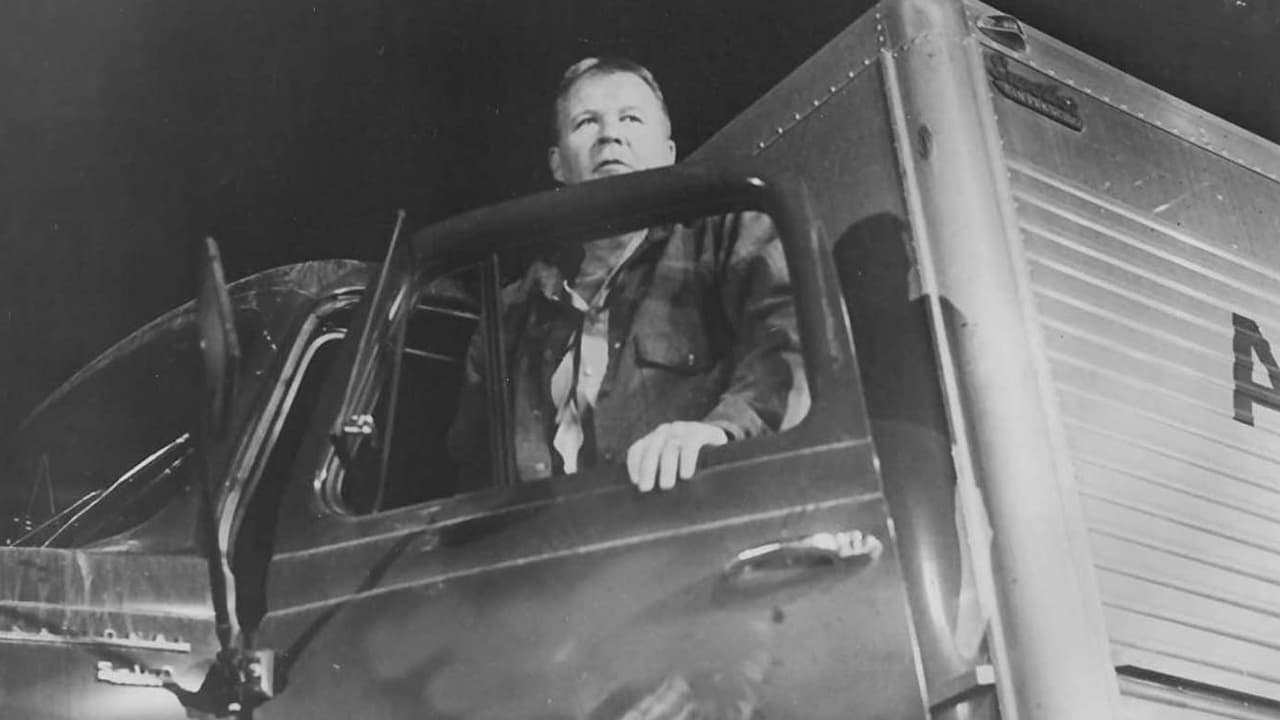
Ernest Haller, whose career stretched from the silent era through prestige productions including Gone with the Wind, brings an unlikely sophistication to this low-budget Regal production. Working largely on actual California highways and practical locations rather than studio backdrops, Haller exploits the flat, diffuse light of overcast daytime exteriors to strip the landscape of atmosphere and replace it with exposure. The wide shots of trucks and cars moving through open terrain are not picturesque – they are surveillant. Interior work in vehicles is tight and shallow-focused, the frame crowded by headrests, dashboards, and windshields that become bars as the film proceeds. Night sequences at the rail yard use selective arc lighting to carve figures out of darkness without softening the geometry of the space. Haller's choice throughout is legibility over mood: the moral logic of the film depends on the audience seeing clearly that there is nowhere to hide, and his lighting enforces that argument at every turn.

In the Catalogue

Themes & Motifs

Availability

Where to Watch

Also in the Directory

See Also