Films People Pull a Fast One Night Beat Reading Room On TV Shop
Moontide 1942
1942 20th Century Fox
★★★☆☆ Notable
Film Noir · 94 minutes · Black & White

Moontide

Directed by Archie Mayo
Year 1942
Runtime 94 min
Studio 20th Century Fox
TMDB 6.4 / 10
"A drifter with a blackout where his conscience should be finds something worth protecting – and someone who might destroy him for it."

On the fog-wrapped waterfront of a California fishing village, Bobo (Jean Gabin) is a big, gentle itinerant who works the docks and drinks with the kind of regularity that fills in the hours he cannot account for. He lives in the shadow of a night he cannot reconstruct: a man is dead, and Bobo has no memory of where he was. His only company is Tiny (Thomas Mitchell), a fast-talking hanger-on whose loyalty has the texture of something bought and not yet paid for, and Nutsy (Claude Rains), a lean, watchful drifter whose interest in Bobo runs deeper than friendship.

When Bobo pulls a young woman named Anna (Ida Lupino) from the water and nurses her back to health in his bait shack, something in him steadies. Anna is damaged in her own way – driven to the water's edge by desperation – and the two form a fragile attachment that neither fully trusts. Tiny grows uneasy at her presence; Nutsy, whose knowledge of that missing night gives him a particular kind of power, grows dangerous. The question of what Bobo did – or did not do – refuses to stay submerged.

Moontide works in the territory between redemption drama and noir fatalism, asking whether a man whose past is literally unknown to him can be held responsible for it, and whether love is capable of functioning as evidence of character. The film's waterfront milieu, its drifting men and damaged women, and its air of guilt without clear origin place it in a tradition of poetic realism that the French imported and Hollywood translated into something slightly harder and less forgiving.
Classic Noir

Moontide arrives at an instructive intersection: French poetic realism colliding with American studio noir. Gabin, imported by Fox following his celebrated work with Renoir and Carné, carries the role of Bobo with a physical authenticity that the Hollywood system rarely cultivated in its own contract players – his performance is interior, slow, and genuine in a way that the surrounding material does not always deserve. The film's most durable quality is its waterfront atmosphere, rendered with patient attention to texture and light, and its willingness to treat amnesia not as a thriller device but as a moral condition. Claude Rains, working against type in a role that reverses his usual authority, gives the film its most unsettling undercurrent. What Moontide finally reveals about its era is the anxiety around assimilation – of a foreign star, of European stylistic conventions, of a darkness that American genre filmmaking was still learning to name.

– Classic Noir
3 ★★★☆☆ Notable
Credits

The Crew

DirectorArchie Mayo
ScreenplayJohn O'Hara
CinematographyCharles G. Clarke
MusicDavid Buttolph
EditingWilliam Reynolds
Art DirectionJames Basevi
CostumesGwen Wakeling
ProducerMark Hellinger
Performances

The Cast

Close Reading

The Signature Scene

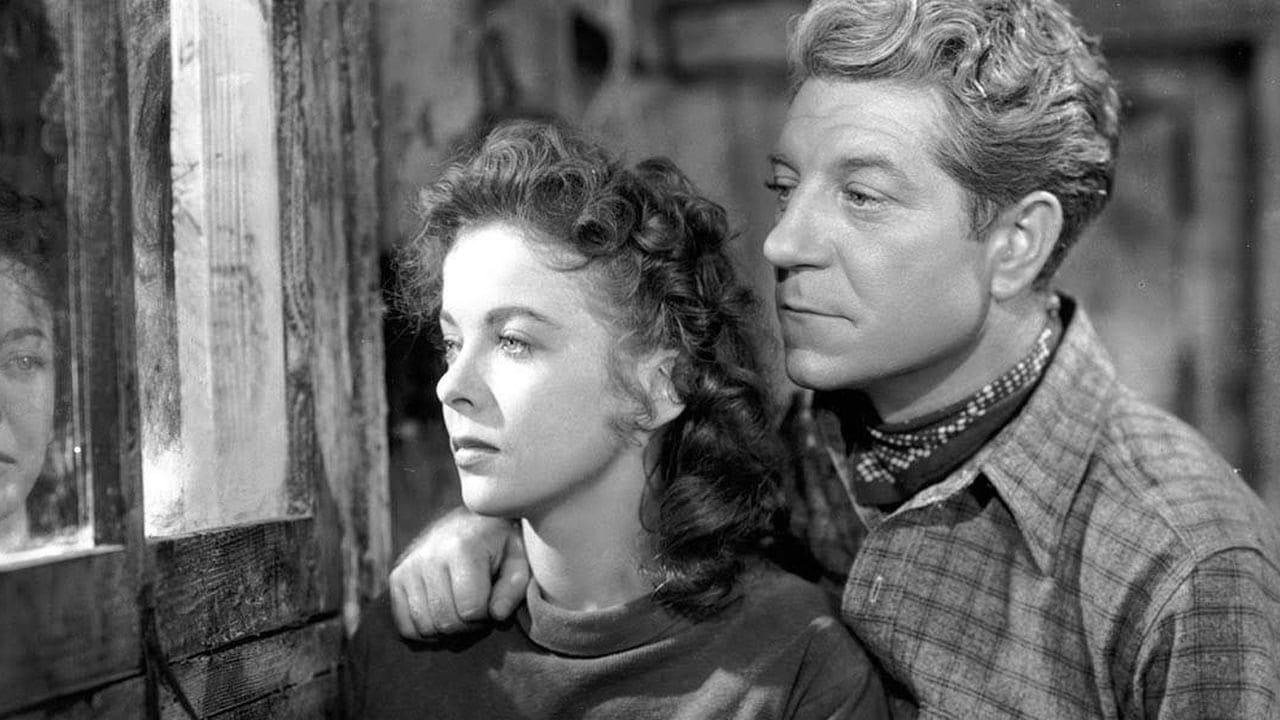
Moontide – scene
The Bait Shack at Night Lamplight Across Still Water

Clarke lights the interior of Bobo's shack with a single practical source – a hanging lamp that swings almost imperceptibly, casting the room in alternating warmth and shade. The frame is kept close, the background dissolved into darkness so that Gabin's face and Lupino's form occupy a small island of visibility surrounded by nothing. When the camera moves, it does so slowly, as though reluctant to disturb the stillness, and the shadows fall across both figures in ways that suggest enclosure rather than intimacy.

The scene establishes the film's central argument: that care offered in darkness is still care, but that the darkness does not disappear because something tender happens inside it. Bobo's gentleness here is real, and the film does not undercut it – but Clarke's framing will not allow the viewer to forget that the same hands whose tenderness we are watching belong to a man who may have killed. The light, precious and small, is surrounded by everything the film declines to resolve.

Visual Language

The Cinematography

🎞️
Charles G. Clarke – Director of Photography

Charles G. Clarke brings to Moontide a visual language drawn from the fog and wet wood of the waterfront, using diffused, low-key lighting that owes a clear debt to the French poetic realist films Gabin had just left behind. Clarke favors deep shadow fills that let the backgrounds go almost entirely dark, isolating characters within the frame and giving the studio-built dock sets a density they might not otherwise sustain. His lens choices tend toward moderate focal lengths that compress slightly without distorting, keeping faces legible while the environment presses in. Key light is frequently positioned low and to the side, raking across weathered surfaces – rope, timber, water – and producing the kind of texture that suggests lived-in space rather than constructed set. The fog, deployed consistently, is not atmosphere for its own sake but a visual correlative for the film's moral logic: outlines are uncertain, distances are unreliable, and what lies just beyond the frame may be anything at all.

In the Catalogue

Themes & Motifs

Availability

Where to Watch

Also in the Directory

See Also