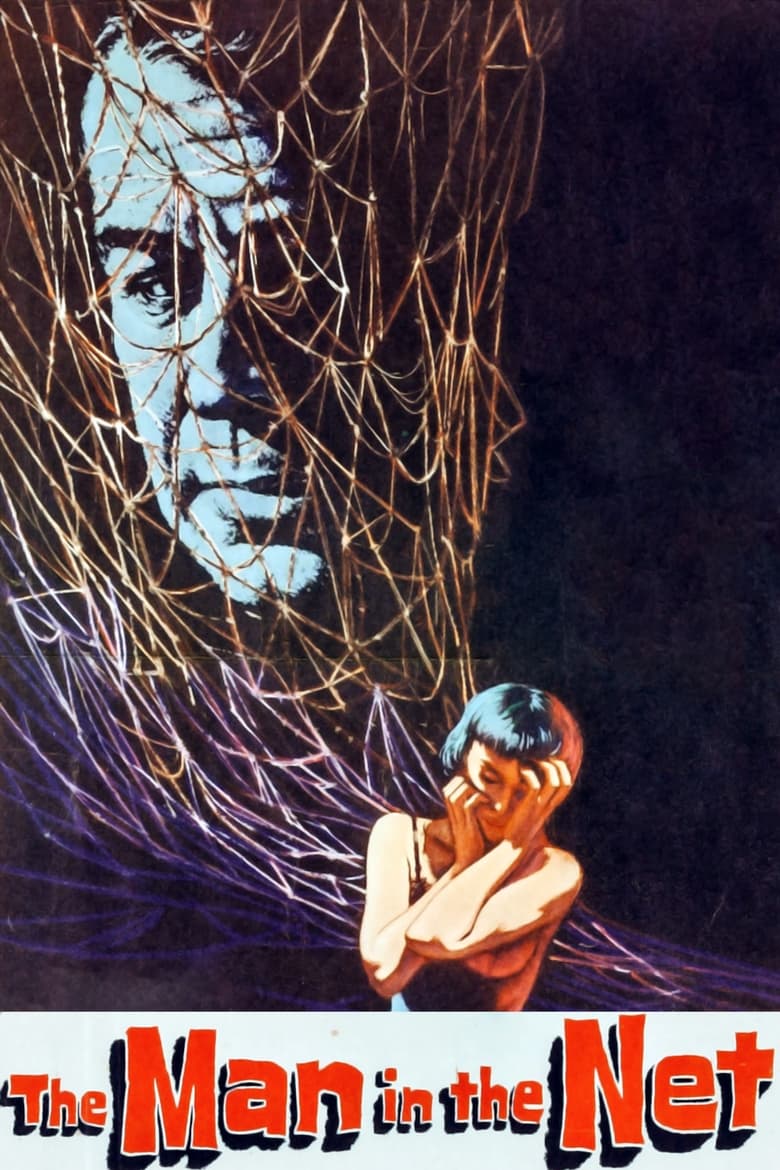
John Hamilton, a commercial artist, has retreated with his wife Linda to a small Connecticut village, hoping distance will stabilize their deteriorating marriage. Linda drinks, disappears for hours, and returns with explanations that do not hold together. When she vanishes entirely one night and is later found dead, the circumstantial evidence assembles itself around John with a logic he cannot dismantle: motive, opportunity, and a community already disposed to distrust an outsider.
With Sheriff Steve Ritter pressing a case against him and the town's respectable citizens closing ranks, John finds his only allies among the local children, who have been using an abandoned mill as a hideout and witnessed things adults have chosen not to see. Meanwhile, his neighbor Gordon Moreland and the woman Vicki Carey, whose husband Brad harbors his own entanglements with Linda's past, complicate any clean reading of guilt or innocence. Allegiances shift in ways that implicate nearly everyone in the village.
Man in the Net belongs to the wrong-man cycle that noir refined through the 1950s, a subgenre preoccupied less with criminal methodology than with the erosion of a man's standing in the social order. The film's unusual device – placing trust in children rather than institutions – gives it a quietly subversive edge that sets it apart from more procedural entries in the cycle.
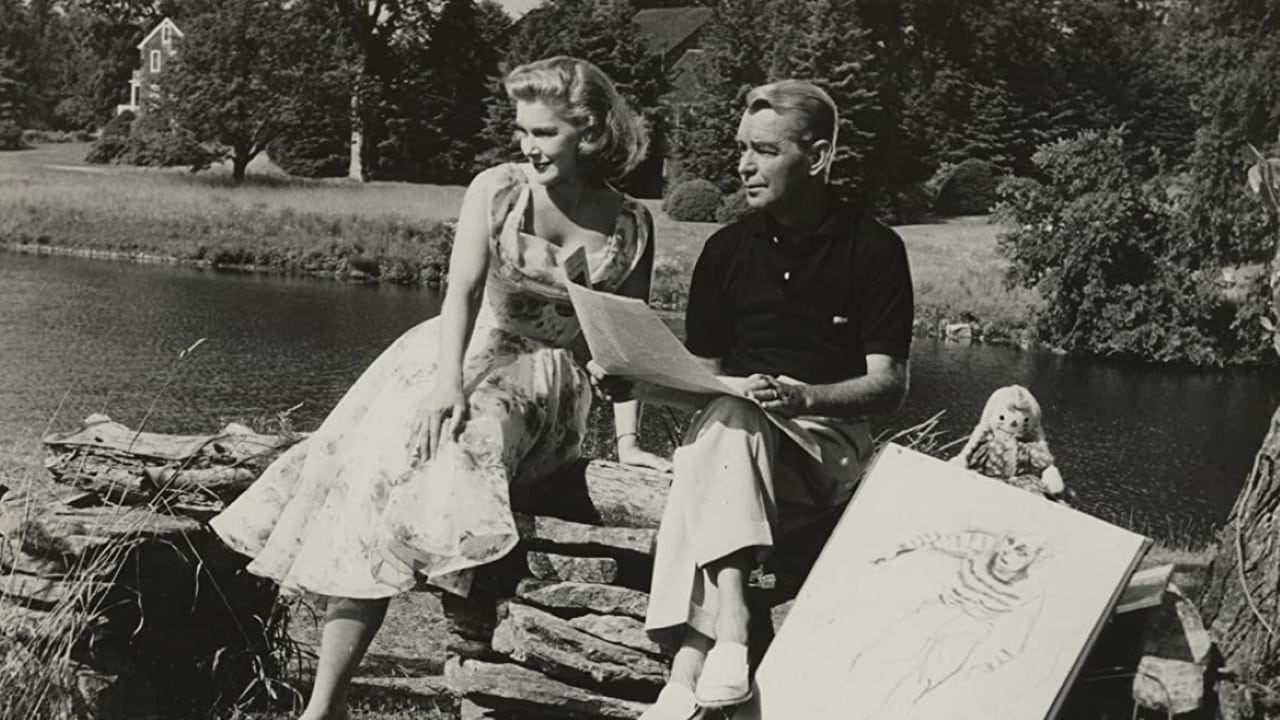
Man in the Net arrives late in Michael Curtiz's career and carries the marks of a director executing competently within a genre rather than interrogating it, yet the film rewards attention precisely because of what it does with the wrong-man formula. The decision to make the children of the village the instruments of eventual justice is not merely a narrative convenience; it functions as a structural inversion of the film's central anxiety, which is that adult institutions – law, marriage, community reputation – have become engines of injustice. John Seitz's cinematography, developed across a long career that included Double Indemnity, brings a disciplined shadow work to the New England setting that quietly refuses picturesque comfort. Alan Ladd's characteristic stillness, which critics of the period sometimes read as limitation, serves the material: a man whose innocence is legible to the audience but unreadable to the world around him needs to project exactly that quality of compressed, unperformed rectitude. Carolyn Jones, working against type, delivers a portrait of self-destruction that the film treats with more complexity than the plot strictly requires.
– Classic Noir
Seitz frames the interior of the abandoned mill with a high angle that emphasizes the geometry of rotting beams and broken planking, the available light entering in diagonal shafts from gaps in the structure above. Hamilton moves through the space in near-darkness, the camera holding on a medium shot that keeps his face half-obscured, catching only one eye and the line of his jaw. The children's lantern, small and warm against the surrounding cold black, becomes the compositional anchor of the sequence, drawing the eye while the periphery dissolves into indeterminate shadow.
The scene encodes the film's central argument about knowledge and social position: the mill is outside the adult world's jurisdiction, a space where evidence survives precisely because official sight lines do not reach it. That Hamilton must depend on the testimony of children to reconstruct what happened to his wife is presented not as whimsy but as a damning commentary on the failure of every institutional mechanism that should have protected him. The lantern light – juvenile, precarious, stubbornly present – becomes the film's moral figure for the kind of truth that official power cannot generate on its own.
John F. Seitz brings to Man in the Net a discipline acquired across three decades of American cinematography, most notably his work on Double Indemnity and Sunset Blvd. with Billy Wilder. Here, shooting in a rural New England setting that resists the urban iconography more familiar to the genre, Seitz works against natural light rather than with it, suppressing the pastoral warmth of the locations through underexposure and selective fill. Interiors are rendered with a low-key setup that pools shadow at the margins of the frame, keeping characters in a middle zone where expressions remain readable but backgrounds become unstable. The decision to use the mill sequences without artificial augmentation of the children's lantern gives those scenes a quality of visual precariousness that mirrors the narrative situation. Throughout the film, Seitz avoids wide establishing shots that would anchor the village as familiar or safe, preferring tighter framings that compress the space around Hamilton and reinforce the sense that the community is closing in geometrically, not merely socially.
As of this writing, Tubi has carried Man in the Net in a reasonably clean print; availability on free platforms for titles of this vintage can shift, so verify before viewing.
Amazon Prime VideoRentalAvailable for digital rental and purchase, offering a reliable fallback if free-streaming options lapse.
Archive.orgFreePublic domain status makes this film a periodic presence on the Internet Archive, though print quality varies by upload and should be checked against other options.