Films People Pull a Fast One Night Beat Reading Room On TV Shop
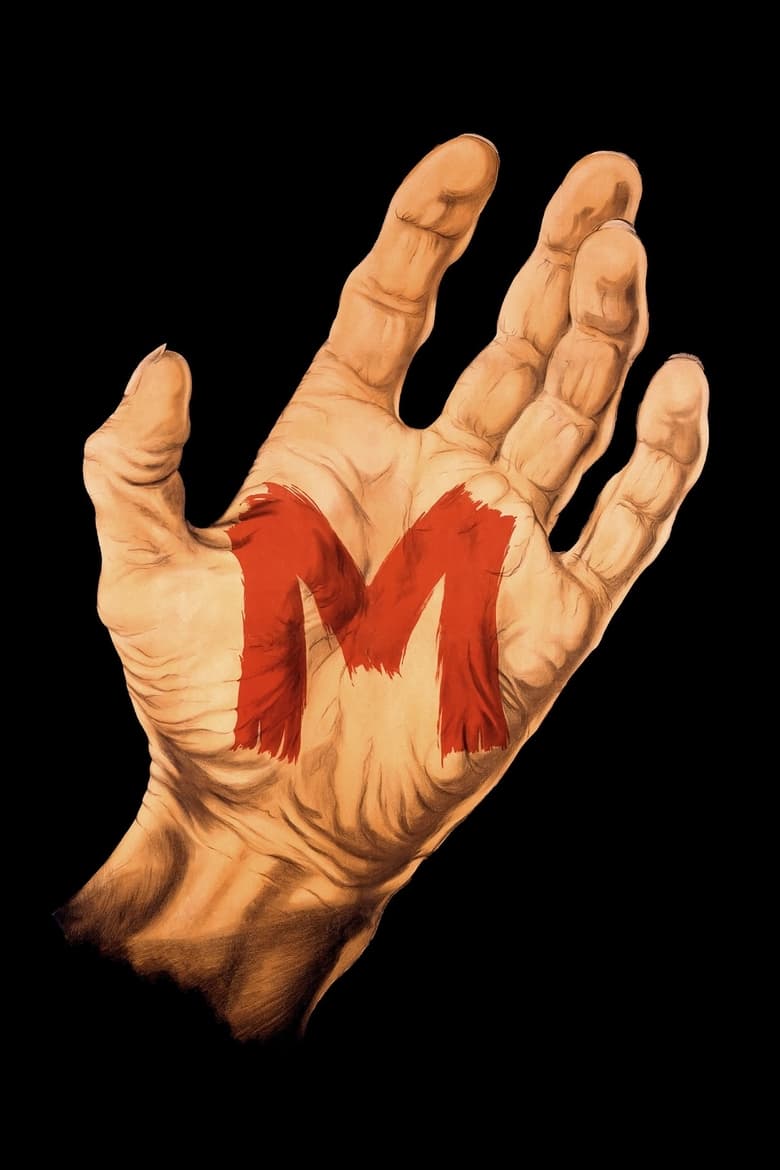
M 1931
1931 Nero-Film AG
★★★★★ Essential
Film Noir · 110 minutes · Black & White

M

Directed by Fritz Lang
Year 1931
Runtime 110 min
Studio Nero-Film AG
TMDB 8.1 / 10
"A city holds its breath while a killer walks among the shadows it cast itself."

Berlin, 1931. A series of child murders has paralyzed the city. The killer, Hans Beckert, is an unassuming figure who drifts through crowds unnoticed, his presence announced only by a whistled Grieg melody and the shadow he casts across a wanted poster bearing his own description. The police, under Inspector Karl Lohmann, conduct raids and interrogations with increasing desperation, disrupting the underworld far more than they unsettle the man they are hunting.

The criminal syndicates, finding their operations strangled by constant police pressure, convene and resolve to hunt Beckert themselves. They possess what the police do not: an army of informants with eyes on every corner of the city. A blind balloon seller, who once encountered Beckert, helps identify him by his whistle, and a mark is chalked on his coat by a pickpocket working for the mob. The underground closes in with a cold efficiency that mirrors, and ultimately parodies, the machinery of official justice.

M operates at the intersection of crime film, procedural, and psychological portrait. It is less concerned with the mechanics of detection than with the question of what a society does when it confronts a man who may be beyond the reach of moral judgment. The film positions Beckert not as a monster safely external to the social order but as something it has failed to account for, forcing the institutions meant to protect that order – law, commerce, the criminal fraternity itself – into uncomfortable alignment.
Classic Noir

Fritz Lang's M arrived at a moment when German society was already fracturing under pressures that would shortly become catastrophic, and the film absorbs those pressures without resolving them into comfort. It is the first major sound film to treat the serial killer as a psychological subject rather than a Gothic cipher, and Peter Lorre's performance as Beckert remains one of the most precise pieces of screen acting the genre produced. What Lang and co-writer Thea von Harbou achieve is a structural argument: the parallel investigations conducted by police and criminal organization expose not the superiority of one institution over the other but the equivalent limitations of both. The kangaroo court that closes the film is not a triumph of mob justice; it is a demonstration of justice's absence. Fritz Arno Wagner's cinematography sustains this argument at the level of image, keeping Beckert both ordinary and irrecoverable within the same frame. The film sits at the origin point of noir not because it establishes a style but because it establishes a problem.

– Classic Noir
5 ★★★★★ Essential
Credits

The Crew

DirectorFritz Lang
ScreenplayFritz Lang
CinematographyFritz Arno Wagner
EditingPaul Falkenberg
Art DirectionEmil Hasler
ProducerSeymour Nebenzal
Performances

The Cast

Close Reading

The Signature Scene

M – scene
The Warehouse Trial Beckert Faces His Accusers

Lang stages the kangaroo court in a vast underground space, its high ceiling lost in darkness and its floor packed with figures crowded into the frame's edges. Wagner lights the scene from above and at harsh angles, throwing faces into partial shadow so that the assembled criminals read less as individuals than as a collective organism. Beckert is placed at the center, isolated by open floor, the geometry of the composition making him simultaneously the scene's subject and its prisoner before any verdict is spoken.

The scene is the film's argument made visible. Beckert's desperate, nearly incoherent self-defense – he cannot control himself, he carries his torment everywhere – does not exonerate him and is not meant to. What it does is collapse the distance between the accused and his accusers. The criminals who judge him are not disinterested arbiters; they are protecting their own economy. The lawyer who defends him is hired performance. Lang refuses the audience the satisfaction of a clean moral position, insisting that the desire for judgment and the capacity for it are not the same thing.

Visual Language

The Cinematography

🎞️
Fritz Arno Wagner – Director of Photography

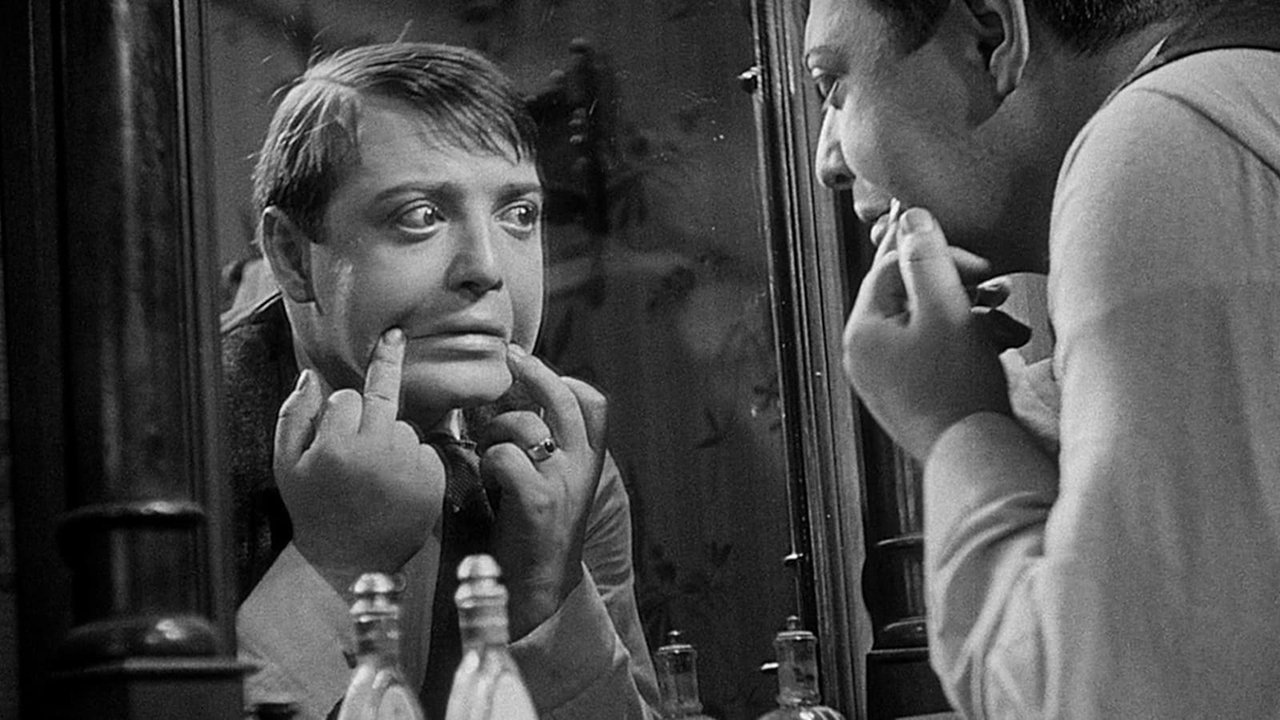
Fritz Arno Wagner, who had already shot Nosferatu and The Threepenny Opera, brings to M a deep-focus, location-inflected visual grammar that keeps the city itself legible as a space of concealment and exposure. Working largely in studio reconstructions of Berlin streets and interiors, Wagner uses overhead sources and hard side-lighting to produce shadows that function architecturally, defining zones of safety and danger within a single frame. His lens choices tend toward moderate focal lengths that preserve spatial relationships without flattening depth, so that Beckert moving through a crowd registers as both embedded in it and separate from it. The recurring motif of reflections – mirrors, shop windows, polished surfaces – fractures the image of the killer without ever rendering him symbolic. Where many cinematographers of the early sound era allowed the microphone's demands to dominate visual composition, Wagner maintains a disciplined frame, and the moral logic of the film, that ordinary surfaces conceal extraordinary corruption, is carried as much by his lighting as by the screenplay.

In the Catalogue

Themes & Motifs

Availability

Where to Watch

Also in the Directory

See Also