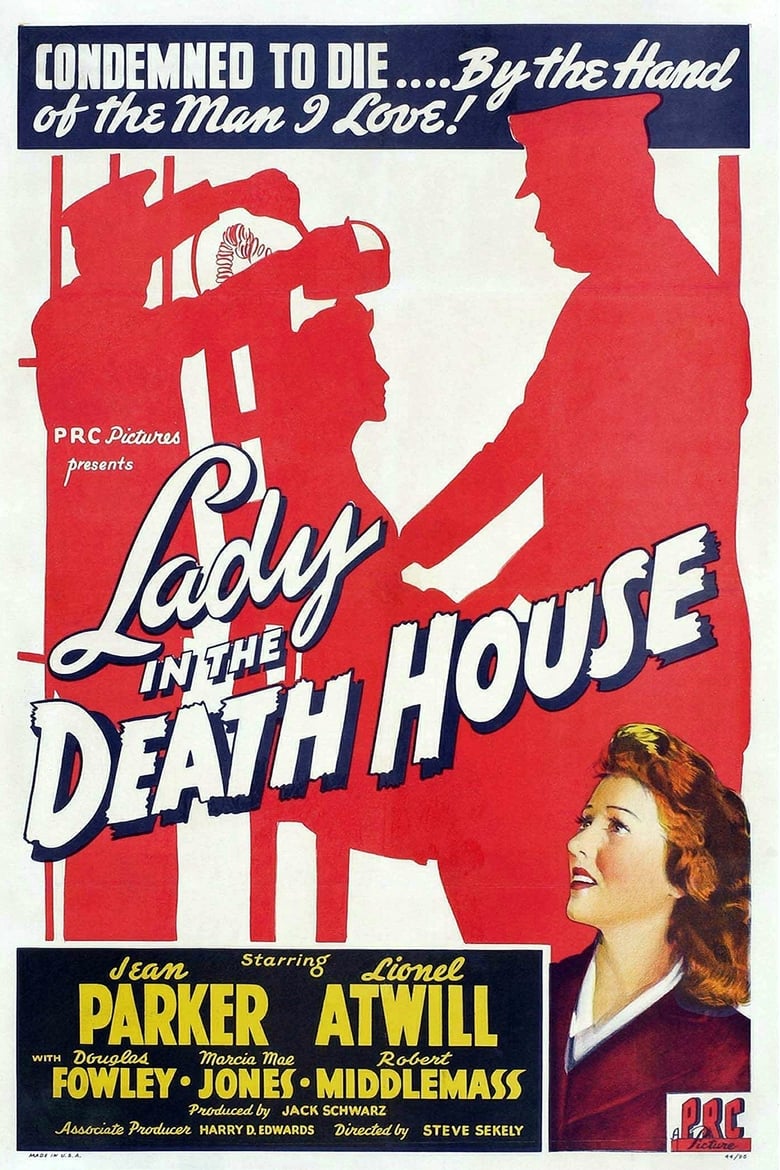
Mary Kirk Logan sits on death row, condemned for a murder the state believes she committed with calculated intent. Her only hope rests with Charles Finch, a criminologist whose methods are unconventional and whose interest in Mary extends beyond professional obligation. Finch races against a fixed execution date, working the margins of a case that the state has already declared closed.
The investigation pulls Finch toward Dr. Dwight Bradford, a figure whose professional standing masks a deeper complicity, and toward Suzy, Mary's younger sister, whose testimony and silence both carry weight. The state's attorney has built his case on evidence that is more convenient than conclusive, and as Finch presses further, allegiances among the principals shift in ways that expose how thoroughly the legal apparatus can be weaponized against the vulnerable.
Lady in the Death House belongs to a cycle of late-studio Poverty Row productions that used the wrongful conviction framework to examine institutional failure and the fragility of innocence under bureaucratic pressure. At 56 minutes, it moves with the economy of the B-picture, concentrating its moral argument into a tight procedural structure that leaves little room for sentiment but considerable room for unease.
Lady in the Death House is a minor but instructive entry in the cycle of early-1940s Poverty Row noir, produced by Jack Schwarz on a budget that demanded efficiency above all else. Steve Sekely, a director who had trained in European commercial cinema before emigrating, brings a modest compositional discipline to material that a lesser hand would have treated as purely functional. Lionel Atwill, by this point typecast in sinister or morally compromised roles, here operates as a nominal protagonist, and the tension between his screen persona and his character's ostensibly benign function generates a low-level unease the script never fully exploits. What the film does achieve is a frank acknowledgment of the death penalty's capacity for irreversible error – a theme that gained urgency in the postwar years but was already legible in productions like this one. Jean Parker's performance carries a stillness that the film earns rather than asserts. As a document of how genre conventions were being assembled and tested on the margins of studio production, it repays serious attention.
– Classic Noir
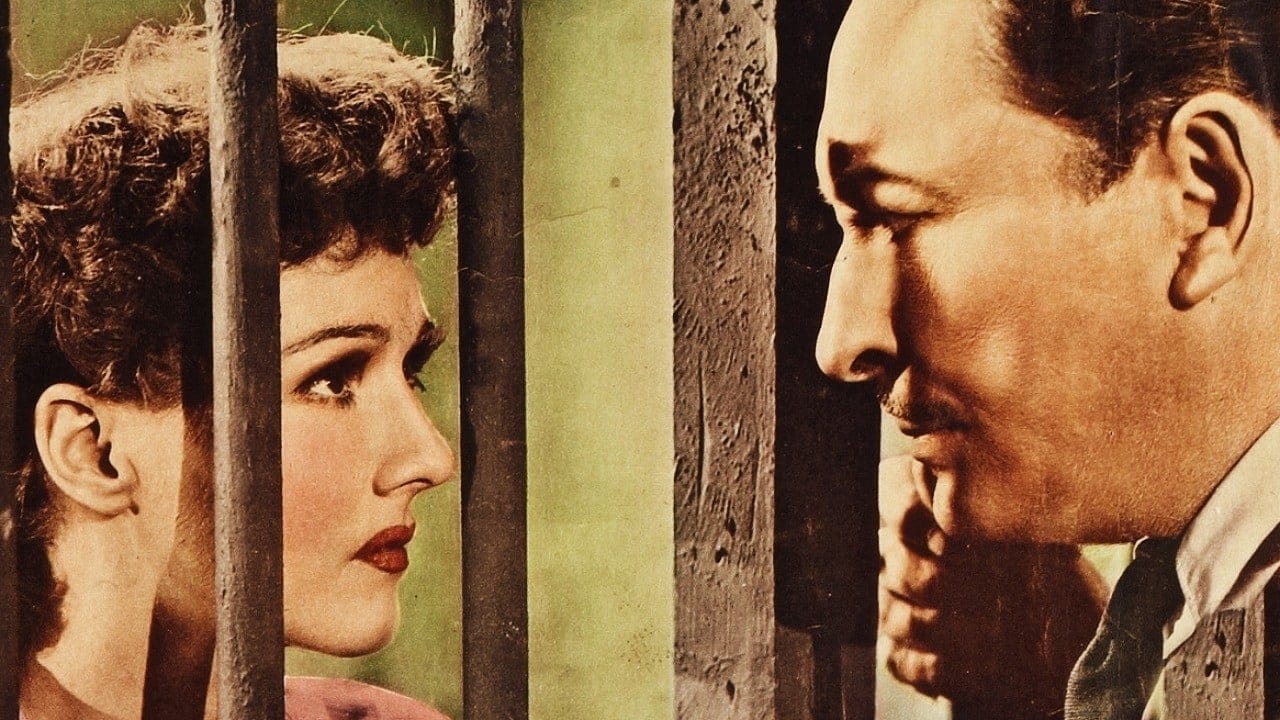
Gus Peterson places the camera at a low angle in the corridor outside Mary's cell, allowing the horizontal bars to cast a ladder of hard shadows across the floor and the lower half of Mary's figure. The light source is positioned high and to the left, implying institutional fluorescence without romanticizing it. The frame is shallow, compressing the depth of the corridor so that the space behind Mary reads as an absolute terminus rather than a passageway.
The composition does not need dialogue to make its argument: the geometry of confinement is the film's central visual statement. Mary's stillness within the barred shadow pattern renders her simultaneously present and already abstracted from the world that condemned her. The scene concentrates the film's thesis about the state's power to reduce a person to a category – guilty, sentenced, scheduled – before the truth has been fully accounted for.
Gus Peterson operates under the severe constraint of a Poverty Row budget, which in practice meant limited setups, fast shooting schedules, and studio interiors that had to suggest institutional spaces without the resources to build them convincingly. Within those limits, Peterson works with hard, directional light and strong perpendicular shadow elements – bars, window grilles, architectural verticals – that serve the story's moral logic without requiring elaborate equipment. His lens choices favor moderate focal lengths that keep the principal actors in readable mid-shot while allowing background architecture to assert its weight. The death house interiors are lit with a deliberate flatness that is not a failure of ambition but a considered choice: warmth is withheld from spaces the narrative has already designated as terminal. Where Peterson does introduce chiaroscuro contrast, it is in scenes involving Finch and Bradford, where the moral situation is less settled and shadow can carry interpretive pressure rather than simply atmospheric dressing.
Lady in the Death House has entered the public domain and is available on Archive.org in multiple transfers; the best available print is in acceptable condition given the film's provenance.
TubiFreeTubi carries a number of Poverty Row titles from this period, and Lady in the Death House has appeared in their catalog; availability may vary by region.
Amazon Prime VideoSubscriptionPublic domain prints of the film have circulated on Prime through third-party curators of classic B-pictures; verify current availability before streaming.