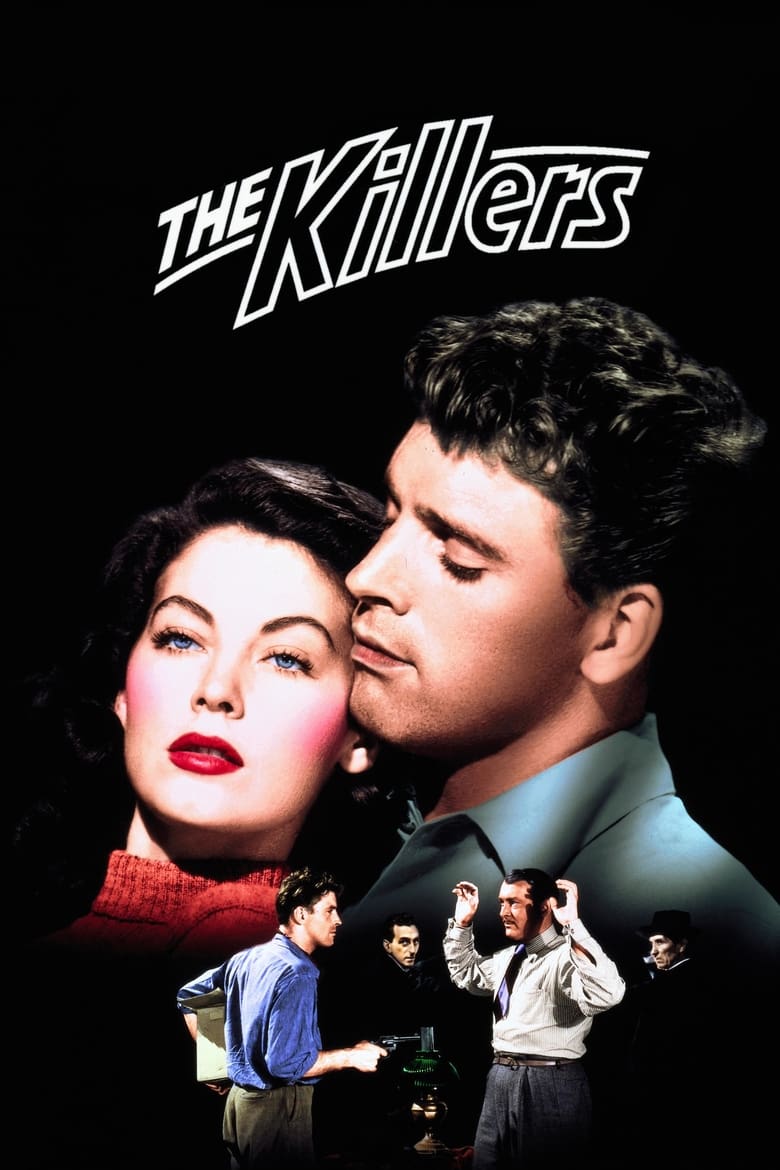
In the small town of Brentwood, New Jersey, two hired killers walk into a diner and ask for a man called Swede Andersen. They find him in his rented room, lying on his bed, and he does not move. He does not run. He simply waits. When the killers arrive, he accepts his fate without resistance. Insurance investigator Jim Reardon, tasked with paying out a modest claim on Andersen's life, becomes fixated on that passivity. There is, he suspects, a larger payout hidden somewhere, and a story worth following. Working backward through a fragmented chronology, Reardon begins to reconstruct who Swede was: a once-promising boxer, a loyal friend, a man brought low by a single encounter with a woman named Kitty Collins.
Reardon's investigation pulls him through a gallery of witnesses – a former cop, a cellmate, a reformed thief – each adding a piece to the portrait of a man undone by desire and misplaced trust. Kitty, a woman of calculated beauty and uncertain loyalty, passed through Swede's life like a verdict. She belongs, it emerges, to Big Jim Colfax, a crime boss who orchestrated a payroll robbery in which Swede was a willing but ultimately expendable participant. After the heist, the money disappeared along with Colfax and Kitty, leaving Swede with nothing but a prison sentence and a conviction that Kitty had loved him. That conviction, irrational and absolute, is the engine of the film's tragedy.
The Killers adapts Ernest Hemingway's spare 1927 short story – which covers only the diner scene and its immediate aftermath – and extends it into a full-length anatomy of fatalism and criminal betrayal. The film belongs to the cycle of postwar noirs that treat the returning or displaced American male as inherently vulnerable to manipulation, his wartime stoicism converted by peacetime circumstance into a kind of moral paralysis. Reardon's methodical reconstruction of Swede's life functions as the film's structuring device, a procedural frame around an essentially emotional subject: the cost of loving someone who has no capacity for loyalty.
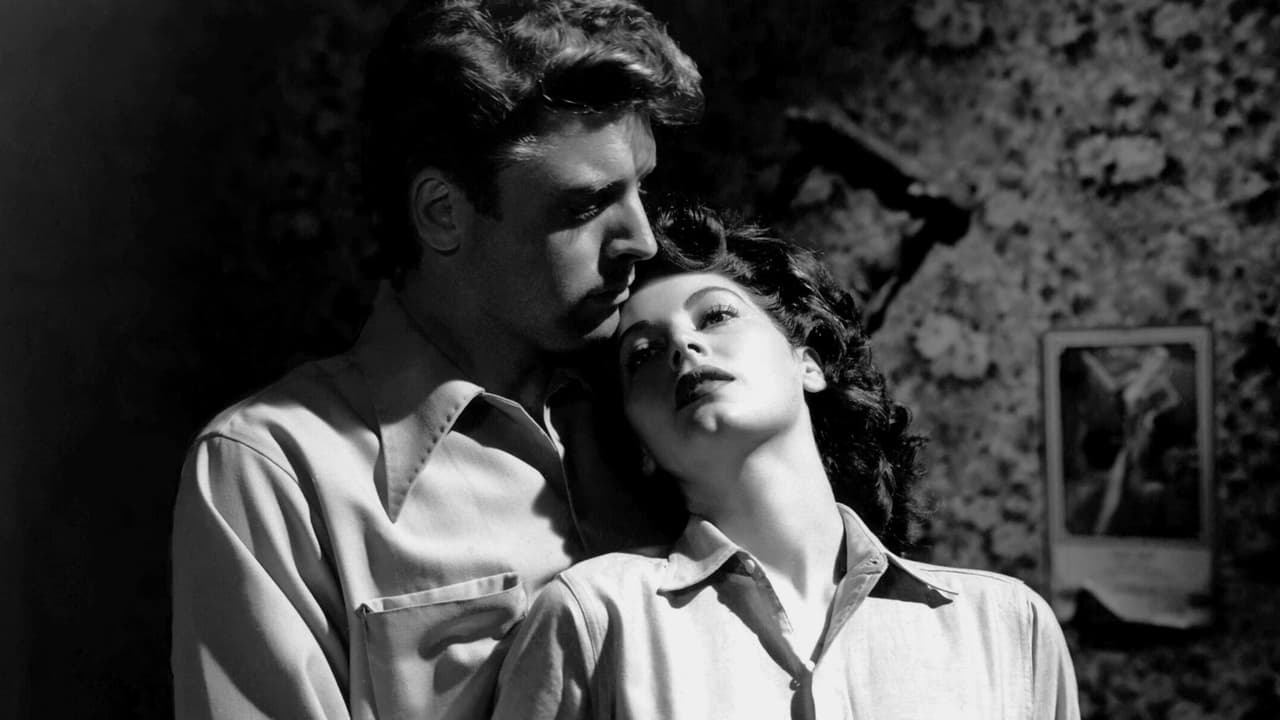
The Killers arrived in 1946 as one of the defining statements of American noir's postwar phase, and it earns that position through formal discipline rather than mere atmosphere. Robert Siodmak, working with cinematographer Elwood Bredell and a score by Miklós Rózsa that had already served Double Indemnity, constructs a film whose retrospective, fragmented narrative mirrors the psychological condition it describes. Burt Lancaster's debut performance is less a star turn than a structural argument: the Swede's physical power and emotional passivity exist in deliberate, disturbing tension, and the film uses that tension to examine how masculine identity – particularly the postwar variant built around strength and self-sufficiency – can be systematically dismantled by a single point of vulnerability. Ava Gardner, in a role that defines the femme fatale without reducing it to caricature, gives Kitty Collins genuine opacity; the film is not entirely certain she is the villain, and that uncertainty is productive. Anthony Veiller's screenplay, with uncredited contributions from John Huston, extends Hemingway's premises into territory the story never occupied, doing so without betraying its fatalist core.
– Classic Noir
Siodmak and Bredell frame the scene with almost punitive economy. The camera holds at a medium distance as the Swede lies on his iron bed, fully clothed, in near-darkness. Light enters through a single window in a narrow band, falling across the lower half of his body without illuminating his face. When Nick – the counter boy who has come to warn him – speaks from the doorway, Swede does not turn his head. The frame does not cut to a reaction shot. It holds. The stillness is not the stillness of sleep; it is the stillness of a decision already made, and the refusal to insert a conventional response shot forces the viewer to sit inside that decision with him.
The scene establishes the film's central argument in its first three minutes: that fate, in this world, is not imposed from outside but accepted from within. Swede's refusal to flee is not cowardice and not ignorance – he knows the killers are coming. It is the logical endpoint of a man who has concluded that nothing remaining in his life is worth the effort of survival. The subsequent investigation is Reardon's attempt to understand that conclusion, and the film's moral weight rests on whether understanding it constitutes a form of justice or merely its simulation.
Elwood Bredell's work on The Killers represents one of the more precisely calibrated visual programs in the Universal noir cycle. Bredell shoots almost entirely on studio sets, but the artificial construction is never a liability – it becomes a tool for moral geometry. His lighting setups favor hard, single-source illumination that creates deep shadow pools with clean edges, a choice that refuses the ambiguity of diffused light and insists instead on a world of stark divisions. The retrospective structure of the narrative demanded visual consistency across multiple time periods and locations, and Bredell maintains tonal coherence by varying intensity rather than approach: flashback sequences are not brighter or softer than the present-day investigation, they are simply differently shadowed, placing characters in the same moral register regardless of when the scene occurs. Close-ups of Ava Gardner are composed with particular care, the light catching her face at angles that preserve rather than resolve her ambiguity. The film's visual language consistently places characters in frames within frames – doorways, windows, mirrors – enforcing the sense that every figure is being observed, assessed, and ultimately judged.
The Criterion Channel presents the film in a clean transfer and contextualizes it within curated noir programming that makes double-feature viewing straightforward.
PeacockSubscriptionPeacock carries a number of Universal catalogue titles from this period; availability shifts seasonally, so confirm before seeking it out here.
TubiFreeTubi has carried the film as a free, ad-supported option – transfer quality varies, but it is the most accessible no-cost route to the film.