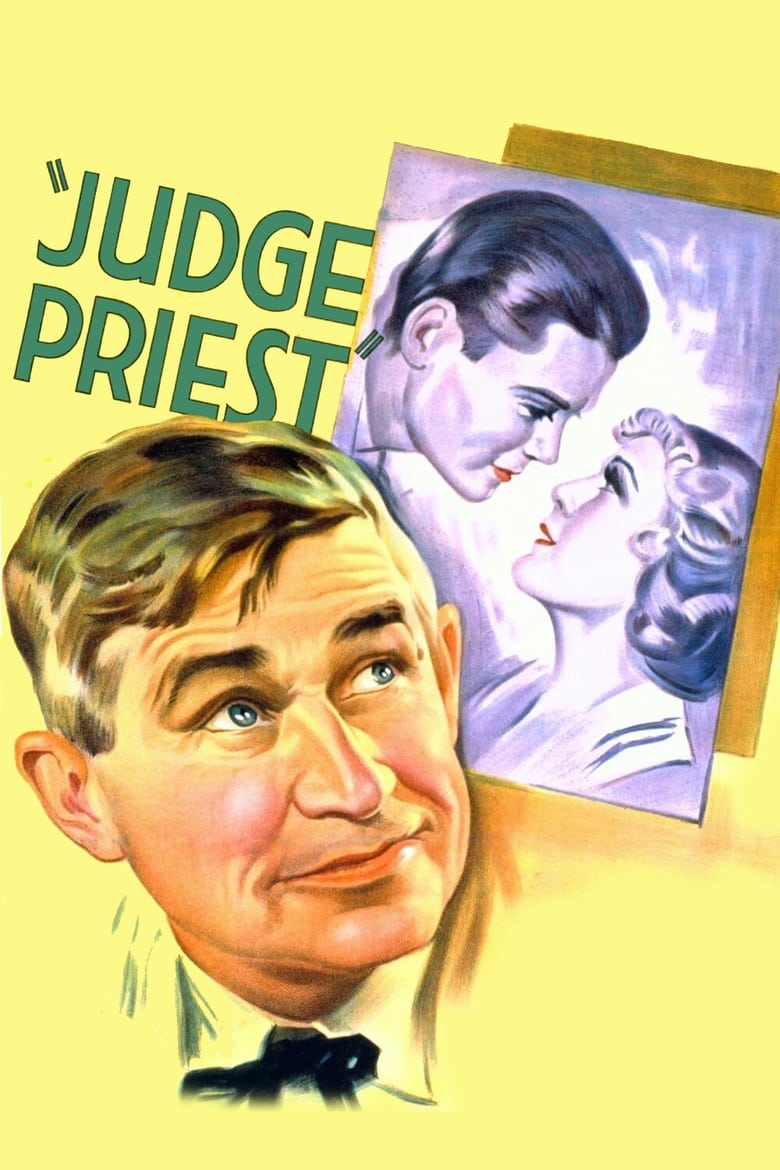
In the languid heat of Fairfield, Kentucky, Judge William Pitman 'Billy' Priest presides over his courtroom with a loose rein and a sharp eye. A Civil War veteran turned small-town magistrate, he navigates the social currents of his community with practiced informality – bantering with juries, fishing between sessions, and maintaining a careful equilibrium between the letter of the law and the needs of the people before him. When his nephew Jerome becomes entangled with Ellie May Gillespie, a young woman whose origins carry a social stigma the town has never spoken aloud, the Judge finds his domestic and professional worlds pressing against each other.
The arrival of a murder charge against Bob Gillis – a man with ties to the town's buried history – forces Billy Priest to weigh mercy against procedure and personal knowledge against public decorum. Reverend Ashby Brand, a figure from the community's Confederate past, holds a secret that could alter the outcome of the trial and reshape the town's understanding of itself. The prosecution, driven by Bob Gillis's adversary Fleming Talley, pushes toward a verdict that the Judge suspects is built on incomplete truth. Allegiances fracture quietly, without melodrama, along the lines of class, memory, and shame.
Ford frames the courtroom not as an arena of theatrical confrontation but as a space where social order is maintained through selective revelation and strategic silence. The film belongs to a strain of American crime drama that locates moral complexity not in urban corruption but in the codes and compromises of provincial life – where the man who dispenses justice is himself implicated in the community's evasions, and where the resolution of a murder case requires the community to decide what version of itself it can afford to live with.
Judge Priest sits at an oblique angle to the noir canon, and that obliquity is precisely what makes it worth examining here. Ford's 1934 adaptation of Irvin S. Cobb's stories is not a crime film in any strict generic sense, but it shares with noir a foundational concern: the gap between institutional justice and human truth. The courtroom sequences anticipate the procedural anxieties that would drive films like Beyond a Reasonable Doubt two decades later, and the film's Southern setting – with its layered silences around race, legitimacy, and social standing – creates a moral atmosphere closer to shadow than sunlight. Will Rogers keeps the tone light, but Ford never lets the lightness fully dispel the darker knowledge underneath. George Schneiderman's photography, shaped by the soft-edged studio grammar of the early sound era, occasionally finds compositions of genuine restraint. The film reveals a Hollywood in transition, uncertain whether sentiment or severity better suits the stories it is learning to tell.
– Classic Noir
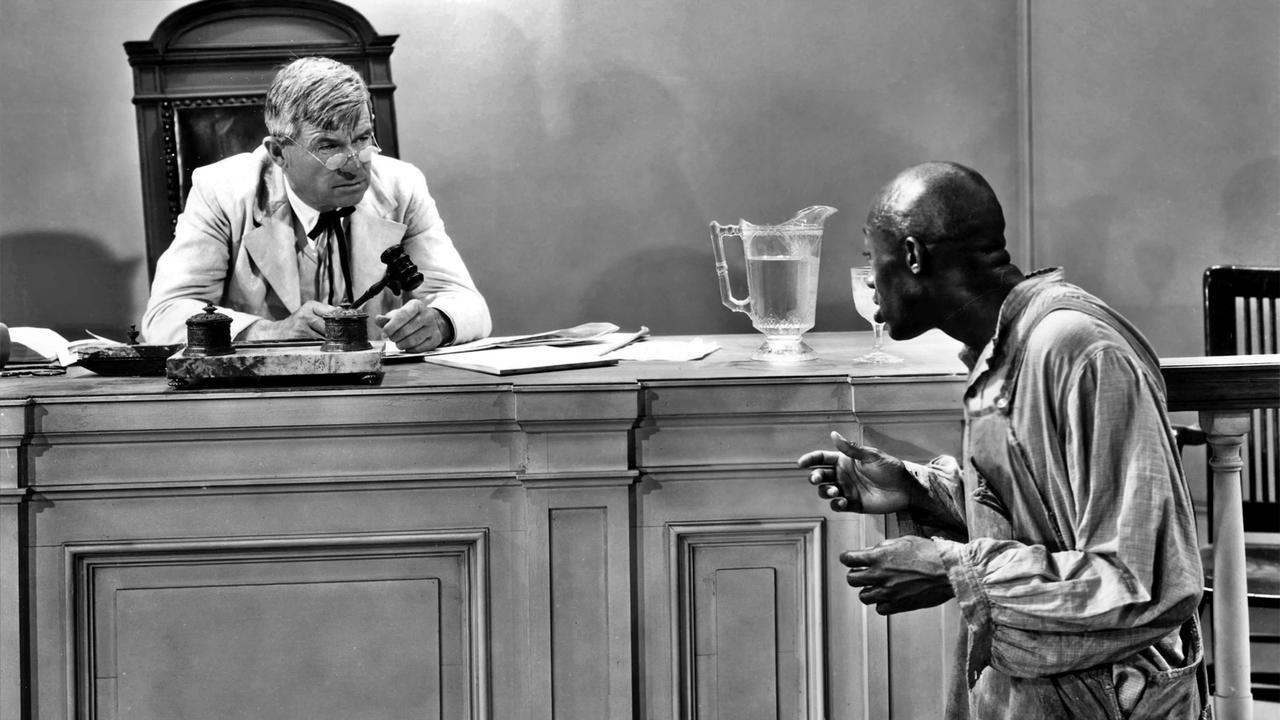
Schneiderman's camera holds on Rogers at medium distance as Billy Priest addresses the court not with rhetoric but with the measured cadence of a man who has already calculated exactly how much to say. The frame is spare – a high-backed chair, the geometry of the courtroom's wooden architecture pressing in from either side. Light falls without drama, diffused through the studio setup in a way that flattens hierarchy and makes every figure in the room equally accountable to what is being said. There is no shadow play here, no expressionist flourish; the visual restraint is itself a kind of argument.
What the scene establishes is the Judge's method: knowledge withheld and then released at the precise moment it can do the most work. Ford reveals character through economy of gesture – Rogers barely moves, and the stillness reads as the stillness of someone who has learned that power is most effective when it does not announce itself. The scene argues that justice in this community operates through the management of revelation, and that the man best equipped to manage it is the one most fluent in the town's own evasions.
George Schneiderman, who had collaborated with Ford since the silent era, brings to Judge Priest the controlled studio grammar he had refined across two decades of Fox productions. Working on interior sets that stand in for Fairfield's courthouse and domestic spaces, Schneiderman uses a soft, directionless light characteristic of early sound-era cinematography – a practical response to the constraints of microphone placement, but one that Ford and Schneiderman turn to deliberate effect, producing an atmosphere of hazy familiarity rather than menace. Where later noir DPs would sculpt shadow into moral geometry, Schneiderman's approach here is cumulative: the absence of hard contrast mirrors the film's refusal to draw clean lines between innocence and guilt. His framing of Rogers consistently positions the Judge as a figure embedded in his environment rather than elevated above it, reinforcing the film's argument that justice is a communal negotiation rather than an individual performance. The camera respects distance; close-ups are earned rather than routine.
Judge Priest is in the public domain and available in full on Archive.org, though print quality varies between uploads.
TCMSubscriptionTCM periodically screens Judge Priest as part of its John Ford or Will Rogers programming blocks, typically in a restored broadcast print.
TubiFreeTubi has carried public-domain Ford titles from this period; availability fluctuates, so confirm before seeking.