Films People Pull a Fast One Night Beat Reading Room On TV Shop
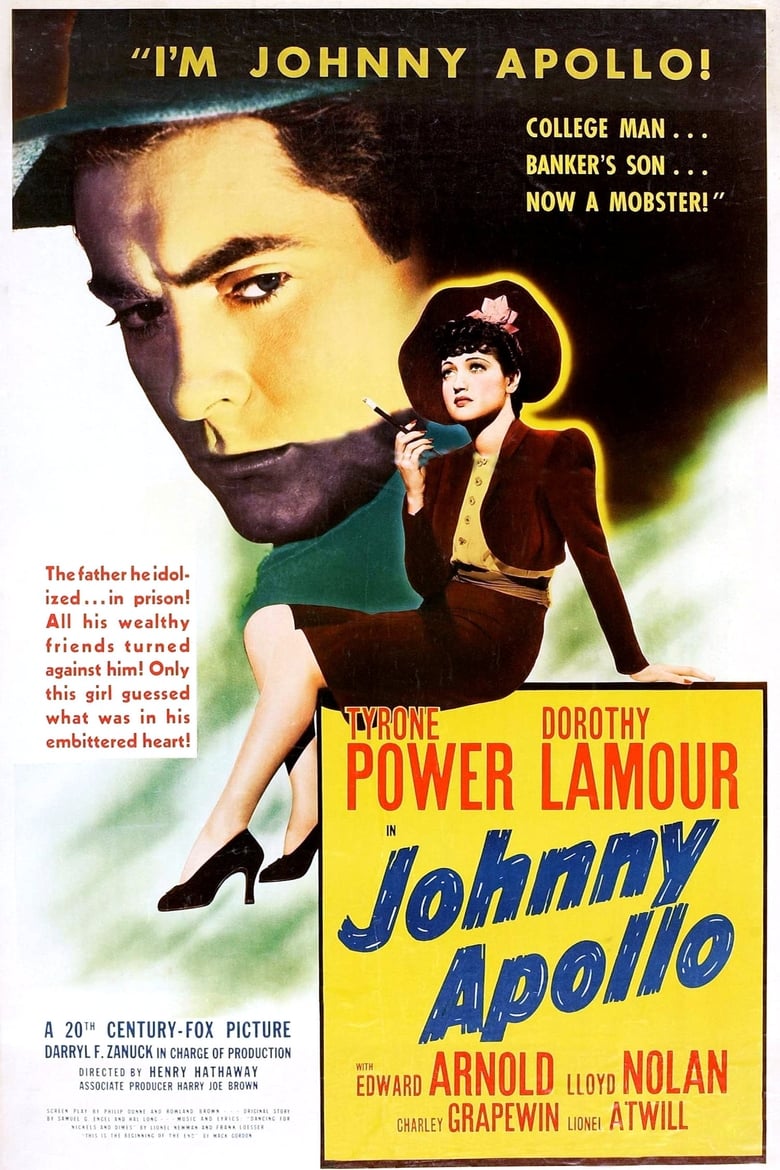
Johnny Apollo 1940
1940 20th Century Fox
★★★☆☆ Notable
Film Noir · 94 minutes · Black & White

Johnny Apollo

Directed by Henry Hathaway
Year 1940
Runtime 94 min
Studio 20th Century Fox
TMDB 6.9 / 10
"A son trades his name for his father's sins, and finds the price higher than either of them expected."

Robert Cain Jr. is a privileged college man whose world collapses when his father, a respected Wall Street broker, is convicted of embezzlement and sent to prison. Disowned by his fiancée's family and frozen out of legitimate employment, Robert sheds his name along with his prospects, reinventing himself as Johnny Apollo – a small-time runner for racketeer Mickey Dwyer. Edward Arnold plays the elder Cain with the particular heaviness of a man who built something real and then quietly destroyed it; Tyrone Power's transition from entitled son to underworld operative is the film's central dramatic engine.

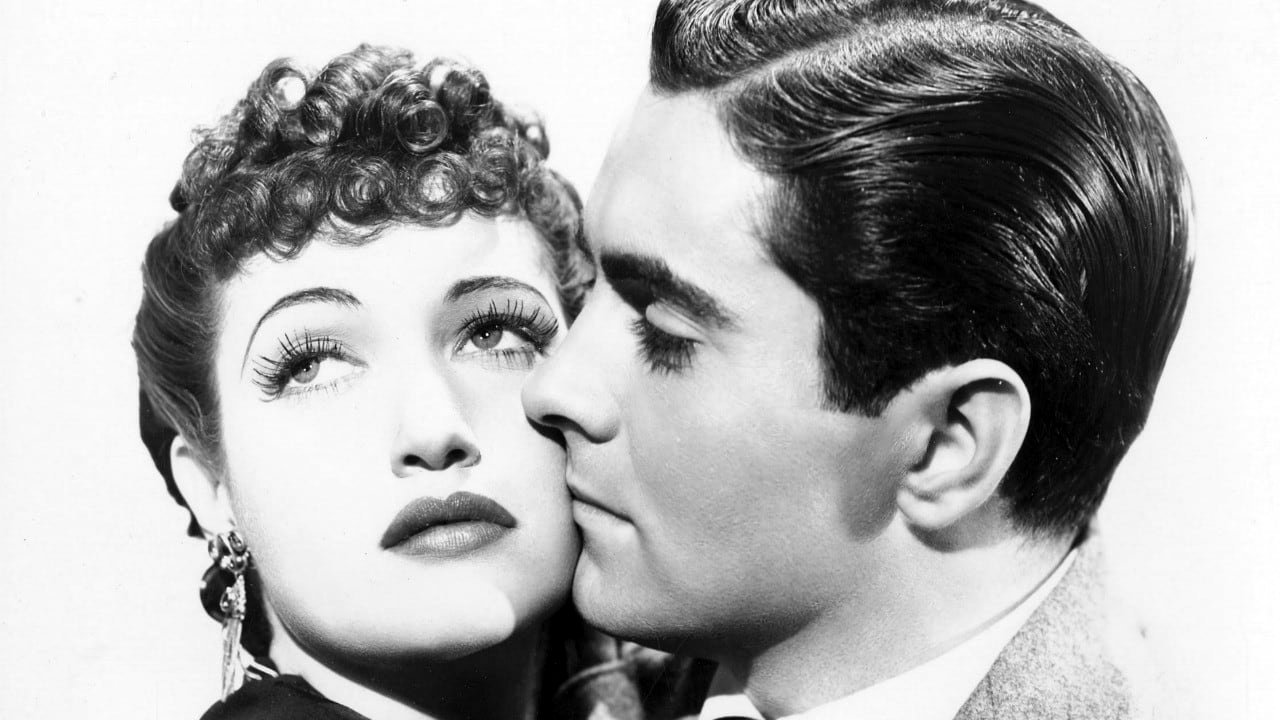
Johnny Apollo's ambitions within Dwyer's organization bring him into contact with Lucky Dubarry, the racketeer's singer and companion, played by Dorothy Lamour in a register considerably darker than her road-picture work. The relationship between Johnny and Lucky develops against a background of competing loyalties – his drive to earn enough to secure his father's release conflicts with Dwyer's interests and the machinations of crooked attorney Jim McLaughlin, played by Lionel Atwill. Lloyd Nolan's Mickey Dwyer occupies that specific noir position: the criminal with his own code, neither ally nor enemy, but an accelerant.

Johnny Apollo arrives at the outer edge of what the Production Code permits in its portrait of institutional corruption and social determinism. The film belongs to that strand of late-Depression crime drama in which the descent into criminality is not a moral failure so much as a structural inevitability – the legal world and the illegal one mirror each other closely enough that the distinction loses force. Hathaway stages this argument with economy, and the film's final movement tests whether the machinery of crime and punishment allows for anything resembling redemption.
Classic Noir

Johnny Apollo occupies a transitional position in American crime cinema – produced the same year as Stranger on the Third Floor and preceding the acknowledged noir cycle, yet fully fluent in the genre's moral vocabulary. Henry Hathaway, more often associated with procedural realism, works here with surprising psychological compression. The film's real subject is the porousness of class boundaries under economic pressure: Robert Cain Jr.'s fall is not a consequence of character weakness but of a social contract that withdraws itself the moment respectable money proves dirty. Power, then primarily a romantic lead, handles the gradual coarsening of his character without sentimentality. Arnold's performance as the disgraced father carries genuine weight, and the casting of Nolan – always reliable in the zone between menace and pragmatism – gives the underworld scenes a texture that avoids caricature. The film does not fully escape the period's requirement for moral resolution, but it earns its ending more honestly than most of its contemporaries.

– Classic Noir
3 ★★★☆☆ Notable
Credits

The Crew

DirectorHenry Hathaway
ScreenplayHal Long
CinematographyArthur C. Miller
MusicCyril J. Mockridge
EditingRobert Bischoff
Art DirectionRichard Day
CostumesGwen Wakeling
Performances

The Cast

Close Reading

The Signature Scene

Johnny Apollo – scene
The Prison Visit Father and Son, Divided by Glass

Arthur C. Miller frames the visiting-room exchange through a wire-reinforced partition that bisects the image horizontally at mid-frame. The elder Cain sits on one side in the flat institutional light that falls evenly and without mercy on the prison set; the son stands on the other in a slightly warmer register, though the difference is minor enough to read as ironic. Miller holds the two-shot long enough that the architecture of separation becomes the scene's actual subject. There is no shadow work here in the expressionist sense – the effect is achieved through denial of shadow, through a lighting scheme that removes the flattering gradation ordinarily used to dignify faces on screen.

The scene crystallizes the film's central argument about inheritance. The father passed on a name, a position, and ultimately a crime; the son has now assumed all three in different forms. The partition functions simultaneously as a literal barrier and as a visual statement about the impossibility of clean separation between the two men's trajectories. Whatever Johnny Apollo has become, the film insists that it was shaped on this side of that glass as much as anywhere in Dwyer's operation.

Visual Language

The Cinematography

🎞️
Arthur C. Miller – Director of Photography

Arthur C. Miller's work on Johnny Apollo is notable for its resistance to the more theatrical shadow configurations that would come to define the genre visually. Miller, who would win Academy Awards for How Green Was My Valley and Anna and the King of Siam, brings to this material a preference for controlled naturalism over expressionist display. The prison sequences use flat, sourceable institutional light to strip faces of the romantic softness standard for studio production; the nightclub scenes modulate toward warmer, more diffuse sources without becoming decorative. Miller shoots the city exteriors with a documentary precision that grounds the more melodramatic story elements. His lens choices favor moderate focal lengths that maintain spatial coherence within the frame – there is little of the distortion sometimes used to signal psychological instability. The cinematography serves the film's moral logic by insisting that this world looks ordinary, that corruption and legitimacy share the same unremarkable light.

In the Catalogue

Themes & Motifs

Availability

Where to Watch

Also in the Directory

See Also