Films People Pull a Fast One Night Beat Reading Room On TV Shop
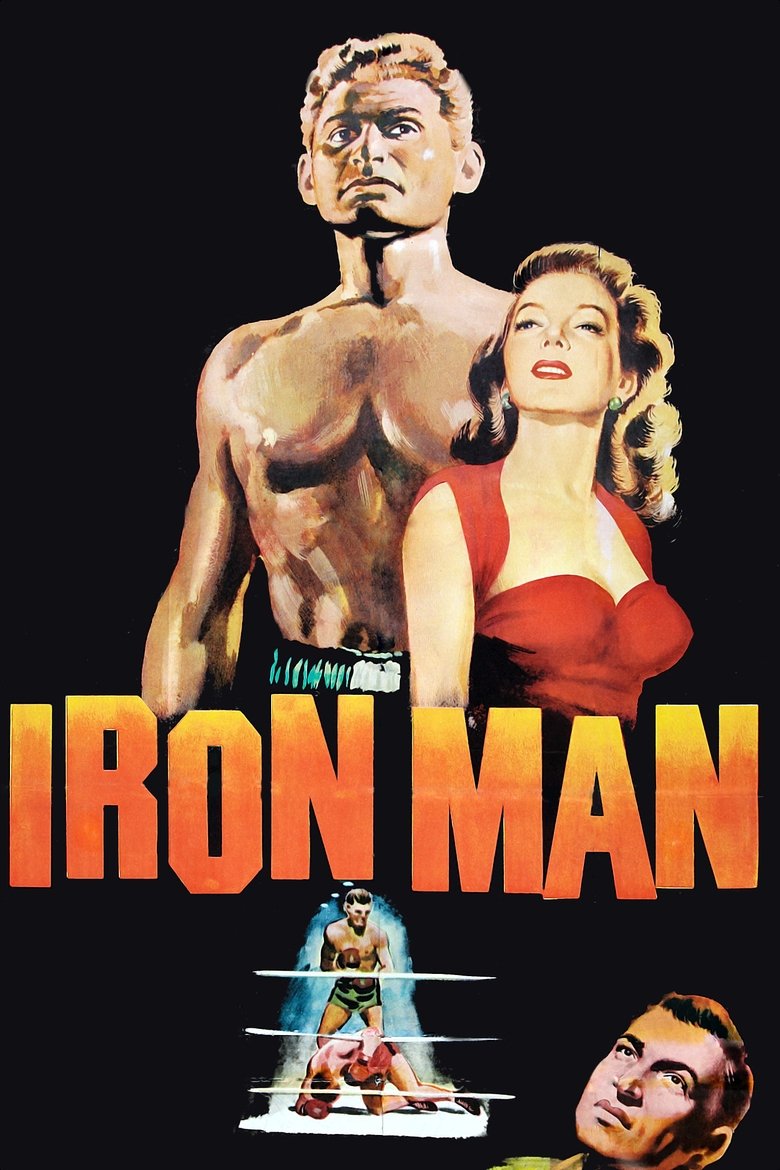
Iron Man 1951
1951 Universal International Pictures
★★★☆☆ Notable
Film Noir · 82 minutes · Black & White

Iron Man

Directed by Joseph Pevney
Year 1951
Runtime 82 min
Studio Universal International Pictures
TMDB 6.2 / 10
"In the ring, a man sells himself; outside it, others collect the price."

Coke Mason (Jeff Chandler) is a coal miner with fists enough to fight his way out of the pits and into the professional boxing ranks. His older brother George (Stephen McNally) recognizes the commercial value in that raw power and assumes the role of manager, steering Coke toward a career that promises money, status, and escape from the life they both know. Rose Warren (Evelyn Keyes), a woman of sharp intelligence and limited illusions, enters the picture and marries Coke, though the precise nature of her feelings – and George's designs on her – remain deliberately unresolved.

George Mason is the film's organizing corruption. He maneuvers Coke into fixed fights, negotiates with syndicate figures who treat boxers as inventory, and keeps his brother dependent through a combination of flattery and controlled information. Rose comes to understand George's operation before Coke does, and her position – loyal wife, clear-eyed witness, trapped participant – gives the film much of its moral tension. Tommy 'Speed' O'Keefe (Rock Hudson), a rival fighter, represents the road not taken: ambition without the encumbrance of a predatory family claim.

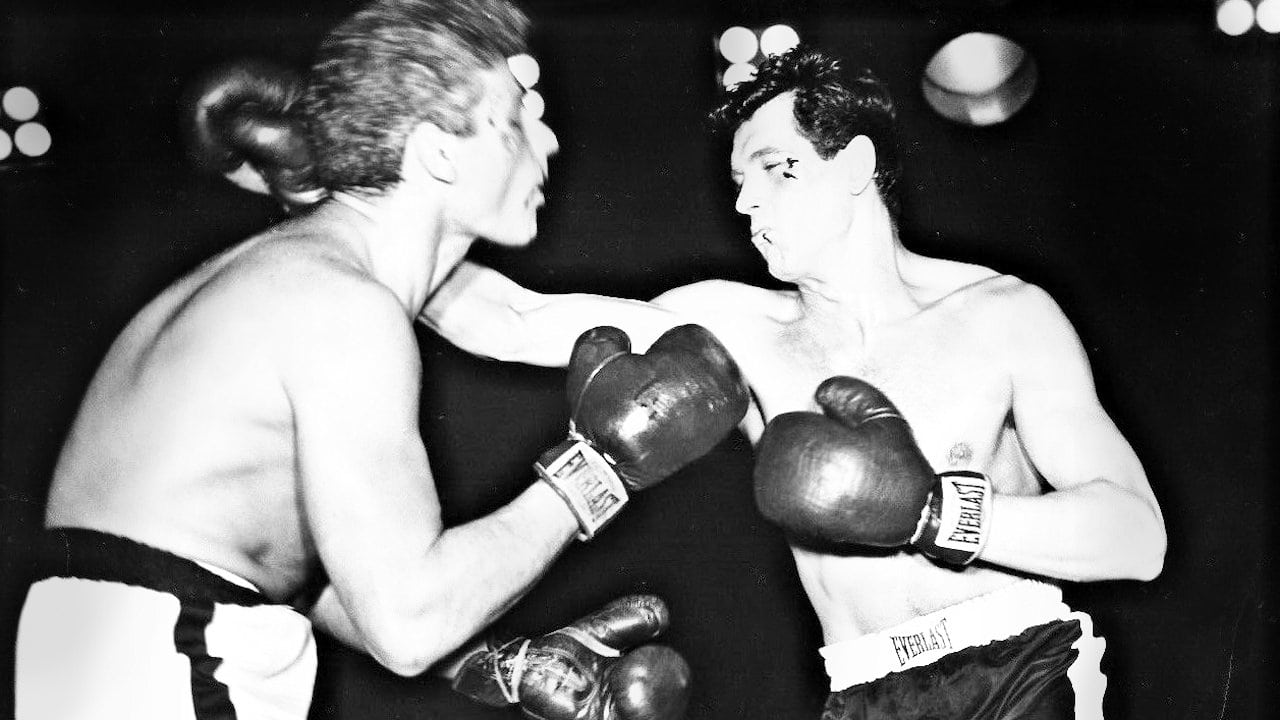
Iron Man belongs to a cycle of postwar boxing noirs in which the sport serves as a transparent model for broader systems of exploitation – the promoter, the fixer, the crowd, the compliant athlete. Joseph Pevney frames the ring as a space where physical courage is systematically monetized and the fighter's body becomes the instrument of other men's profit. The film is less interested in the mechanics of corruption than in how a man of limited self-knowledge navigates a world that has already decided his value.
Classic Noir

Iron Man (1951) is the third film adaptation of W.R. Burnett's 1930 novel, and the most noir-inflected of the three. Joseph Pevney, working with a Universal International contract cast that included Jeff Chandler at his most physically convincing and Stephen McNally at his most controlled, produces a picture that understands boxing not as spectacle but as economic system. Chandler's Coke Mason is a particular type: strong, not unintelligent, but constitutionally unable to perceive the architecture of his own exploitation until it is too late to matter. McNally's George operates in that familiar noir register of the man who converts affection into leverage. Evelyn Keyes carries the film's ethical center without being reduced to a cipher; Rose sees clearly and is punished for it in the way the genre typically punishes female lucidity. Rock Hudson, still in the process of being constructed as a screen presence, is used here effectively in a secondary role that does not demand more than his skills at the time could provide. The film does not transcend its B-picture constraints, but it works honestly within them.

– Classic Noir
3 ★★★☆☆ Notable
Credits

The Crew

DirectorJoseph Pevney
ScreenplayGeorge Zuckerman
CinematographyCarl E. Guthrie
MusicDaniele Amfitheatrof
EditingRussell F. Schoengarth
Art DirectionBernard Herzbrun
CostumesBill Thomas
ProducerAaron Rosenberg
Performances

The Cast

Close Reading

The Signature Scene

Iron Man – scene
The Dressing Room, Pre-Fight Light Through a Doorway

Carl E. Guthrie positions the camera at a low angle in the narrow dressing room, the overhead lamp casting a cone of harsh white light directly onto Chandler's shoulders and the back of his neck while the faces of the men around him – handlers, George, the syndicate's representative – remain in various degrees of shadow. The composition places Coke at the visual center but drains him of agency; the light that isolates him also pins him. The frame is crowded without being busy, and Guthrie holds the shot long enough that the geometry of the room – its low ceiling, its single exit – registers as deliberate confinement.

What the scene argues is what the film has been building toward: Coke's physical eminence and his structural helplessness are not in contradiction, they are the same condition. The men in shadow do not need to threaten him because the architecture does it for them. His compliance in what follows is not weakness but the logical result of a situation the film has rendered with uncommon spatial clarity.

Visual Language

The Cinematography

🎞️
Carl E. Guthrie – Director of Photography

Carl E. Guthrie's work on Iron Man operates within the Universal house style of the early 1950s – studio interiors, controlled lighting, efficient setups – but applies those constraints with genuine discipline. Guthrie favors tight, high-contrast pools of light that define space by what they exclude rather than what they reveal, a technique well suited to a story in which the principal character is the last to understand his circumstances. The fight sequences are shot with a newsreel flatness that deliberately denies them glamour; the crowd is a noise and a blur, and the ring itself is lit from above in a way that leaves the corners dark. In the domestic scenes, Guthrie allows slightly more fill but maintains a quality of overhead directionality that keeps interiors feeling supervised rather than intimate. The cinematography never editorializes – it records, and in recording, implicates.

In the Catalogue

Themes & Motifs

Availability

Where to Watch

Also in the Directory

See Also