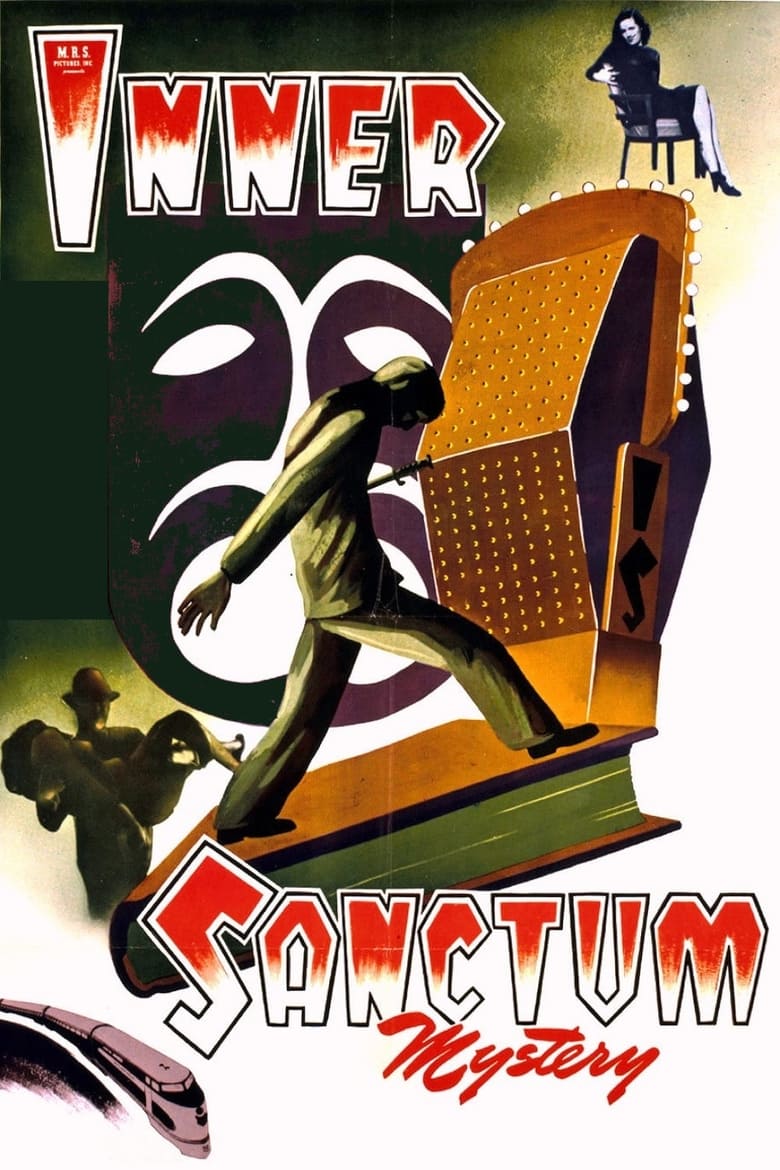
Harold Dunlap boards a late train bound for a small town, carrying the weight of a crime he has committed and the thin hope that distance might protect him. When the train is delayed by a snowstorm, he is stranded at a rural way station with a handful of strangers, each one a potential witness or threat. Among them is Jean Maxwell, a young woman whose attention draws Dunlap into an uneasy intimacy he cannot afford.
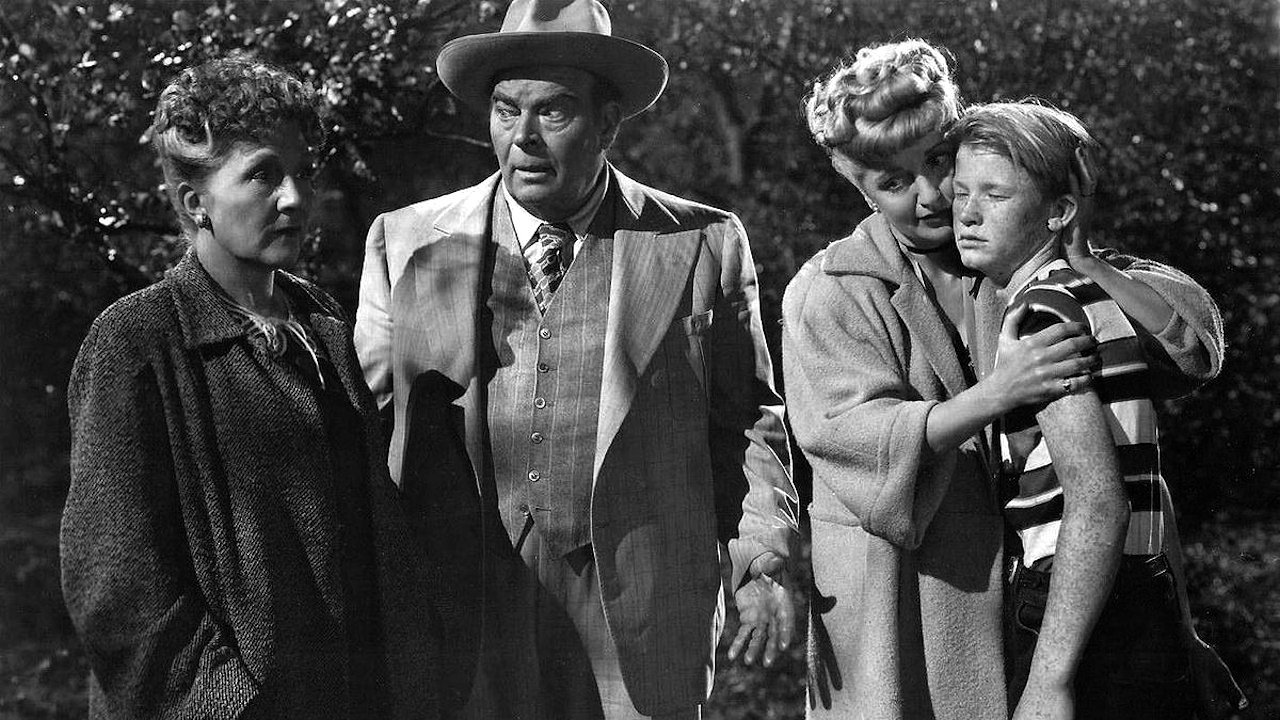
As the hours accumulate, the other stranded passengers begin to close in on Dunlap in ways both deliberate and accidental. Mrs. Mitchell, a watchful older woman, and the peculiar Dr. Valonius observe more than they let on, while the local handyman Willie provides an unsettling comic counterpoint to the tension. Ruth Bennett and her son Mike represent the ordinary world Dunlap has forfeited, and their presence sharpens his sense of what he stands to lose.
Inner Sanctum works as a chamber noir, confining its moral drama to a single location and a compressed timeframe. The film belongs to a cycle of low-budget B-noir productions from the late 1940s that substituted atmosphere and psychological pressure for spectacle, testing how much dread a limited setting could sustain before the walls close in on a guilty man.
Inner Sanctum occupies a specific and honest position in the B-noir economy of the late 1940s. Produced by the minor outfit M.R.S. Pictures and running a tight sixty-two minutes, it makes no pretense of competing with the prestige noirs of its era. What it offers instead is a controlled study in confined guilt – a single snowbound location, a small cast of character actors working well within their ranges, and a narrative logic that owes more to stage drama than to the open-road fatalism of larger productions. Charles Russell brings a credible, worn quality to Dunlap, and Lee Patrick, always reliable in supporting work, lends Ruth Bennett more substance than the role strictly requires. Lew Landers, a director whose career spanned serials and programmers across three decades, manages the pacing with professional economy. The film's value today is partly archaeological: it documents how studios at the margins of the industry absorbed and reproduced noir conventions, stripping them to their functional core and finding, occasionally, that the skeleton holds.
– Classic Noir
Allen G. Siegler frames Dunlap in medium shot against a wall that offers him no cover, the overhead practical lamp casting a hard pool of light that stops well short of the room's edges. The other passengers exist in partial shadow at the frame's periphery, present but undefined, their faces readable only when they choose to move. The camera holds its position with deliberate stillness, refusing to give Dunlap the relief of movement, and the depth of the room behind him suggests a space that observation could enter from any direction.
The scene makes the argument that the stranded location is not merely a plot convenience but a moral condition. Dunlap cannot leave, cannot control who watches him, and cannot know which pair of eyes in the room understands what he has done. The stillness of the framing translates his internal paralysis into visual fact, and the light that isolates him without illuminating anyone else positions guilt as a condition of exposure rather than discovery.
Allen G. Siegler, a cinematographer whose studio career stretched back to the silent era, brings a practiced efficiency to Inner Sanctum that suits both the budget and the material. Working almost entirely on interior studio sets, Siegler relies on high-contrast lighting setups that exaggerate the division between the inhabited foreground and the unresolved dark of background space. He avoids the more expressionistic angles associated with prestige noir, preferring instead a flat, watchful framing that keeps the camera at eye level and lets shadow do the work of unease. Practical light sources – lamps, a single window – are used to motivate the lighting geometry and give the confined space a sense of physical authenticity. The snowbound exterior, glimpsed sparingly, reads as genuine isolation rather than mere backdrop. What Siegler achieves within these constraints is a visual consistency that reinforces the film's central argument: there is no angle from which a guilty man disappears.
Inner Sanctum is in the public domain and available for free streaming and download here, though print quality varies by upload.
TubiFreeTubi periodically carries public domain B-noirs of this period; availability may vary and is worth confirming before seeking elsewhere.
Amazon Prime VideoSubscriptionMay appear through third-party classic film channels on Prime; check current availability as catalogue shifts frequently.