Films People Pull a Fast One Night Beat Reading Room On TV Shop
Incident 1948
1948 Monogram Pictures
★★★☆☆ Notable
Film Noir · 66 minutes · Black & White

Incident

Directed by William Beaudine
Year 1948
Runtime 66 min
Studio Monogram Pictures
TMDB 5.4 / 10
"A chance encounter on a dark street leaves two men bound by violence and one woman caught between them."

In postwar Los Angeles, Joe Downey and Slats Slattery are small-time drifters whose one bad night spirals into something neither can walk away from. After a street altercation leaves a man dead, the two find themselves entangled with Marion Roberts, a woman with enough sense to see through them and enough feeling to stay involved. The incident of the title is quick, ugly, and almost accidental – which is precisely what makes it dangerous.

As the police close in under the steady pressure of Lieutenant Madigan, the web of complication widens to include Joan and Bill Manning, a couple whose own secrets make them unreliable allies, and Nails, a figure whose criminal connections suggest the deeper machinery behind what appeared to be an isolated act. Herman Rinsel, a neighborhood druggist, functions as an unwilling link in a chain of information that nobody wants traced. Allegiances shift not from cunning but from fear, which gives the film its particular texture of low-grade dread.

Incident belongs to the tradition of Monogram B-noirs that locate moral pressure not in elaborate plotting but in the slow constriction of options available to ordinary men. The film works the margins of the genre – no femme fatale, no private investigator, no grand criminal scheme – and is more honest for it. What remains is a study in how quickly a life can narrow.
Classic Noir

Incident is the kind of film the noir canon tends to overlook precisely because it asks so little of spectacle. Produced at Monogram – a studio whose budgets enforced economy in every department – William Beaudine directs without flourish, which suits the material. The story concerns men without resources, options, or illusions, and the film's refusal to inflate their situation into tragedy is a form of respect. Warren Douglas, who also wrote the screenplay, brings an unsentimental intelligence to Joe Downey; there is no self-pity in the performance, only the recognition that the machinery has already started. Robert Osterloh as Slats is the more volatile element, a man whose instincts are always slightly wrong. What Incident reveals about its era is the postwar sense that reintegration into civilian life carried its own dangers – that the men who came back were not always equipped for the peace they returned to. At sixty-six minutes, the film makes no wasted moves.

– Classic Noir
3 ★★★☆☆ Notable
Credits

The Crew

DirectorWilliam Beaudine
ScreenplayHarry Lewis
CinematographyMarcel Le Picard
EditingAce Herman
Art DirectionDave Milton
ProducerHall Shelton
Performances

The Cast

Close Reading

The Signature Scene

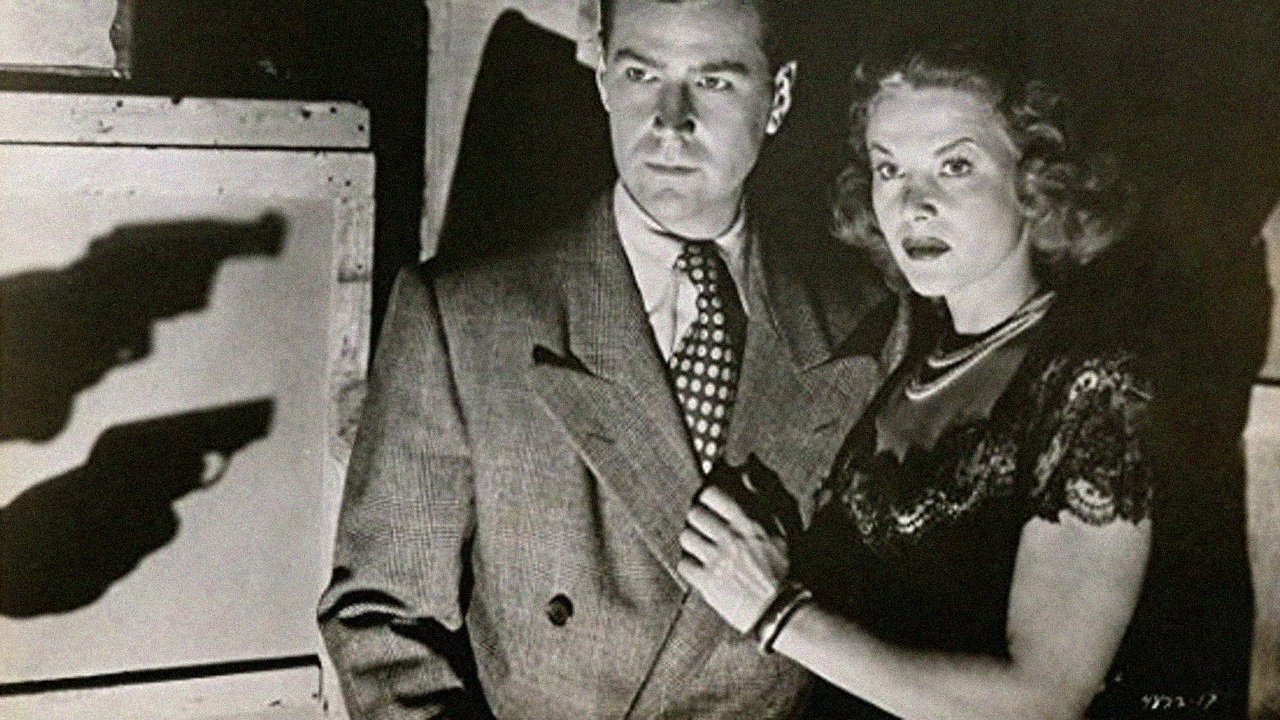
Incident – scene
The Drugstore Confrontation Light Through a Pharmacy Window

The scene is composed in tight interior space, the counter running diagonally across the frame so that Rinsel is pinned between the foreground edge and the two men behind it. Marcel Le Picard uses the overhead pharmacy lighting against his own shadows, letting the practical fixtures cast pools that stop short of the corners, which remain unresolved. The camera stays at middle distance – no expressionist tilts, no theatrical close-ups – and the flatness of that choice produces its own unease. What should be a mundane errand reads as an interrogation.

The scene argues, quietly, that ordinary spaces are the true sites of postwar coercion. Rinsel is not a criminal; he is a man who knows something and cannot afford to say so. His discomfort makes the audience aware that the threat in this film does not travel in limousines – it walks into neighborhood shops in daylight. That democratization of danger is what Incident, at its clearest moments, understands about the world it is depicting.

Visual Language

The Cinematography

🎞️
Marcel Le Picard – Director of Photography

Marcel Le Picard's cinematography on Incident operates within the constraints that Monogram routinely imposed – limited shooting days, studio interiors standing in for city locations, minimal lighting packages – and turns those constraints into a visual argument. Le Picard favors mid-range lenses that compress without distorting, keeping characters in the same focal plane as the walls closing around them. His shadow work is not decorative; shadows fall where the script places guilt, on peripheral figures and doorframes rather than on the protagonists, who are filmed in a flat, unheroic light that denies them the chiaroscuro glamour of bigger-budget noir. Street exteriors, when they appear, feel genuinely nocturnal rather than studio-lit, suggesting at least some location work or, more likely, a disciplined use of low-key fill on the backlot. The overall visual register is one of diminishment – a world rendered in grays that refuse to organize themselves into meaning, which is precisely where the film locates its moral argument.

In the Catalogue

Themes & Motifs

Availability

Where to Watch

Also in the Directory

See Also