Released from prison on the strength of a deal brokered by an ailing crime boss, Roy Earle – a veteran stick-up man out of step with a changed world – drives west from Chicago toward the Sierra Nevada. His assignment is to coordinate a hotel robbery in the California mountains alongside a crew of younger, less disciplined thieves: the volatile Babe, the nervous Red, and the inside man Mendoza, whose reliability is already in doubt. Along the way Roy stops at a roadside camp and becomes drawn to the Goodhue family, a dirt-poor clan traveling with their club-footed granddaughter, Velma.
Roy's attachment to Velma – part protectiveness, part longing for something clean in a life without it – sits uneasily beside his growing relationship with Marie, a woman in the camp who attaches herself to him with a directness he cannot quite deflect. The heist itself, when it comes, goes badly: the crew fractures, violence intrudes, and the proceeds fail to materialize in any useful form. Velma, whose surgery Roy has quietly financed, rejects him without sentiment. The syndicate's patience narrows. Roy finds himself moving toward the mountains with Marie and a borrowed dog, reduced to a fugitive identity he can no longer separate from who he always was.
I Died a Thousand Times is a remake of Raoul Walsh's High Sierra (1941), transposing Humphrey Bogart's Mad Dog Earle into the rawer register of Jack Palance's physicality and CinemaScope's wide-frame capacity for landscape as doom. The film belongs to a strand of mid-decade noir in which the criminal protagonist is observed with neither glamour nor contempt but as a man whose psychology has been formed entirely by systems – institutional and criminal – that have left him without the equipment for any other life. The mountains are not escape; they are the argument's conclusion.
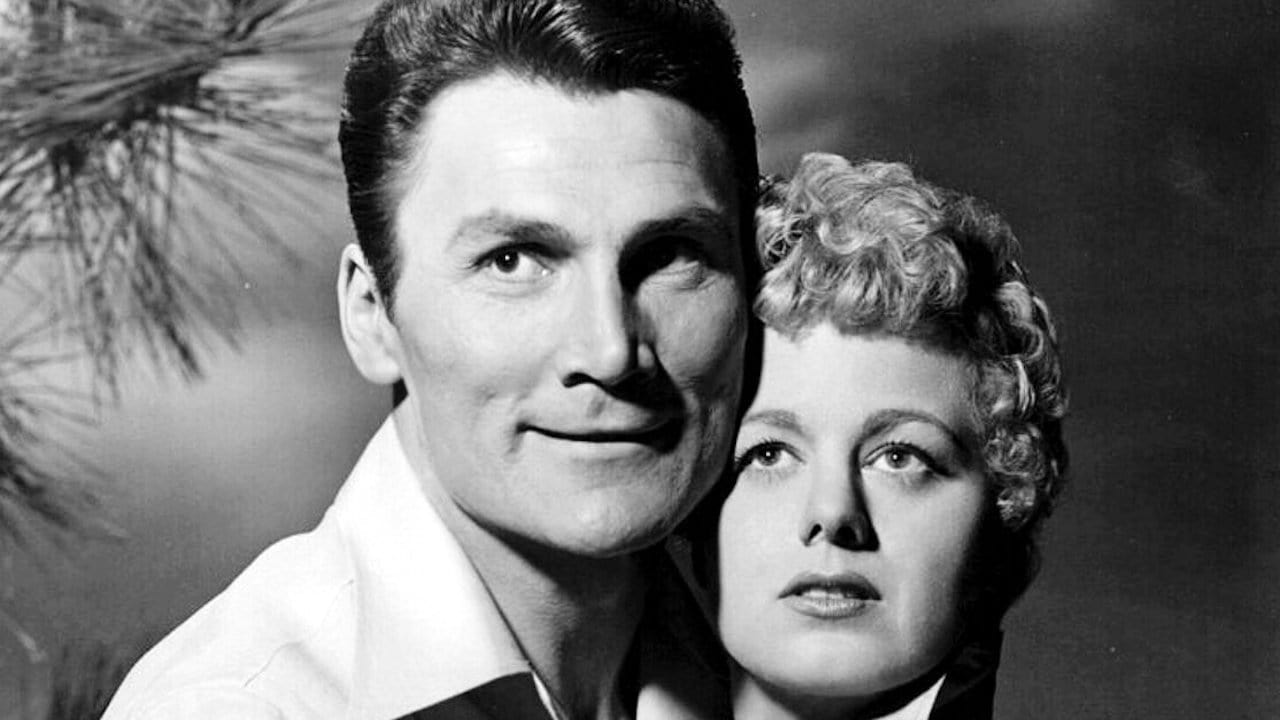
To measure I Died a Thousand Times against High Sierra is necessary but insufficient. Stuart Heisler's film is not simply a color CinemaScope upgrade of Walsh's original; it is a 1955 reading of the same material, and that distance of fourteen years registers in every scene. Palance's Earle lacks Bogart's laconic romanticism – he is harder, more solitary, his tenderness toward Velma less poignant than unsettling in its desperation. Shelley Winters, working in a register she had refined through the early decade, gives Marie a practical intelligence that the script occasionally underuses but never quite suppresses. Lee Marvin's Babe is a compact study in postwar male volatility. Where the film earns its place in the genre is in its treatment of loyalty as a form of cognitive error: every alliance Roy forms is a miscalculation, and the wide Sierran landscape that McCord opens up around him makes isolation not dramatic but simply factual. The film is less tragic than clinical, and that coolness is its defining quality.
– Classic Noir
McCord composes the final Sierra sequence in CinemaScope frames that refuse to compress the distance between Roy and the cordon of police below. The rocks are lit in hard California afternoon light that casts no flattering shadow – everything is exposed, granular, tactile. The camera holds wide, positioning Palance as a figure caught between vertical stone and open sky, neither element offering shelter. When the lens moves closer, it is not to intimate but to confirm: the face is already reading the arithmetic of the situation.
The scene does not argue for Roy's nobility or his waste. It presents a man who has arrived at the only destination his choices permitted. Marie below, the dog beside him, the riflemen arranged below in bureaucratic patience – the frame holds all of this without hierarchy. The film's central argument, that Roy's life has been a sequence of closures mistaken for options, finds its plainest statement here, in a landscape too large and too indifferent to provide anything as consoling as meaning.
Ted D. McCord's work on I Died a Thousand Times takes the CinemaScope ratio seriously in ways that studio-era widescreen cinematography did not always bother to do. Rather than using the extended horizontal frame for spectacle, McCord employs it to isolate: characters are positioned at frame edges, flanked by empty space that reads as social fact rather than compositional flourish. The Sierra locations give him light he could not manufacture on a stage – high-altitude sun that strips texture from faces and flattens moral ambiguity into something more like exposure. Interior scenes in the resort hotel and the roadside camp are lit with a controlled naturalism, practical sources anchoring the setups without the expressionist pooling that an earlier decade's noir would have reached for. The color palette is deliberate in its restraint: earth tones and muted greens that keep the film from the warmth that Technicolor could impose. McCord's choices serve a story whose logic is geographic and behavioral rather than psychological – the camera does not probe, it places.
TCM holds deep Warner Bros. library rights and is the most reliable broadcast source for this title in a properly framed presentation.
MaxSubscriptionAs a Warner Bros. production, the film has appeared on Max; availability shifts seasonally, so confirm before seeking.
TubiFree (Ad-Supported)Tubi has carried this title at no cost, though print quality varies and availability cannot be guaranteed at time of reading.