In a quiet riverside town, failed novelist Stephen Byrne (Louis Hayward) makes unwanted advances toward Emily Gaunt (Dorothy Patrick), his housemaid, while his wife Marjorie (Jane Wyatt) is away for the evening. When Emily resists and threatens to expose him, Stephen strangles her in a moment of panicked rage. Desperate to conceal the crime, he enlists his brother John (Lee Bowman) – an upright, respected figure who has long harbored feelings for Marjorie – to help him sink the body in the river outside their house.
John, morally compromised by his complicity, watches helplessly as Stephen manipulates the investigation and turns suspicion toward a local drifter. Stephen's wife Marjorie remains loyal to her husband even as unease accumulates, while John's guilt and his suppressed love for Marjorie place him in an increasingly untenable position. Stephen, far from crumbling under pressure, begins to flourish – drawing grotesque creative energy from his crime and channeling it into a new novel that eerily mirrors the murder itself.
House by the River uses the conventions of the domestic crime thriller to expose the psychology of a man who finds self-justification in art, mapping the corruption of a household against the slow, indifferent movement of the river that carries its secrets. The film belongs to that strain of noir less concerned with investigation than with moral rot – a portrait of guilt displaced, transferred, and ultimately devoured.
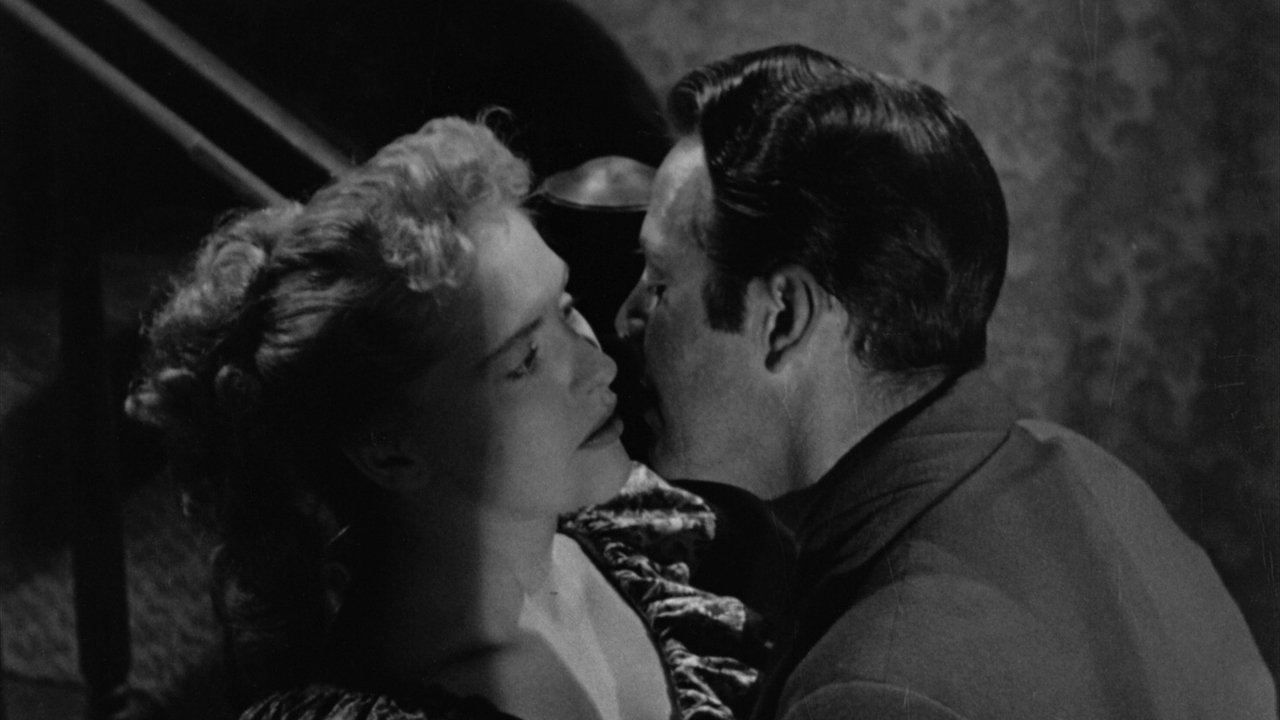
Fritz Lang made House by the River under difficult conditions – a low budget at Republic Pictures, a studio not known for nurturing serious cinema – and the film bears those constraints while also transcending them in unexpected ways. Louis Hayward's Stephen Byrne is one of the more unsettling protagonists in Lang's American work: not a man destroyed by fate or femme fatale, but one who experiences murder as a kind of liberation. Lang is interested here in the aestheticization of evil, a theme that connects the film obliquely to earlier work like M and to the broader postwar concern with the banality of cruelty. Jane Wyatt, cast against her warm television image, brings a controlled unease to a role that could easily have been passive. The film lacks the visual resources of Lang's studio films at Fox or Paramount, but Edward Cronjager's photography finds genuine menace in the fog-draped river and the claustrophobic domestic interiors. It is a minor Lang, but minor Lang is still a precise, uncomfortable experience.
– Classic Noir
Lang and Cronjager frame the disposal sequence with a flat, almost affectless geometry – the two brothers moving through near-total darkness toward the riverbank, the water itself barely visible, a faint light catching the surface at a low angle that renders depth ambiguous. The wrapped body is carried horizontally through the frame, held between two vertical figures, a composition that feels more like a rite than a crime. When it enters the water, the camera holds on the disturbed surface rather than cutting away, the ripples spreading into the blackness.
The scene's refusal of conventional dramatic tension is the point. Stephen does not tremble or hesitate; he is already elsewhere, already narrating. What Lang reveals is not the mechanics of concealment but the moment a man crosses into a self-authored version of events – the river becomes less a hiding place than an accomplice, a collaborator in the story Stephen is beginning to tell himself about who he is and what he has done.
Edward Cronjager brings a restrained but purposeful visual grammar to House by the River, working within the limitations of a Republic Pictures budget to construct an atmosphere of slow dread rather than expressionist shock. His lighting avoids the high-contrast chiaroscuro of classic noir in favor of a more diffuse, fog-softened darkness – light that seems to seep rather than cut, appropriate for a film about guilt that spreads rather than erupts. Studio interiors are dressed with deep shadow at the edges of the frame, keeping Stephen's domestic world half-obscured, as if the house itself is complicit. The river sequences rely on practical darkness punctuated by low-source reflections, a technique that keeps the geography of crime genuinely uncertain. Cronjager's lens choices favor middle distances that deny intimacy without providing detachment, placing the viewer in the uncomfortable position of observer rather than confidant – which is precisely where Lang's moral logic demands they sit.
Available to stream at no cost; picture quality is serviceable for a film of this vintage, making it the most accessible entry point.
Archive.orgFreeA public domain print is available; quality varies by upload, but the film's status makes this a legitimate and cost-free option.
KanopyFree with library cardCheck availability through your local library system; Kanopy's prints tend to be more stable than Archive.org uploads.