Films People Pull a Fast One Night Beat Reading Room On TV Shop
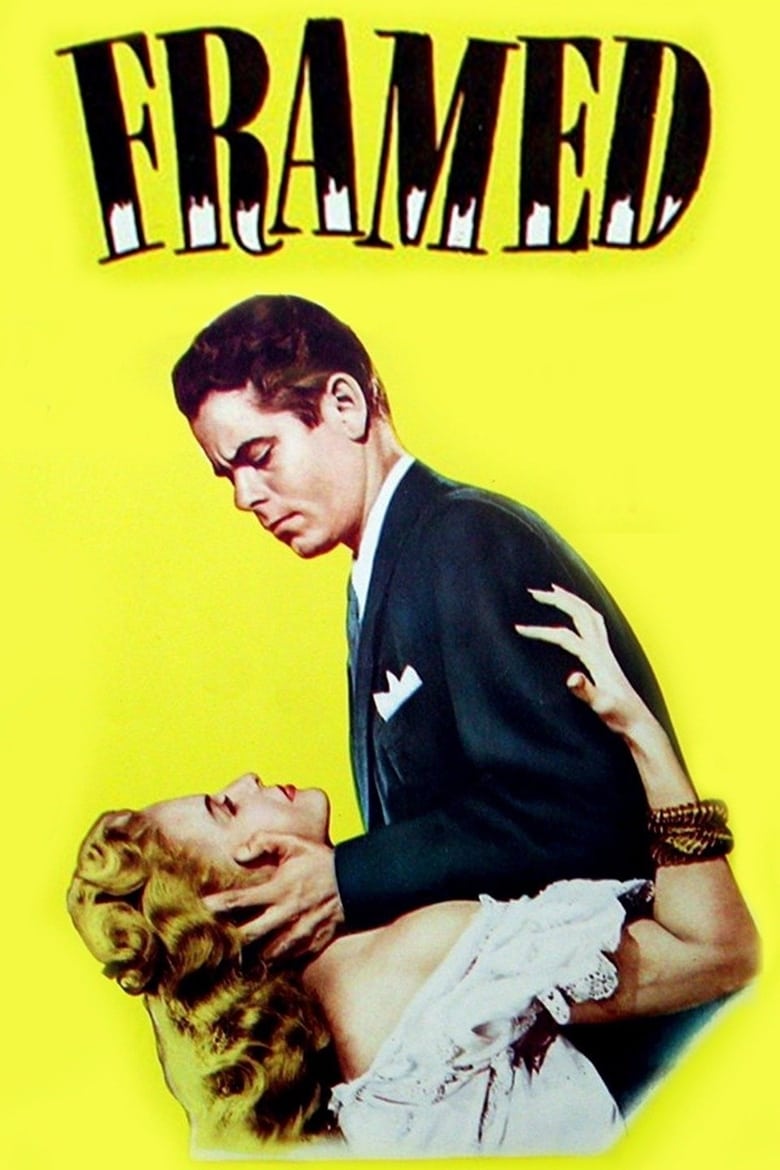
Framed 1947
1947 Columbia Pictures
★★★☆☆ Notable
Film Noir · 82 minutes · Black & White

Framed

Directed by Richard Wallace
Year 1947
Runtime 82 min
Studio Columbia Pictures
TMDB 6.5 / 10
"A woman with a plan finds the right man to ruin."

Mike Lambert, a down-on-his-luck mining engineer, rolls into a small California town behind the wheel of a runaway truck, his brakes gone and his prospects no better. He lands in a diner where Paula Craig, a waitress with cool eyes and a warm manner, takes an immediate interest in the stranger. Paula is not what she appears, and neither is the town, which hides a network of convenience and quiet corruption beneath its ordinary surface.

Paula is already entangled with Steve Price, a bank officer who has embezzled a substantial sum and needs a patsy to absorb the consequences. The scheme is precise: Lambert will be made to look guilty of a crime he did not commit, leaving Price and Paula free to disappear with the money. What the plan does not account for is Lambert's stubborn refusal to behave like a man who suspects nothing, and Paula's calculation slowly acquiring an inconvenient emotional charge. Jeff Cunningham, the local sheriff, circles the edges of the situation with the unhurried menace of a man who has seen worse.

Framed belongs to the mid-forties cycle of noir built around the femme fatale as operational intelligence rather than mere temptation. Paula Craig is a strategist first, and the film's tension derives from watching her scheme collide with contingency. The picture is compact and unsparing, content to work within its budget constraints while keeping its moral geometry clean and its ending without sentimentality.
Classic Noir

Framed is a minor but coherent entry in Columbia's noir output, sitting comfortably alongside the studio's more celebrated titles without claiming their ambitions. What distinguishes it is Janis Carter's performance as Paula Craig, one of the more cold-blooded femmes fatales of the cycle – not a woman destroyed by passion but one who deploys it as instrument. Richard Wallace directs without flourish, which suits the material; the film's plainness is functional, not accidental. Glenn Ford plays Lambert with the kind of decent-man bewilderment he would refine across the decade, and Barry Sullivan's Steve Price carries genuine menace beneath a presentable surface. The film's real argument concerns the mechanics of moral compromise: how ordinary-looking people construct elaborate betrayals not out of desperation but out of appetite. Released in 1947, at the height of postwar disillusionment, Framed reflects an era preoccupied with the discovery that wartime sacrifice had not produced a cleaner world, only a more practiced one.

– Classic Noir
3 ★★★☆☆ Notable
Credits

The Crew

DirectorRichard Wallace
ScreenplayJohn Patrick
CinematographyBurnett Guffey
MusicMarlin Skiles
EditingRichard Fantl
Art DirectionCarl Anderson
CostumesJean Louis
ProducerJules Schermer
Performances

The Cast

Close Reading

The Signature Scene

Framed – scene
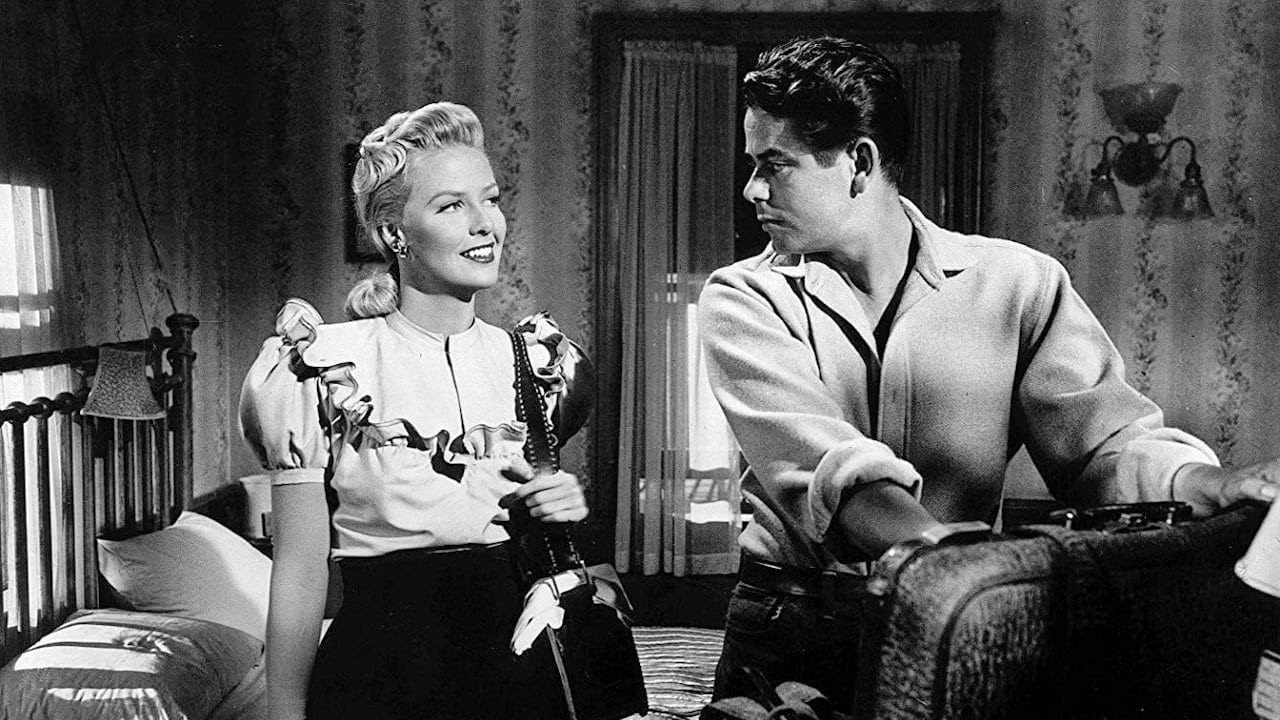
The Hotel Room Confrontation Paula's Calculation Exposed

Burnett Guffey keeps the camera at mid-range, allowing the geometry of the room to do the compositional work: Paula at one edge of the frame, Lambert occupying the center, the window behind him casting a thin lateral light that catches neither face fully. Shadow pools at the corners. The lamp on the nightstand throws an upward light that flattens Paula's expression into something unreadable, an effect that reads simultaneously as glamour and threat. The frame refuses the easy close-up, holding back the intimacy the scene seems to promise.

The distance Guffey maintains is the scene's argument. Paula is never quite within reach, visually or morally, and Lambert's position in the light makes him the exposed party while she remains half-dissolved into the background. The sequence crystallizes the film's central proposition: that the vulnerable figure is the one standing in the open, and that the dangerous one is always a little out of focus.

Visual Language

The Cinematography

🎞️
Burnett Guffey – Director of Photography

Burnett Guffey, working here before his reputation was fully established, brings a disciplined economy to Framed that serves the story's stripped-down mechanics. The film is a studio production shot largely on constructed sets, and Guffey uses that control to build consistent interior environments where shadow operates as moral indicator rather than atmosphere for its own sake. His lighting setups favor hard sources with limited fill, carving faces out of darkness in a manner that links physical presence to moral exposure. Characters who move into light become readable and therefore vulnerable; those who stay near the frame's edges remain opaque. There is no elaborate crane work or expressionist distortion – the visual language is classical and restrained, which makes its periodic severity more effective. The mining country exteriors, such as they are, are handled with similar economy, establishing geography without lingering. Guffey's lens choices favor a moderate focal length throughout, keeping depth in the frame and allowing spatial relationships between characters to carry meaning the dialogue chooses not to state.

In the Catalogue

Themes & Motifs

Availability

Where to Watch

Also in the Directory

See Also