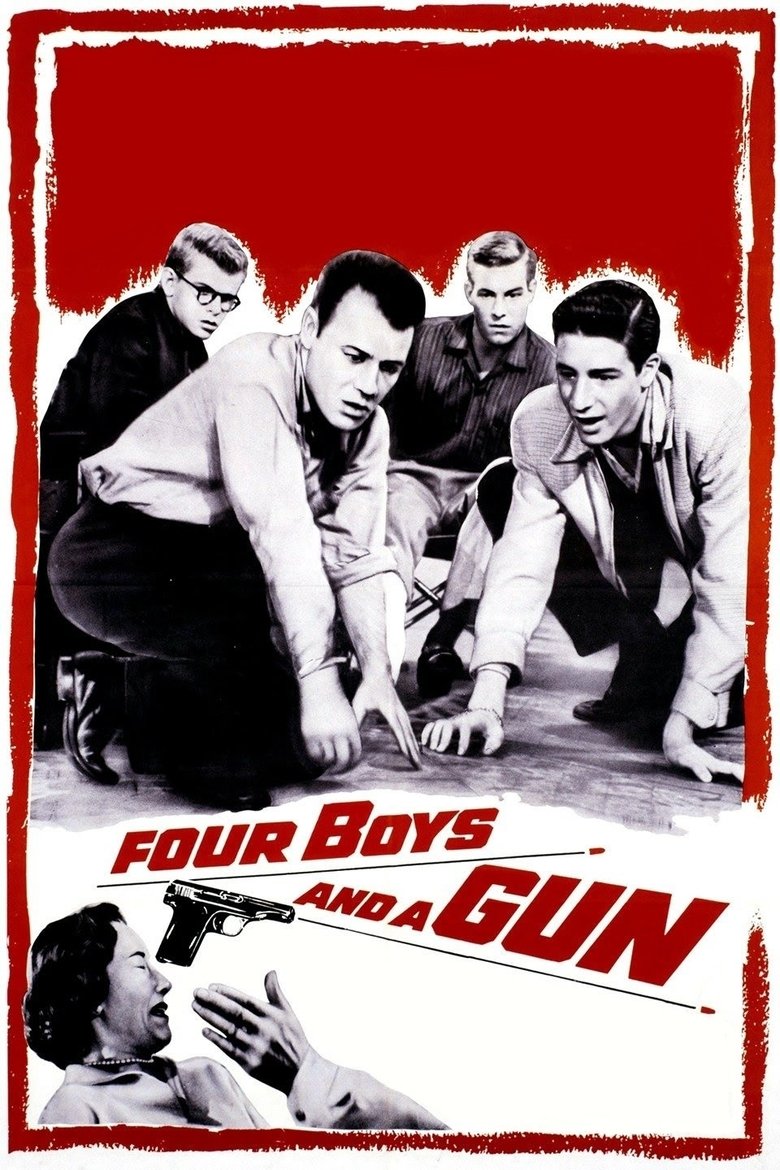
In the dense tenements of postwar New York, four young men – Ollie Denker, Eddie Richards, Johnny Doyle, and Stanley Badek – find themselves implicated in a killing that none of them planned and all of them enabled. The night begins as a minor criminal venture, the kind of reckless improvisation that cheap neighborhoods and idle ambition produce in equal measure. District Attorney Otto Hulett begins assembling the case against them, and the machinery of the law moves with the indifference of a system that does not distinguish between degrees of guilt.
As the investigation tightens, the bonds between the four begin to fracture. Ollie, the most volatile of the group, becomes a liability to the others. Johnny, younger and more conflicted, is pulled between loyalty to his friends and the influence of Marie, a woman who represents a life outside the pattern these streets enforce. Joe Barton, a peripheral figure with connections to the local underworld, complicates the question of who bears final responsibility, while the fight manager who orbits the group hints at the institutional corruption that makes such crimes possible.
Four Boys and a Gun belongs to the cycle of late-noir procedurals that traded expressionist shadow for social scrutiny, treating crime less as fate than as consequence. The film uses its four protagonists to examine collective culpability – the way young men move in packs until the moment accountability arrives and the pack dissolves. It is a lean, economical picture that asks how much the environment around a crime shares in producing it.
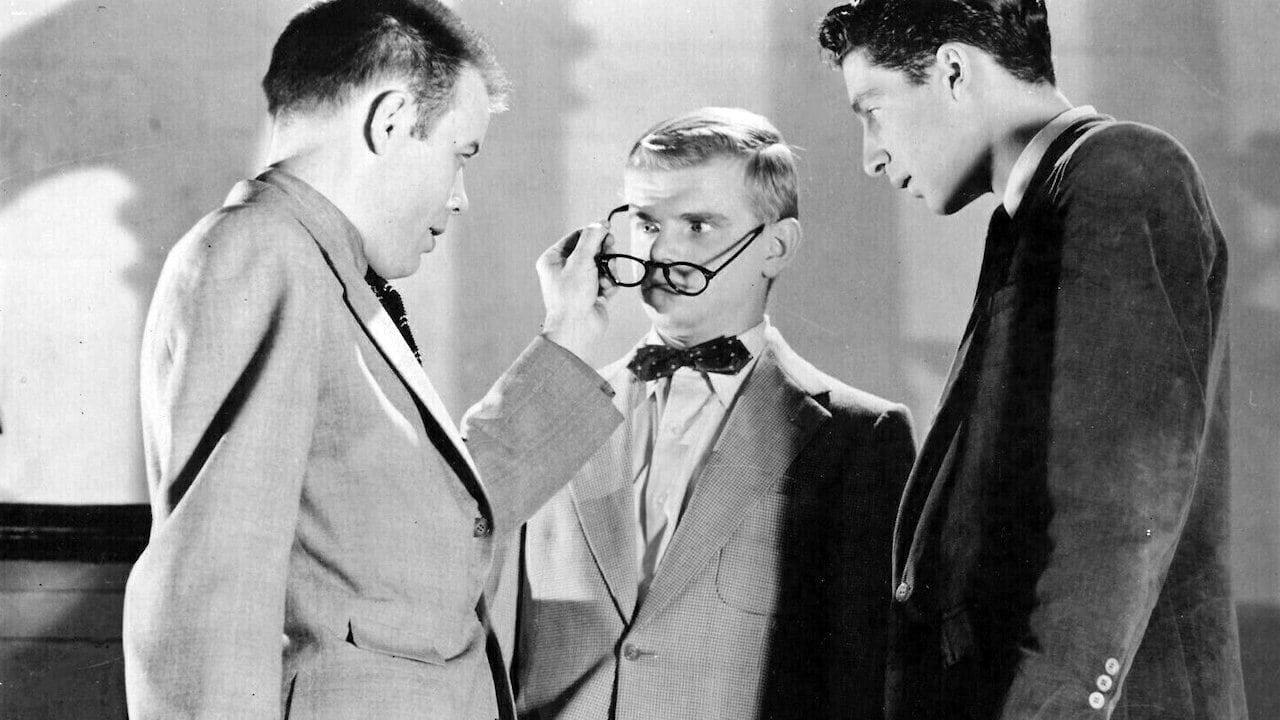
Four Boys and a Gun occupies a specific and underexamined corner of the noir cycle: the juvenile delinquency procedural, a subgenre that emerged in the mid-1950s as American culture grew anxious about its own postwar youth. William Berke, a director with long experience in tight-budget crime programmers, handles the material without sentimentality, refusing the redemptive arcs that studio product of the period often imposed on similar material. The film's four-protagonist structure is its most interesting formal decision, distributing moral weight across the group and resisting the genre's usual concentration on a single doomed figure. Security Pictures, operating on a constrained budget, could not match the production values of the major studios, but that constraint pushes the film toward location-inflected realism and away from artifice. James Franciscus, in an early role, brings a quality of suppressed conflict that the script only partially develops. The film is not without its limitations – the narrative economy sometimes reads as compression rather than precision – but as a document of how noir absorbed the era's social anxieties, it repays serious attention.
– Classic Noir
J. Burgi Contner positions the camera at a low angle, making the ceiling press down on the four young men arranged in a row against the institutional wall. A single overhead practical casts hard pools of light on each face while leaving the space between them in soft, unresolved shadow. The District Attorney moves in and out of frame, his authority communicated less by dialogue than by the camera's refusal to give him a fixed position – he belongs to the room in a way the four subjects do not.
The arrangement of four men in a line is not incidental. The scene argues visually what the film argues morally: that these men are bound together by the act but cannot be judged as one. Each face responds differently to the same pressure, and Contner's framing keeps them simultaneously connected and isolated, sharing a frame but unable to share a fate. It is the film's clearest statement that collective action does not produce collective absolution.
J. Burgi Contner brings to Four Boys and a Gun a visual approach shaped by documentary realism and the constraints of independent production in the 1950s. Working largely on location in New York, Contner uses available architecture as a moral landscape: narrow corridors, low ceilings, and streets that funnel rather than open. His lighting strategy favors hard sources with minimal fill, producing faces that carry shadow even in nominally lit interiors. This is not the ornate chiaroscuro of classic noir but something closer to the exposed, unsentimental look of the crime documentary, which suits the film's social-problem ambitions. Contner reserves his most deliberate compositions for the interrogation sequences, where the geometry of bodies in institutional space carries meaning that the script leaves implicit. His lens choices stay in the moderate range, keeping faces in proportion to their environments rather than isolating them through distortion – a consistent visual argument that these men are products of a specific world, not aberrations within it.
Tubi's library of independent and poverty-row noir titles makes it the most probable free streaming home for this Security Pictures release; confirm availability before viewing.
Archive.orgFreePublic domain status for films from smaller independent studios of this era means Archive.org may carry a digitized print, though source quality can vary.
Amazon Prime VideoSubscriptionClassic crime programmers of the 1950s occasionally surface in Prime Video's catalog through third-party channels; availability should be verified at time of viewing.