Films People Pull a Fast One Night Beat Reading Room On TV Shop
Flaxy Martin 1949
1949 Warner Bros. Pictures
★★★☆☆ Notable
Film Noir · 86 minutes · Black & White

Flaxy Martin

Directed by Richard L. Bare
Year 1949
Runtime 86 min
Studio Warner Bros. Pictures
TMDB 5.6 / 10
"A woman with a talent for survival leaves her men to carry the damage."

Walter Colby is a criminal attorney in New York who has spent years walking the line between legitimate practice and service to the mob. When his client Hap Richie, a mid-level syndicate operator, needs legal cover for a murder charge, Colby takes the case and takes the risk. What he does not fully account for is Flaxy Martin, Richie's girlfriend – a woman of cool intelligence and colder ambition, who has already begun calculating her exit from one arrangement and her entrance into another.

Flaxy maneuvers Colby into a frame-up for the murder, leaving him holding a conviction he did not earn while she repositions herself with Richie. Colby escapes custody and goes underground, sheltering with Nora Carson, a straightforward woman whose plainness the film implicitly contrasts with Flaxy's dangerous glamour. As Colby works to unravel the conspiracy from the outside, the syndicate closes ranks, loyalties among Richie's associates fracture, and the small-time operator Roper becomes a pressure point in the web of double-dealing.

Flaxy Martin belongs to the cycle of late-1940s Warner Bros. crime pictures that channel postwar moral uncertainty into tightly constructed genre mechanics. The film is less interested in redemption than in the economics of betrayal – who profits, who absorbs the cost, and which performances of innocence hold under scrutiny. It situates itself squarely within the wrong-man tradition while using Flaxy herself as the film's actual organizing intelligence, a femme fatale whose calculating detachment the narrative never fully punishes.
Classic Noir

Flaxy Martin occupies a precise, modest position in the Warner Bros. noir catalogue – competent rather than inspired, but not without interest. Richard L. Bare, better known for programmers and later television, keeps the pacing economical and the moral geography legible. The film's chief distinction is Virginia Mayo's performance, which resists the temptation to signal villainy; Flaxy operates through apparent reasonableness, and that restraint gives the film more menace than its B-picture construction might otherwise support. Zachary Scott, who made a career of playing men compromised by their own appetites, is well-cast as Colby – a man whose legal sophistication proves no defense against a more patient predator. Dorothy Malone's Nora functions as a structural counterweight rather than a fully realized character, which is a recurring limitation of the form. What the film accurately documents is the postwar erosion of professional ethics as a workable identity: Colby's legal acumen gives him no advantage in a system where the law is simply one more tool Flaxy has already picked up and set down.

– Classic Noir
3 ★★★☆☆ Notable
Credits

The Crew

DirectorRichard L. Bare
ScreenplayDavid Lang
CinematographyCarl E. Guthrie
MusicWilliam Lava
EditingFrank Magee
Art DirectionTed Smith
ProducerSaul Elkins
Performances

The Cast

Close Reading

The Signature Scene

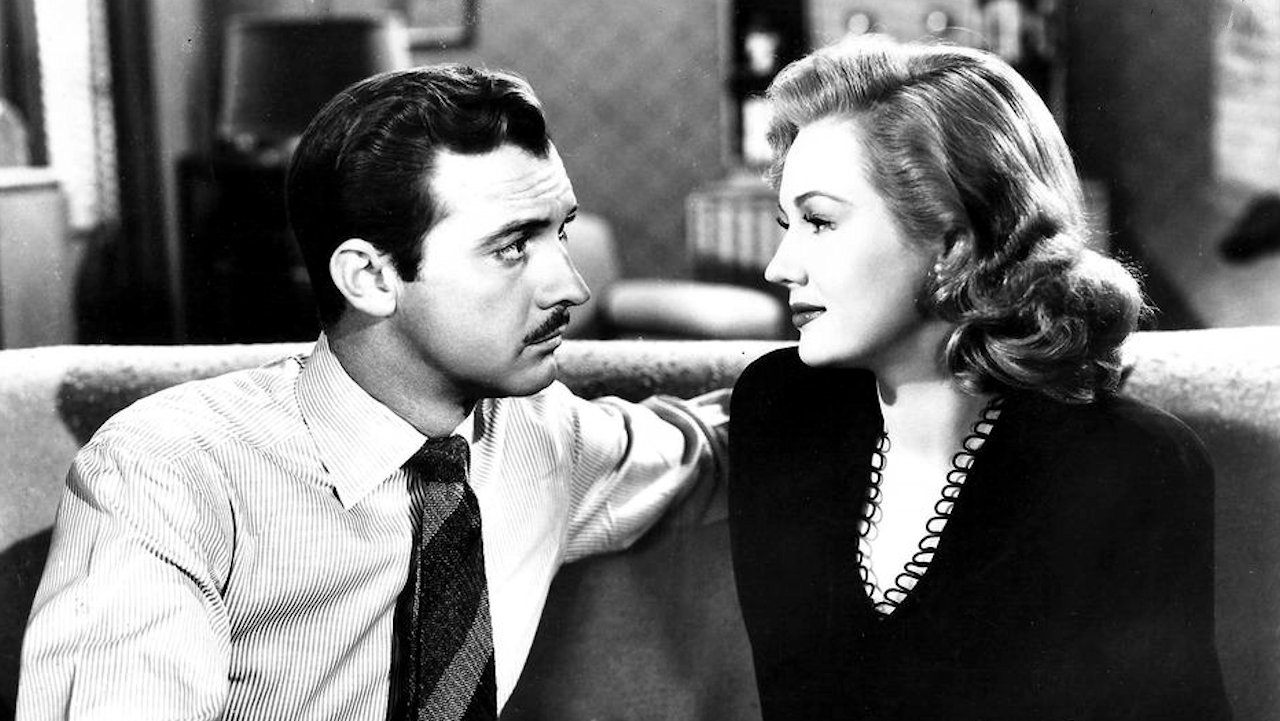
Flaxy Martin – scene
Flaxy's Apartment, Late Evening The Arrangement Laid Bare

Carl E. Guthrie frames the scene in a shallow interior, the room lit from a single practical lamp that catches Mayo's face at three-quarters while leaving the surrounding space in soft compression. The camera holds at a middle distance that refuses intimacy, placing Colby slightly out of the light's center as Flaxy speaks. The composition gives Mayo the frame's dominant plane; Scott exists at its edge, already geometrically subordinate. Venetian blind shadow patterns, a visual grammar common to the period, are used here with deliberate economy – a single band of shadow across Flaxy's shoulder rather than full expressionist overlay, as if the film trusts the actress over the technique.

What the scene establishes is not seduction but negotiation. Flaxy is not performing desire; she is assessing utility. The camera's reluctance to close in mirrors Colby's own failure to read the situation clearly – he sees proximity where there is only strategy. The lighting arrangement makes visible what the dialogue withholds: that Flaxy has already decided, and that the conversation Colby believes he is having is not the one actually in progress.

Visual Language

The Cinematography

🎞️
Carl E. Guthrie – Director of Photography

Carl E. Guthrie's work on Flaxy Martin reflects the house style Warner Bros. had developed across its crime productions through the decade – a pragmatic expressionism that never sacrifices legibility for atmosphere. Guthrie works primarily on studio interiors, using controlled artificial light to establish moral register without heavy-handed symbolism. His lighting setups favor defined key sources with selective fill, producing faces that carry shadow without becoming obscured – a practical choice that serves a narrative reliant on reading small deceptions in performance. There is no unusual lens work; the visual language is built on composition and light placement rather than distortion. Where a figure moves into a darker quadrant of the frame, it corresponds to a choice being made, not simply a mood being invoked. Guthrie's contribution is that of a craftsman working with precision inside established conventions – which suits a film whose central argument is about the costs of underestimating a composed and careful person.

In the Catalogue

Themes & Motifs

Availability

Where to Watch

Also in the Directory

See Also