Films People Pull a Fast One Night Beat Reading Room On TV Shop
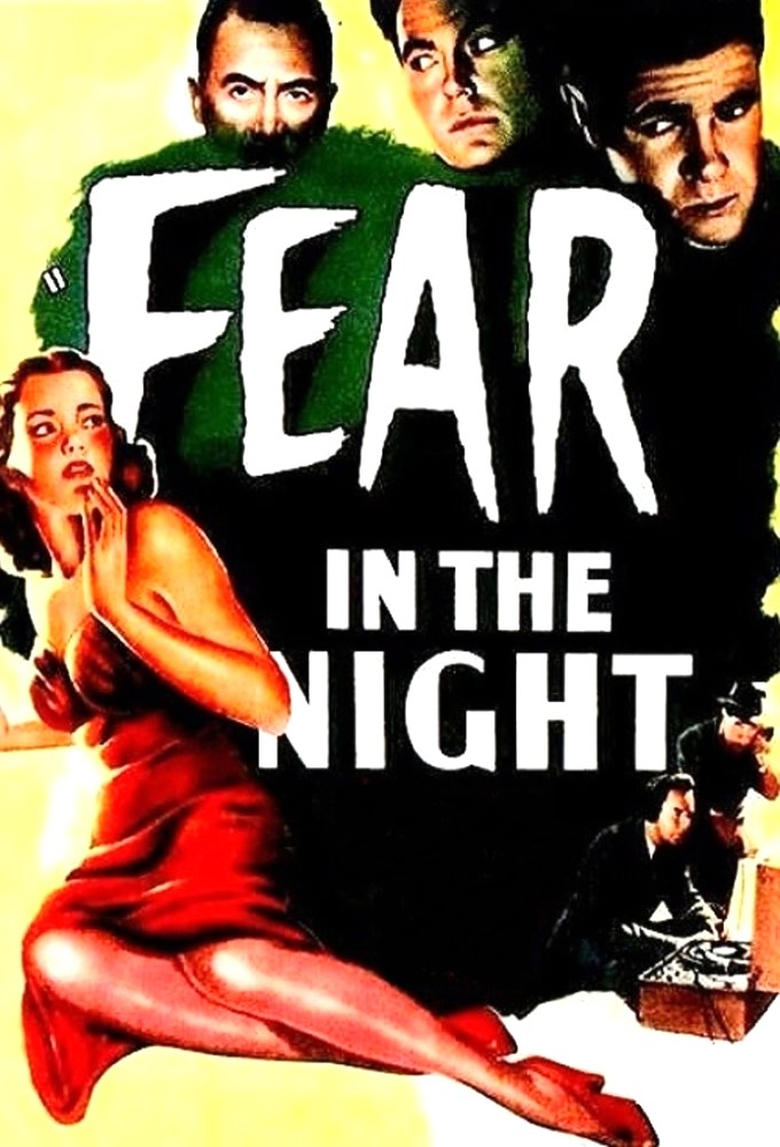
Fear in the Night 1947
1947 Pine-Thomas Productions
★★★☆☆ Notable
Film Noir · 72 minutes · Black & White

Fear in the Night

Directed by Maxwell Shane
Year 1947
Runtime 72 min
Studio Pine-Thomas Productions
TMDB 5.4 / 10
"A man wakes from a dream of murder to find the blood on his hands is real."

Vince Grayson, a New Orleans bank teller, wakes from a vivid, disorienting dream in which he has committed murder inside an octagonal mirrored room. The images are too precise, too tactile, to dismiss as ordinary nightmare: the victim's face, the layout of the room, the weight of the act. Shaken and uncertain, Vince confides in his brother-in-law Cliff Herlihy, a veteran police detective, hoping for rational reassurance. What he receives instead is the beginning of an investigation that neither man is prepared for.

As Cliff begins to probe the details of Vince's account, the dream proves to have coordinates in the waking world. A man is dead. The mirrored room exists. Vince's presence at the scene, however involuntary it may have been, cannot be explained away, and the question of whether he acted under hypnotic compulsion or is concealing a conscious crime drives a wedge of suspicion between the two men. The supporting figures – Cliff's wife Lil, Vince's girlfriend Betty, and a slippery character named Lewis Belknap – each carry information that complicates the picture without clarifying it.

Fear in the Night belongs to the postwar cycle of psychological noir that found in hypnosis and dissociation a secular vocabulary for guilt, complicity, and the unreliable self. Maxwell Shane's adaptation of Cornell Woolrich's story 'And So to Death' uses a modest budget and a compressed running time to construct a trap with no obvious exit: a protagonist who cannot trust his own memory, surrounded by people who may or may not be telling the truth about what they know.
Classic Noir

Fear in the Night is a minor-register entry in the Woolrich tradition – tightly wound, economically made, and more persuasive in its paranoid atmosphere than its plotting strictly earns. Shane, working from his own screenplay, keeps the film moving at a pace that discourages close scrutiny of the logic, which is wise, because the hypnosis premise requires the audience to accept a chain of coincidences that Woolrich's prose could sustain more readily than a 72-minute program picture can. What redeems it is DeForest Kelley's performance as Vince: genuinely unsettled rather than merely anxious, he makes the central ambiguity feel like a psychological condition rather than a narrative device. Paul Kelly's Cliff functions as the genre's familiar figure of institutional reason, and the tension between these two registers – one emotional, one procedural – gives the film its modest structural interest. Pine-Thomas Productions operated at the lower end of the studio economy, and that constraint is visible in the limited locations and small cast, but Shane turns scarcity into a formal asset, keeping the action claustrophobic in ways that serve the story's argument about entrapment.

– Classic Noir
3 ★★★☆☆ Notable
Credits

The Crew

DirectorMaxwell Shane
ScreenplayMaxwell Shane
CinematographyJack Greenhalgh
MusicRudy Schrager
EditingHoward A. Smith
Art DirectionFrank Paul Sylos
ProducerWilliam H. Pine
Performances

The Cast

Close Reading

The Signature Scene

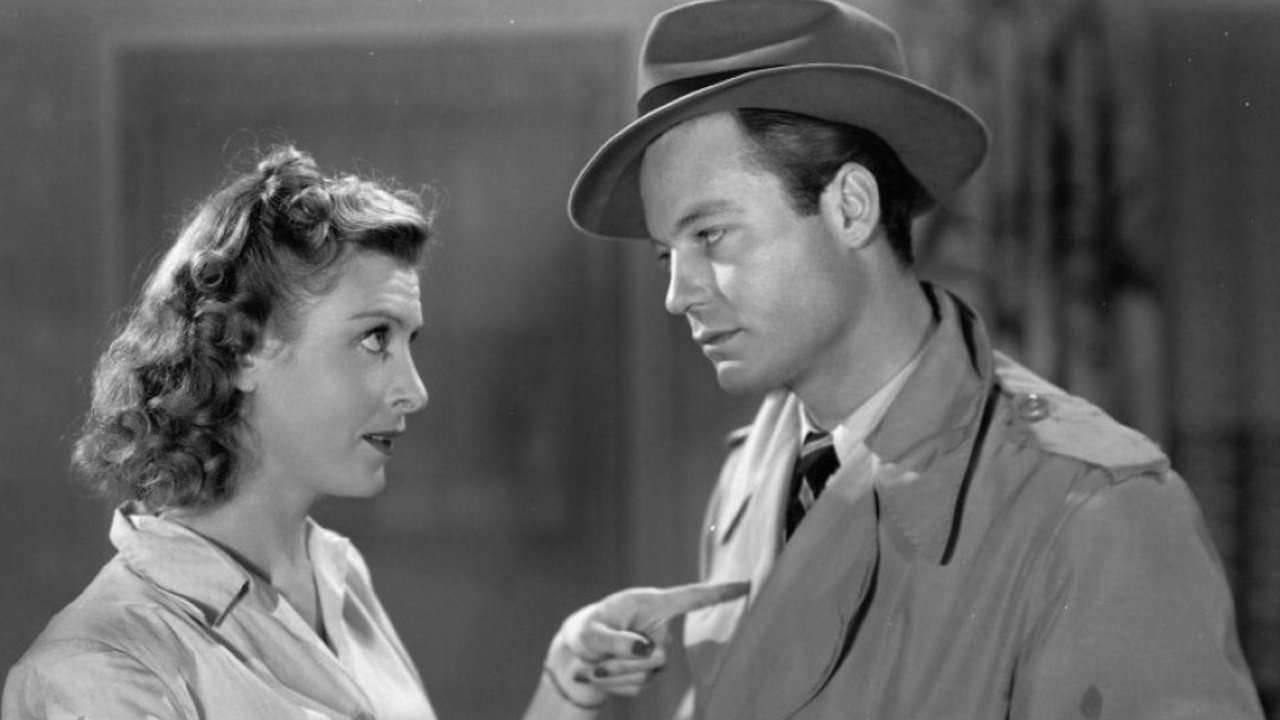
Fear in the Night – scene
The Mirrored Room Reflections Without a Witness

Shane and cinematographer Jack Greenhalgh construct the octagonal room sequence around a visual principle of proliferation: Vince's image multiplies across angled mirror panels so that the frame is never occupied by a single, sovereign point of view. The camera moves cautiously, as though reluctant to fix responsibility, and the lighting – hard, sourceless, suggesting neither day nor night – strips the space of temporal anchoring. The effect is less of a room than of a consciousness that cannot locate its own edges.

The scene does the film's central argumentative work without dialogue. If guilt is defined by awareness of an act, then a man who acts inside this hall of refracted selves is genuinely uncertain about what he has done and who did it. The mirror logic is not decorative; it externalizes the film's core problem, which is whether selfhood is continuous enough to bear moral weight. That Shane manages this on a poverty-row budget, without recourse to elaborate optical effects, makes the sequence the most formally considered in the film.

Visual Language

The Cinematography

🎞️
Jack Greenhalgh – Director of Photography

Jack Greenhalgh spent much of his career in B-pictures and serials, and Fear in the Night shows both the limits and the discipline that environment imposed. Working within tight schedules and minimal lighting rigs, Greenhalgh opts for deep shadow rather than elaborate source motivation – darkness functions here as a default condition, not a managed effect. The studio interiors are shot with a flatness that occasionally works against the material, but in the mirrored room sequence and in the quieter domestic scenes between Vince and Cliff, Greenhalgh finds angles that emphasize enclosure: low ceilings press into frame, doorways bisect figures, windows offer light without escape. The lens choices favor a slightly compressed middle distance that keeps characters in proximity without intimacy, a visual grammar well suited to a story in which no one is fully known to anyone else, including themselves. The cinematography does not call attention to itself, which in this context is a form of craft.

In the Catalogue

Themes & Motifs

Availability

Where to Watch

Also in the Directory

See Also