In a German prisoner-of-war camp during World War II, a new compound built to contain repeat escapers becomes the unlikely staging ground for the most ambitious escape attempt of the war. Royal Air Force Squadron Leader Roger Bartlett – known as 'Big X' – arrives with a plan already formed: not the escape of a handful of men, but of two hundred and fifty, enough to paralyze the German war machine with the manhunt that follows. Around him assembles a loose coalition of specialists: Hilts, an American pilot whose compulsive solo escape attempts earn him repeated stretches in the camp's punishment cell; Hendley, a resourceful scrounger who can acquire almost anything through charm and barter; Danny, a Polish tunneller whose claustrophobia threatens the very work he leads; and Blythe, a soft-spoken forger whose failing eyesight becomes an increasingly cruel obstacle.
The film's tension accumulates in the incremental labor of three simultaneous tunnels – codenamed Tom, Dick, and Harry – each requiring the removal and concealment of tons of sand beneath the noses of German guards. Bartlett drives the operation with a discipline that borders on severity, and his relationship with the camp's senior British officer, Ramsey, carries an undercurrent of institutional friction: the older man understands that most escapers will be recaptured, and that the cost in lives may outpace any strategic gain. When the Germans discover one tunnel, the enterprise contracts around a single remaining option, and the date of the attempt is forced forward before preparations are complete. The fragility of the plan – forged papers not quite finished, civilian clothing not quite adequate – becomes the film's moral weight.
The Great Escape operates at the intersection of the war film and the procedural thriller, and it is in that procedural register that it most closely approaches the noir sensibility: an intricate plan executed under surveillance, dependent on human ingenuity and equally human failing, moving toward an outcome that the audience understands will not be clean. The film is less concerned with heroism in the conventional sense than with competence, routine, and the particular psychology of men who cannot stop attempting the impossible. Its second half, which disperses the escapers across occupied Europe in a series of near-autonomous pursuit sequences, transforms the collective enterprise into something more intimate and more bleak.
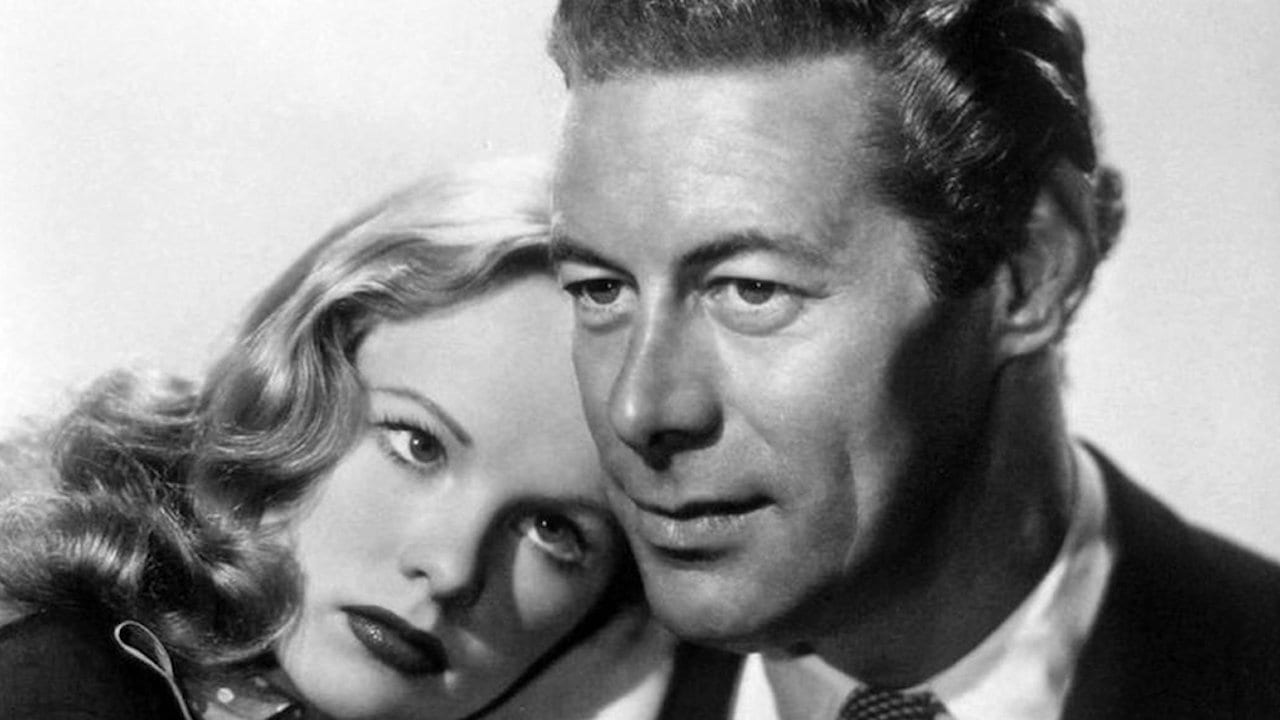
The Great Escape occupies an unusual position in the postwar thriller tradition: it is too large, too sun-drenched, and too deliberately assembled to sit comfortably within noir's tighter formal constraints, yet its underlying architecture – the meticulous plan corroded by contingency, the institutional loyalty that cannot protect individuals from their fates – belongs to the same moral universe. John Sturges, working from James Clavell and W.R. Burnett's adaptation of Paul Brickhill's account, constructs the film as a sustained argument about the limits of collective effort. Elmer Bernstein's march theme, ubiquitous as it has become, functions within the film as a kind of irony: its brisk confidence belongs to a story that grows progressively less confident as it unfolds. The casting is cannily calibrated – McQueen's coiled independence set against Attenborough's driven collectivism – and the film earns its length by making the labor of the tunnels feel genuinely cumulative. What it reveals about its era is a postwar culture negotiating the gap between the mythology of resistance and the arithmetic of loss.
– Classic Noir
Daniel L. Fapp frames the emergence from the tunnel's exit in near-darkness, the camera held low and close to the ground so that the figures crawling clear of the earth occupy the extreme foreground while the camp's perimeter lights burn in soft, indistinct halos behind them. The barbed wire runs as a diagonal across the frame, dividing the image between the relative safety of the tunnel mouth and the exposed ground beyond. Fapp resists the impulse to clarify: the scene's visual logic is one of partial information, of men seen only as shapes, their faces lost to shadow.
What the scene argues, without stating it, is that the escape is not a liberation but a transition from one form of confinement to another. The open night beyond the wire is not freedom – it is simply a different kind of danger with fewer walls. The men who move through the frame carry their vulnerability with them, and Fapp's refusal to light them heroically is the film's most honest formal choice: these are not men being freed; they are men being released into a wider trap.
Daniel L. Fapp shot The Great Escape in Panavision on location in Bavaria, and his approach to the material is defined by a studied restraint that runs counter to the widescreen spectacle the format invites. Within the compound, Fapp favors a compressed visual grammar: tight corridors, low ceilings in the tunnel sequences lit with single-source practical lights that flatten faces and eliminate middle distance, creating a spatial anxiety that the narrative's procedural calm cannot entirely suppress. His exterior work is deliberately deceptive – the Bavarian summer light is clean and open, and Fapp uses that openness to establish what the escapers are moving toward, before the second half closes it down again with night sequences, rain, and the geometry of railway stations and border posts. The moral logic the cinematography serves is one of diminishing options: the frame grows more constrained as the film progresses, the compositions less balanced, the light more conditional. Shadow work is sparse but purposeful, reserved for moments when the film acknowledges what it will not say aloud.
Available in HD as part of the Prime library; the most consistently accessible option for most regions, though availability varies by territory.
TubiFreePeriodically available on Tubi with ads; confirm current availability before relying on this as a primary option.
Criterion ChannelSubscriptionNot currently part of the Criterion library, but the Channel's postwar thriller programming provides essential context for the film's genre placement.