
Films People Pull a Fast One Night Beat Reading Room On TV Shop
Destiny 1944
1944 Universal Pictures
★★★☆☆ Notable
Film Noir · 65 minutes · Black & White

Destiny

Directed by Reginald Le Borg
Year 1944
Runtime 65 min
Studio Universal Pictures
TMDB 5.2 / 10
"A man on the run finds shelter in an innocent life he cannot afford to keep."

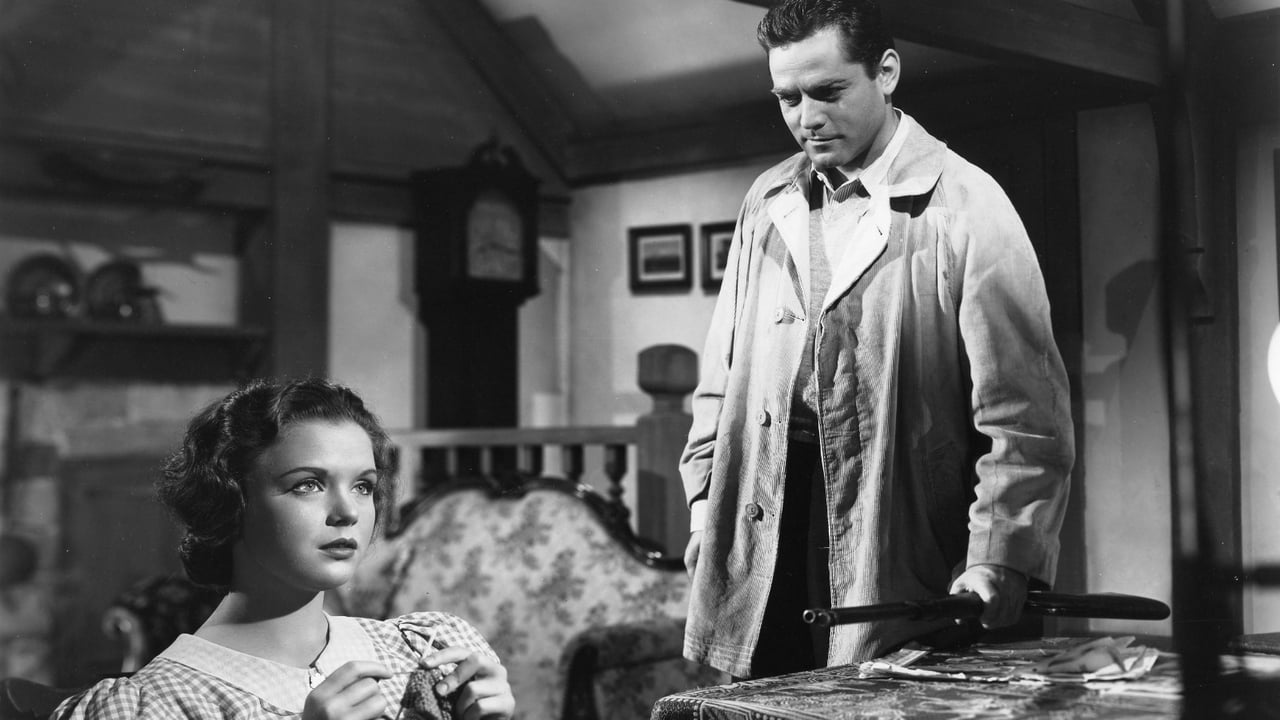
Cliff Banks (Alan Curtis) is a fugitive – a convicted man who has escaped custody and is trying to vanish into the American countryside before the law closes in. Injured and exhausted, he stumbles into the orbit of Jane Broderick (Gloria Jean), a young woman of genuine decency who lives with her elderly, good-natured uncle Clem (Frank Craven) on a modest rural property. She knows nothing of who Cliff is or what he has done, and her willingness to help him is rooted in an uncomplicated human kindness the film takes seriously.

As Cliff lingers in the household, the lies required to sustain his cover multiply. Betty (Grace McDonald) and the harder-edged Phyllis (Vivian Austin) represent the world Cliff is trying to escape – one of compromised women, small-time operators, and the constant threat of exposure. Sam Baker (Frank Fenton) and Marie (Minna Gombell) tighten the noose from the criminal side, while the presence of Jane forces Cliff to measure what he has become against what he might have been. His position between two worlds is untenable, and the film does not pretend otherwise.

Destiny works within a compressed noir framework – 65 minutes, a limited budget, and a Universal B-picture infrastructure – yet it takes its moral question seriously: whether a man defined by his record can act outside of it. The film belongs to a cycle of mid-1940s Universal productions that tested genre conventions against the studio's lighter musical-comedy identity, and the tension between those modes gives Destiny an unresolved quality that is more honest than tidy.
Classic Noir

Destiny occupies a minor but instructive position in Universal's wartime B-picture output. Reginald Le Borg, a reliable craftsman of the studio's second unit, keeps the film spare and functional – there is no excess here, and the economy is itself a kind of discipline. Alan Curtis, who spent much of the decade in similar fugitive-or-suspect roles, brings a convincing moral exhaustion to Cliff Banks, a man whose guilt is never quite the point; the point is whether guilt is all he is. Gloria Jean, borrowed from Universal's musical program, plays Jane without sentimentality, and the contrast between her register and Curtis's gives the film an emotional plausibility it might otherwise lack. Frank Craven provides a grounding plainness as Clem. What Destiny reveals about its era is the period's sustained interest in the returning or displaced male – men out of place in domestic life, men whose identities are contested, men for whom legitimacy is not given but earned or forfeited. The film does not resolve this with confidence, which is its most honest feature.

– Classic Noir
3 ★★★☆☆ Notable
Credits

The Crew

DirectorReginald Le Borg
ScreenplayRoy Chanslor
CinematographyGeorge Robinson
MusicFrank Skinner
EditingPaul Landres
Performances

The Cast

Close Reading

The Signature Scene

Destiny – scene
The Farmhouse at Nightfall Cliff Watches Jane Sleep

George Robinson places his camera at a low angle inside the farmhouse interior, the frame divided by the geometry of a doorway. A single practical source – a lamp beyond the threshold – throws a band of warm light across the floor while the space Cliff occupies remains in controlled shadow. Robinson does not reach for expressionist excess; the shadow work is restrained, the composition stable, which makes Cliff's stillness read as suspension rather than menace. The depth of field holds both the sleeping figure of Jane in soft middle ground and Cliff's face in sharper foreground relief, so the viewer is positioned inside his calculation.

The scene condenses the film's central argument into a visual fact: Cliff is literally on the threshold between the lit domestic world and the dark one he inhabits. His watching is not predatory but ruminative – he is measuring loss. The shot does not editorialize through camera movement or musical underlining; it simply holds the image long enough for the question to register. What kind of man stands in a doorway at night looking at the life he cannot enter? That is the question Destiny is asking.

Visual Language

The Cinematography

🎞️
George Robinson – Director of Photography

George Robinson's cinematography on Destiny demonstrates what a skilled studio contract DP could accomplish within the material constraints of a Universal B-picture. Working on interior sets that were modest in scale, Robinson relies on controlled chiaroscuro rather than location texture – the darkness is architectural, built from positioned sources and carefully flagged fill. His lens choices favor moderate focal lengths that preserve a sense of physical proximity between characters without the distortion that might push the film toward gothic excess. Shadow work is deployed selectively: the harder noir geometry appears when Cliff's criminal identity is most present in the narrative, while scenes centered on Jane and Clem are lit with a flatter, more open quality that signals their moral legibility. This is cinematography in service of the story's moral logic rather than atmosphere as an end in itself. Robinson's broader Universal career – which included work on horror and serial productions – gave him a precise command of low-key setups, and Destiny benefits from that economy.

In the Catalogue

Themes & Motifs

Availability

Where to Watch

Also in the Directory

See Also