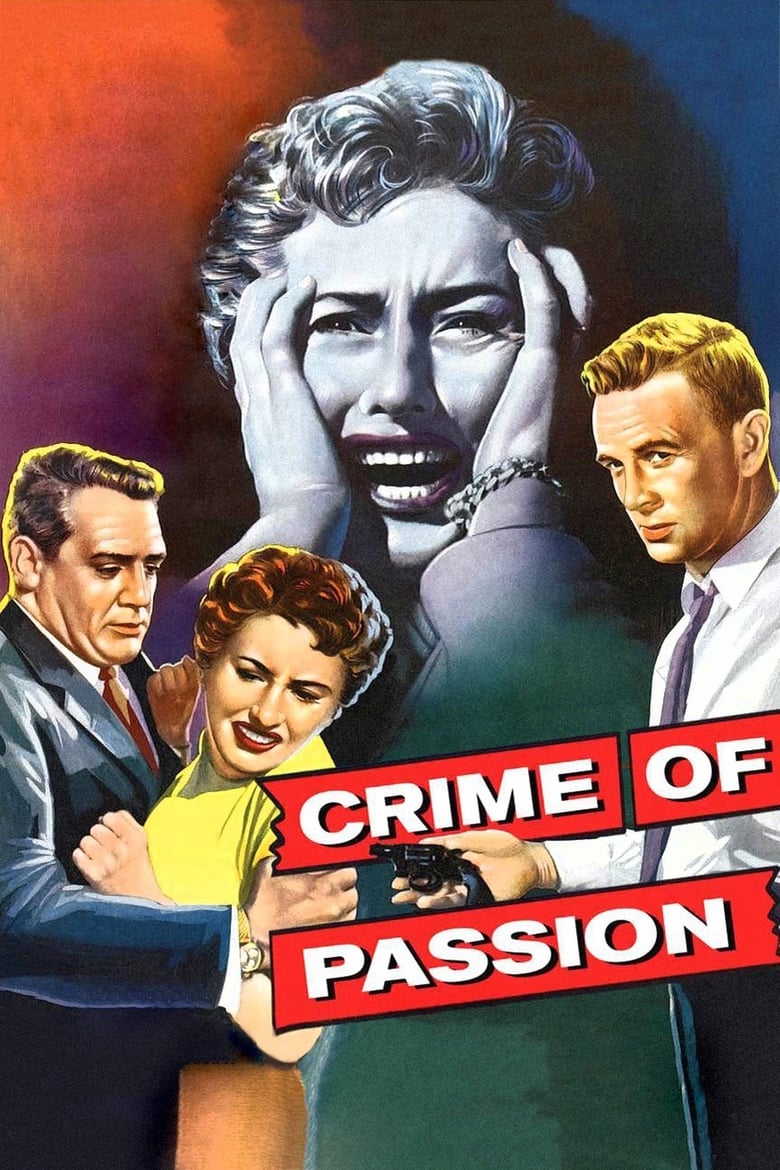
Kathy Ferguson is a sharp-tongued San Francisco newspaper columnist with a reputation for getting results. When a wanted killer's wife contacts her seeking help, Kathy brokers a surrender and attracts the attention of Lt. William Doyle, a decent, unambitious homicide detective. She gives up her career and her city to marry him, relocating to Los Angeles and the suffocating domesticity of a police officer's household.
The marriage is cordial but airless. Kathy watches as Doyle's superior, Inspector Tony Pope, advances through the department with the support of his socially adept wife Alice, and she determines that her husband deserves the same trajectory. What begins as calculated charm directed at Pope curdles into something more dangerous when Pope's attentions become personal and Kathy recognizes that she has entered a transaction she did not fully price. Her ambition, once directed outward into the world, turns inward and corrosive.
Crime of Passion operates as a domestic noir in which the suburban home replaces the rain-slicked street as the site of moral collapse. The film is less concerned with the mechanics of crime than with the psychology of a woman whose intelligence has been systematically refused an outlet, and with the slow erosion that follows. Gerd Oswald directs the material with restraint, allowing the architecture of middle-class respectability to function as its own kind of trap.
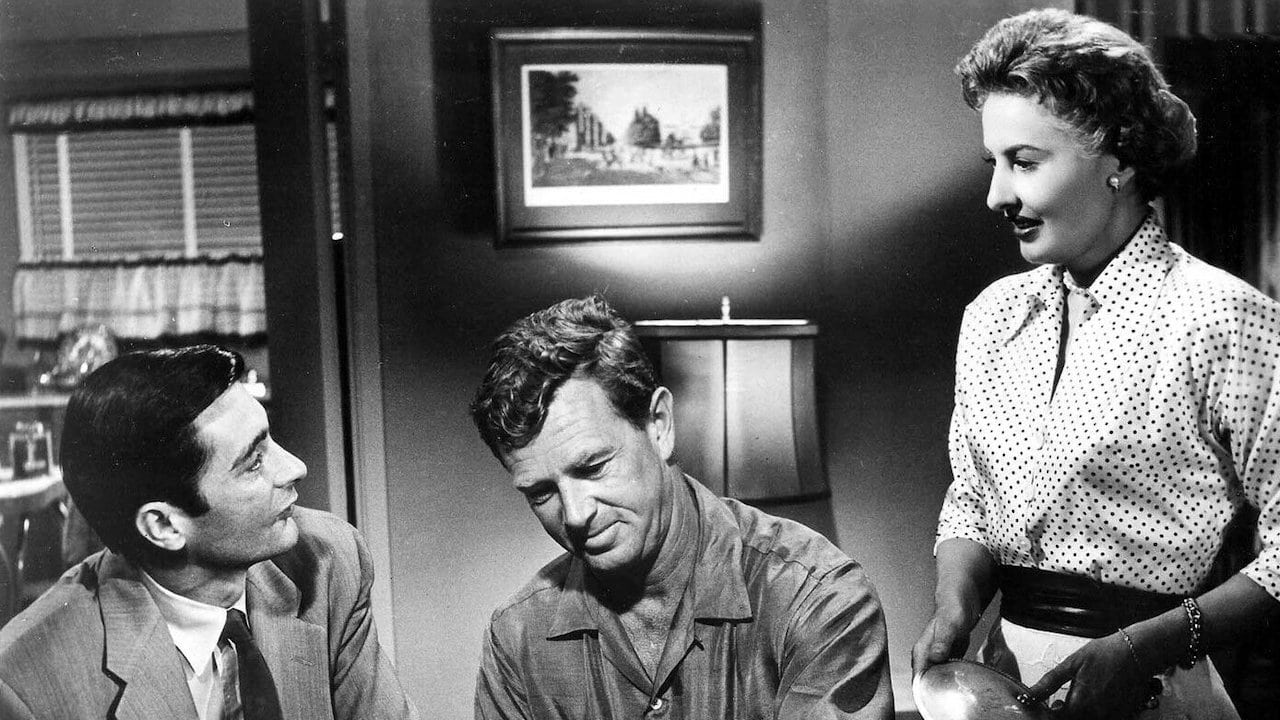
Crime of Passion arrives in 1956 at the tail end of classical noir's productive period, and it is a more precise social document than its modest reputation suggests. The film belongs to a small cluster of postwar noirs – alongside Queen Bee and Female on the Beach – that locate the genre's characteristic entrapment not in criminal underworlds but in the institution of marriage itself. Barbara Stanwyck, who had already mapped this territory in Double Indemnity, brings a different register here: less seductive calculation, more barely contained frustration. The script by Jo Eisinger does not romanticize Kathy's trajectory; it diagnoses it. Raymond Burr's Inspector Pope is a study in affable menace, a man who wears authority as camouflage. What the film ultimately argues is that the real crime is structural – the foreclosure of capacity that mid-century American domesticity imposed on women of intelligence – and that violence emerges not from pathology but from the absence of any legitimate exit. That argument, made without sentimentality, gives the film a durability beyond its genre mechanics.
– Classic Noir
LaShelle frames the scene with Pope seated behind his desk, the bulk of his authority arranged around him in the form of diplomas, filing cabinets, and the low amber of a single desk lamp. Kathy stands initially, then takes a chair at Pope's invitation – a descent the camera registers by holding her face in medium close-up as the lamp's light catches one side and leaves the other in shadow. The composition is deliberately asymmetrical: Pope occupies the center of the frame while Kathy is placed slightly off-axis, the geometry itself encoding the imbalance of the encounter.
The scene makes visible the transaction at the heart of the film. Kathy has come with a professional request on behalf of her husband; what she receives is a negotiation conducted on entirely different terms. The shadow bisecting her face is not decorative – it signals the split that is already forming in her between the woman she intended to be and the instrument she is becoming. Oswald holds on her expression a beat longer than comfort allows, letting the audience read the exact moment she decides to proceed.
Joseph LaShelle, who had won an Academy Award for Laura in 1944, brings to Crime of Passion a disciplined restraint that suits the material's domestic setting. Working largely on studio-constructed interiors, LaShelle avoids the expressionist excess available to him, instead using a relatively tight focal range to compress the rooms Kathy inhabits and make them feel like enclosures. The lighting setups favor a single strong source – a table lamp, a window from the side – producing the shadow bisection that recurs throughout the film as a visual motif for Kathy's divided self. In the exterior sequences, LaShelle opens the frame slightly, allowing the Los Angeles suburban landscape its full flat exposure; the effect is to make the outdoors feel no more liberating than the rooms inside. The cinematography operates in service of the film's moral logic: the more Kathy advances her scheme, the more deliberately LaShelle keeps her in partial darkness, as if the image itself is tracking her diminishment.
Available to stream at no cost and without a subscription, making it the most accessible current option for most viewers.
Amazon Prime VideoRentalAvailable for digital rental in a standard definition transfer; check listing for current availability as catalog titles rotate.
Archive.orgFreeA public domain print is available for free streaming and download, though image quality varies and should be considered a secondary option.