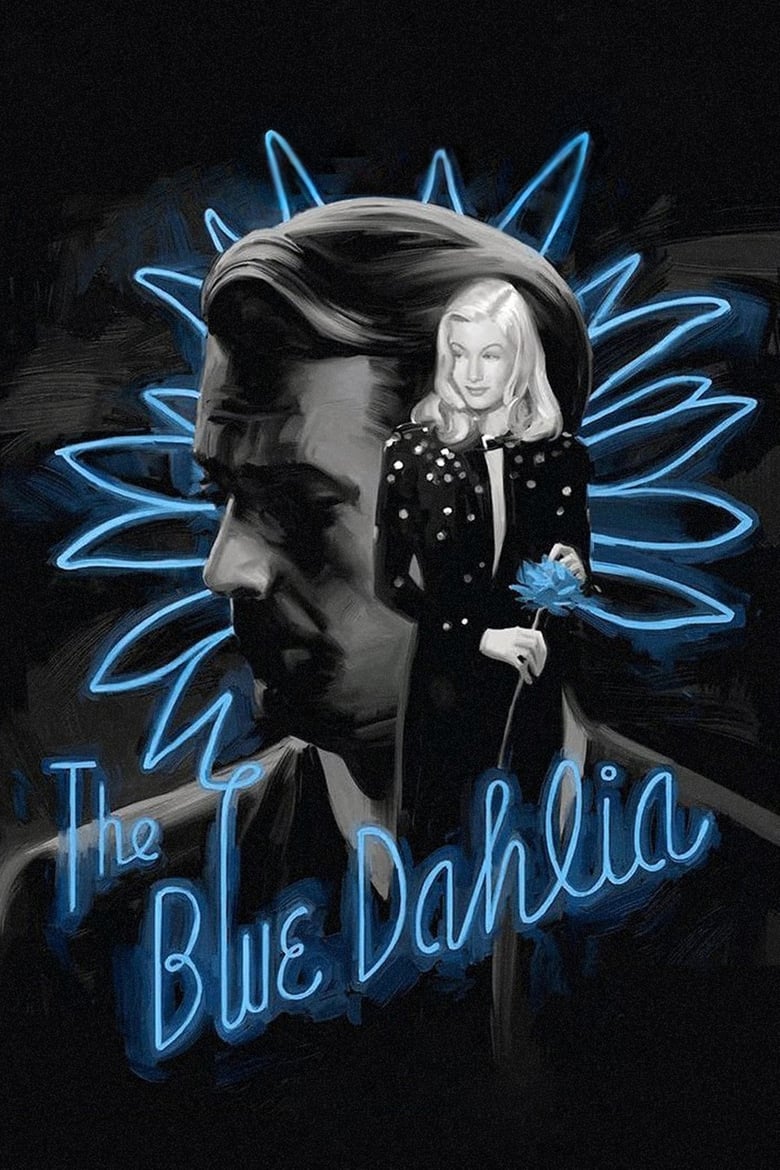
Navy veteran Johnny Morrison returns to Los Angeles expecting a quiet reunion with his wife Helen, but finds her hosting a loud party and deep in an affair with nightclub owner Eddie Harwood. When Helen is found murdered the following night, Johnny becomes the obvious suspect – a man with motive, temper, and no alibi. Fleeing a police dragnet in the rain, he accepts a ride from Joyce Harwood, Eddie's estranged wife, and the two strike up a cautious, charged alliance neither fully trusts.
The investigation spreads outward to expose a syndicate of competing interests: Eddie's criminal connections through the shadowy Corelli, a crooked house detective named Copeland, and a police captain, Hendrickson, who pursues Johnny with institutional certainty rather than actual evidence. Meanwhile Buzz Wanchek, Johnny's war buddy traveling with him since the Pacific, suffers blackouts from a combat head wound – blackouts that make him a potential suspect he cannot account for himself. The script, written by Raymond Chandler under considerable studio pressure, layers enough suspects to keep culpability genuinely distributed.
The Blue Dahlia belongs to the postwar cycle of noirs in which violence at home is inseparable from violence abroad – where men trained to kill return to a civilian world that has moved on without them and turned treacherous in the interval. The film does not resolve that tension so much as absorb it into a procedural framework that is brisk, hard-edged, and deliberately unsentimental about reunion, marriage, and the American dream deferred.
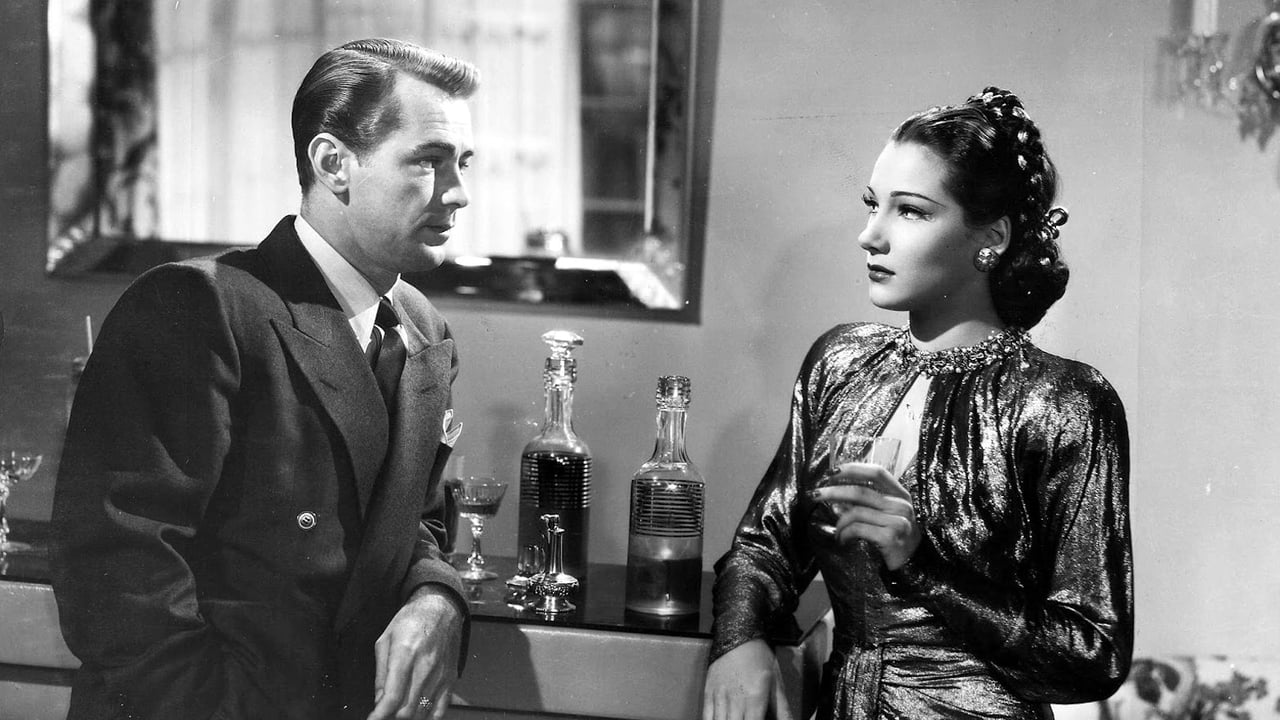
The Blue Dahlia occupies a specific and instructive position in postwar noir: it is the only produced screenplay Raymond Chandler wrote directly for the screen rather than adapting from his own fiction, and the seams of its construction are both its limitation and its interest. Chandler famously claimed he wrote portions of the script while drinking heavily under studio deadlines, and the ending – which originally implicated Buzz before the Navy objected – was rewritten to diminish the film's most psychologically charged thread. What survives is nonetheless a taut, economical piece of genre work. Alan Ladd's stillness under pressure reads less as limited range than as a precise performance of masculine containment, a veteran who has learned to feel nothing visible. Veronica Lake, paired with Ladd for the third time, delivers her characteristically cool geometry. What the film reveals most clearly is how the studio system could simultaneously produce and neuter serious material – Chandler's dialogue retains its bite, but the moral architecture he intended was compromised before the cameras stopped rolling.
– Classic Noir
Johnny climbs into Joyce's car in the rain outside his wife's bungalow court, and Lionel Lindon's camera holds them in a tight two-shot that uses the wet windshield and the wash of passing headlights to fracture the available light into moving patterns across both faces. The frame keeps them physically close but compositionally separate – Joyce illuminated from the side by a streetlamp that catches the curve of her hair, Johnny half in shadow, his jaw set. The rain on glass between them and the world outside creates a provisional, sealed-off space, intimate and temporary.
The scene establishes the film's central romantic geometry not through dialogue but through spatial logic: two people who have reason to distrust each other sharing shelter by default. Neither is confessional. Neither is warm. The implicit argument is that connection in this world is circumstantial – forged by proximity and mutual inconvenience rather than feeling – and that this may be the only honest form it takes in postwar Los Angeles.
Lionel Lindon's cinematography for The Blue Dahlia is studio noir executed with controlled efficiency rather than expressionist flourish, and that restraint is itself a tonal argument. Shooting on Paramount's lots, Lindon uses tight pools of key light against near-black backgrounds in interior scenes to isolate characters as figures under pressure, while exterior sequences – the rain-slicked streets, the nightclub façade – rely on high-contrast wet-pavement reflections to extend the frame's depth without additional light sources. He favors close focal lengths in confrontation scenes, compressing the space between characters and loading the frame with a physical tension that the performances alone do not generate. Where some contemporaries of the period reach for disorienting angles to signal psychological instability, Lindon's camera stays mostly level and observational, which makes the occasional low angle – used on Eddie Harwood in his office – carry proportionally more weight. The visual language serves the screenplay's moral logic: a world that looks ordinary and functions corruptly.
Criterion's streaming presentation of Paramount noir titles generally offers the most stable and film-accurate transfer currently in circulation.
TubiFreeA free ad-supported option that has carried the film; transfer quality varies and availability should be confirmed at time of viewing.
Archive.orgFreeA public-domain version is accessible here, though resolution and print condition are inconsistent across available uploads.