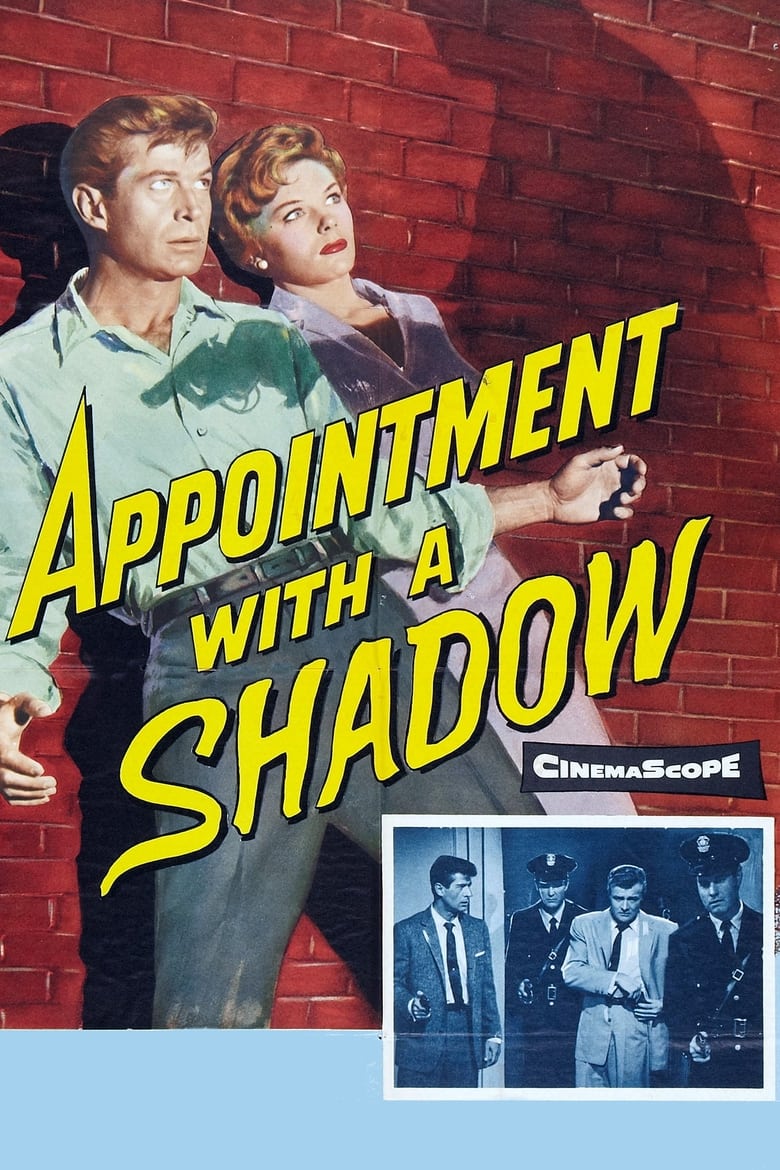
Paul Baxter (George Nader) is a newspaper reporter whose career has collapsed under the weight of alcoholism. Given one last chance by his editor, he stumbles onto what may be the biggest story of his professional life: the apprehension of Dutch Hayden (Frank De Kova), a fugitive gangster long sought by the authorities. Penny Spencer (Joanna Moore) works alongside Baxter and watches his fragile rehabilitation with cautious investment, while her brother Lt. Spencer (Brian Keith) represents the institutional law that Baxter has always circled at an uneasy distance.
The capture of Hayden does not close the case – it opens it. Baxter finds himself entangled in a web of competing interests involving Florence Knapp (Virginia Field) and the criminal infrastructure surrounding Hayden, and the closer he gets to the truth, the more his professional motives blur into something more personal and more dangerous. Lt. Spencer's suspicions about Baxter's conduct place family loyalty and civic duty in direct tension, while Penny is caught between the two men whose agendas she cannot fully trust.
Appointment with a Shadow operates within the tradition of the journalist-as-investigator noir, a subgenre that treats the press not as a heroic institution but as a space where ambition, corruption, and moral compromise intersect. The film's compact seventy-two minutes impose a disciplined economy on its plot, foregrounding Baxter's internal contest between self-destruction and redemption rather than the mechanics of crime alone.
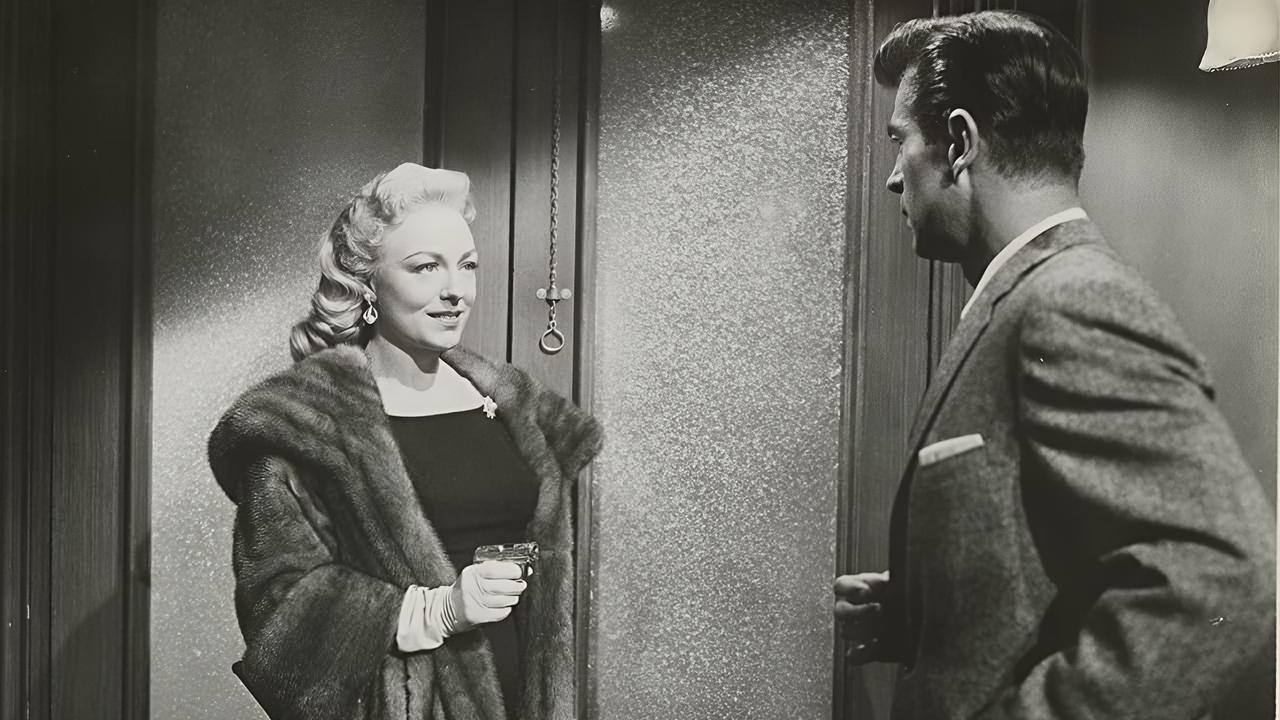
Appointment with a Shadow arrives late in the classical noir cycle, and its awareness of that position is part of what makes it worth examining. Richard Carlson – better known as a performer than a director – keeps the film tightly contained, trusting its modest runtime to enforce the pressure that larger productions might generate through more elaborate means. George Nader's Baxter is not a glamorized correspondent but a man visibly diminished by his own choices, and the film is honest enough to keep that damage legible even as he moves toward something like competence. Brian Keith's Lt. Spencer provides institutional skepticism without melodrama. What the film reveals about its era is telling: by 1957, the newspaper picture and the crime film had merged often enough that their conventions required grounding in character rather than plot novelty to sustain interest. Carlson and screenwriter John C. Higgins supply just enough of that grounding to make Baxter's rehabilitation feel contingent rather than assured.
– Classic Noir
William E. Snyder frames Baxter in the front seat of a parked car, the windshield bisecting him from the world outside. Available streetlight catches the left side of his face and leaves the right in near-total darkness, a compositional choice that literalizes the character's divided condition. The camera holds at a medium distance, refusing close-up intimacy, letting the man exist in the frame as a problem rather than a subject of sympathy.
The scene's argument is simple and exact: Baxter has the information he needs but lacks the moral clarity to know what to do with it. The half-darkness is not atmosphere for its own sake – it maps the space between the reporter he was and the one he might yet become. Nothing in the sequence is resolved. The car does not move. The light does not change. That refusal of resolution is the scene's most precise statement.
William E. Snyder's cinematography for Appointment with a Shadow is the work of a craftsman who understood that a low-budget noir lives or dies by the economy of its visual grammar. Snyder relies on hard-source lighting with minimal fill, allowing shadow to do structural work rather than decorative work – darkness here signals moral ambiguity, not generic atmosphere. His lens choices favor standard focal lengths that compress the frame without distortion, keeping the film's world legible and slightly claustrophobic. Location footage grounds the exterior sequences in a recognizable urban texture, while studio interiors are lit with a deliberate flatness that makes characters seem exposed rather than sheltered. Snyder had worked extensively in the Universal International system by this point, and that institutional experience shows in his efficient management of limited resources. The cinematography consistently serves the film's central moral logic: a man under observation, unable to hide even from himself.
Tubi has carried Universal International catalogue titles of this period and is the most likely free-access option for domestic viewers.
Archive.orgFreePublic domain status for some Universal titles of this era makes Archive.org a plausible source, though print quality varies.
Amazon Prime VideoSubscription or RentalClassic Universal titles appear intermittently on Prime Video; availability varies by region and should be confirmed before seeking.