Films People Pull a Fast One Night Beat Reading Room On TV Shop
Angels Over Broadway 1940
1940 Columbia Pictures
★★★☆☆ Notable
Film Noir · 79 minutes · Black & White

Angels Over Broadway

Directed by Ben Hecht
Year 1940
Runtime 79 min
Studio Columbia Pictures
TMDB 5.9 / 10
"Three grifters and an embezzler walk into a night that has no good exit."

New York, late at night. Charles Engle, a meek and desperate little man, has embezzled money from his employer and, facing ruin, has decided to end his life. He is intercepted by Bill O'Brien, a slick, quick-tongued small-time con man who sees in Engle not a man to be saved but a mark to be played. O'Brien convinces Engle to postpone the inevitable and join him at a poker game where, with the right handling, Engle's stolen money might be parlayed into enough to cover his debts. Also drawn into this orbit is Nina Barona, a showgirl with few illusions and fewer prospects, who attaches herself to the scheme with the wary instinct of someone who has trusted too easily before.

The poker game belongs to Dutch Enright, a professional who does not lose gracefully and whose associates are the kind who solve problems outside the law. Gene Gibbons, an alcoholic playwright of former promise, becomes the unlikely moral center of the group – a man who has squandered his gift but retains enough clarity to understand what the night is actually about. As the cards are dealt and the stakes accumulate, allegiances shift, the original con mutates, and Engle's life – which nobody valued at the start – becomes something worth protecting. What began as exploitation slides, almost despite itself, toward a crooked form of solidarity.

Angels Over Broadway belongs to a small and underappreciated strand of noir that locates its darkness not in murder or conspiracy but in the quiet machinery of failure: how ordinary people arrive at the edge and what, if anything, pulls them back. Written and directed by Ben Hecht, the film carries the literary self-consciousness of a man who came to Hollywood from the newspaper trade and never entirely made peace with the transaction. It is a film about language as much as fate, and about the way cynicism can, under sufficient pressure, reveal something resembling decency underneath.
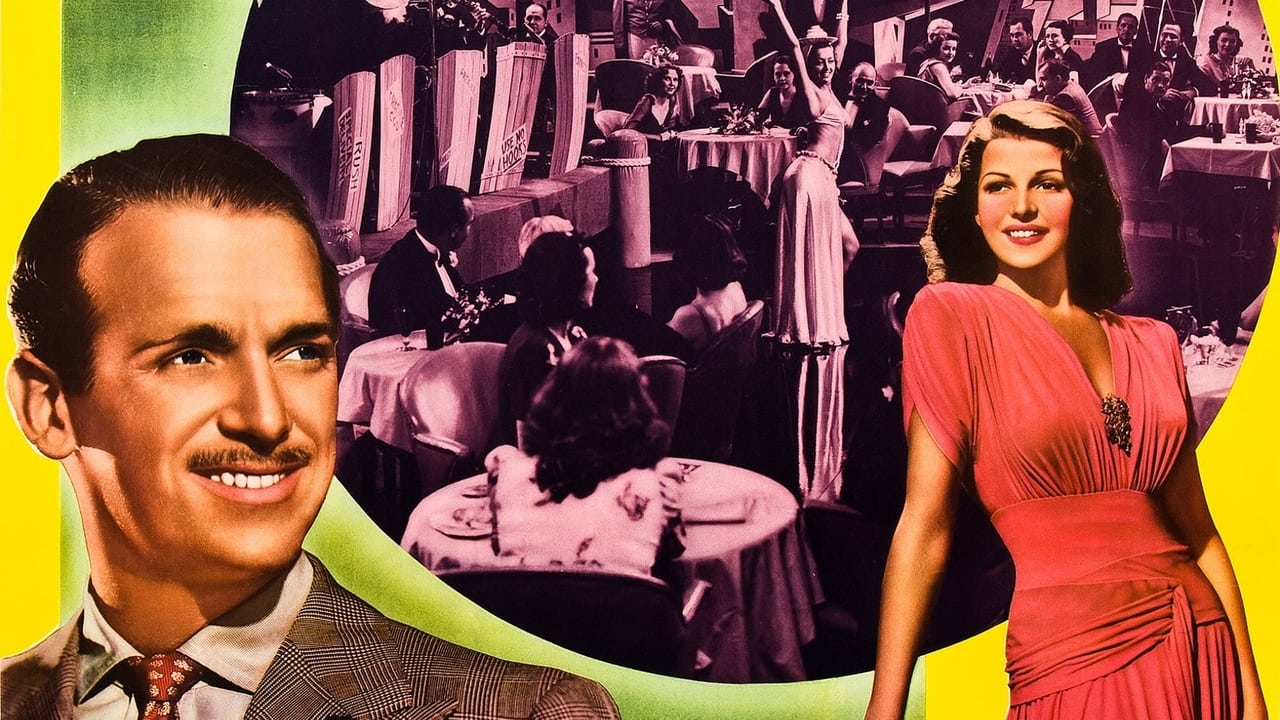
Classic Noir

Ben Hecht's sole directorial credit of consequence, Angels Over Broadway is an anomaly in the Columbia Pictures output of 1940 – a studio programmer that behaves like a chamber piece, confined largely to a single night and a handful of indoor locations. Hecht, who co-directed with Lee Garmes, wrote the screenplay himself, and the film bears his fingerprints throughout: the rapid, stylized dialogue, the gallows humor, the instinct for moral ambiguity dressed in theatrical clothing. Thomas Mitchell's Gene Gibbons is the film's true achievement, a character who might have been a stock drunk but who Mitchell renders as someone in specific, articulate decline. Douglas Fairbanks Jr. and Rita Hayworth perform competently within narrower registers. What distinguishes the film in generic terms is its refusal to treat noir's characteristic fatalism as a foregone conclusion; the darkness here is negotiable, and that negotiation is where the film does its real work. It is a minor film by any accounting, but an honest one.

– Classic Noir
3 ★★★☆☆ Notable
Credits

The Crew

DirectorBen Hecht
ScreenplayBen Hecht
CinematographyLee Garmes
MusicGeorge Antheil
EditingGene Havlick
ProducerBen Hecht
Performances

The Cast

Close Reading

The Signature Scene

Angels Over Broadway – scene
The Poker Table Cards Dealt Under Pressure

Lee Garmes keeps the camera close during the poker sequence, using shallow focus to isolate faces from the green baize and the surrounding smoke. Light falls from a single overhead source, carving the players into planes of illumination and shadow that shift as the hands are dealt. The frame is organized around the money at the center of the table, which anchors the composition the way a body would anchor a crime scene. When Dutch Enright's expression changes, Garmes holds on it a beat too long – long enough to make the audience uneasy before anything overt has happened.

The scene exposes what the film argues throughout: that in the economy of this particular night, money is merely a proxy for survival, and the man with the most technical skill at the table is not necessarily the one with the most to lose. Engle's presence at the game is absurd on its face – a bookkeeper among card sharps – and it is precisely that absurdity that the scene uses to shift the film's emotional register from cynical comedy toward something quieter and more serious.

Visual Language

The Cinematography

🎞️
Lee Garmes – Director of Photography

Lee Garmes, who had already shot Shanghai Express for Sternberg and brought a disciplined expressionism to the studio system, works in Angels Over Broadway within deliberately constrained conditions that suit the film's nocturnal claustrophobia. Shooting almost entirely on Columbia soundstages, Garmes uses the artificiality of the setting to his advantage, constructing a version of New York that is more psychological than geographical. His lighting throughout favors single-source setups – desk lamps, overhead fixtures, neon filtered through rain-streaked glass – that enforce a moral schematic: the characters who speak honestly tend to be caught in direct light, while those who are concealing something slip toward shadow. The lens work is restrained, avoiding the more operatic wide-angle distortions that were becoming fashionable in noir cinematography of the period. Garmes instead relies on precise placement and the careful management of depth to suggest entrapment without overstating it. The result is a visual language that mirrors the screenplay's own quality of knowing exactly how much to say.

In the Catalogue

Themes & Motifs

Availability

Where to Watch

Also in the Directory

See Also