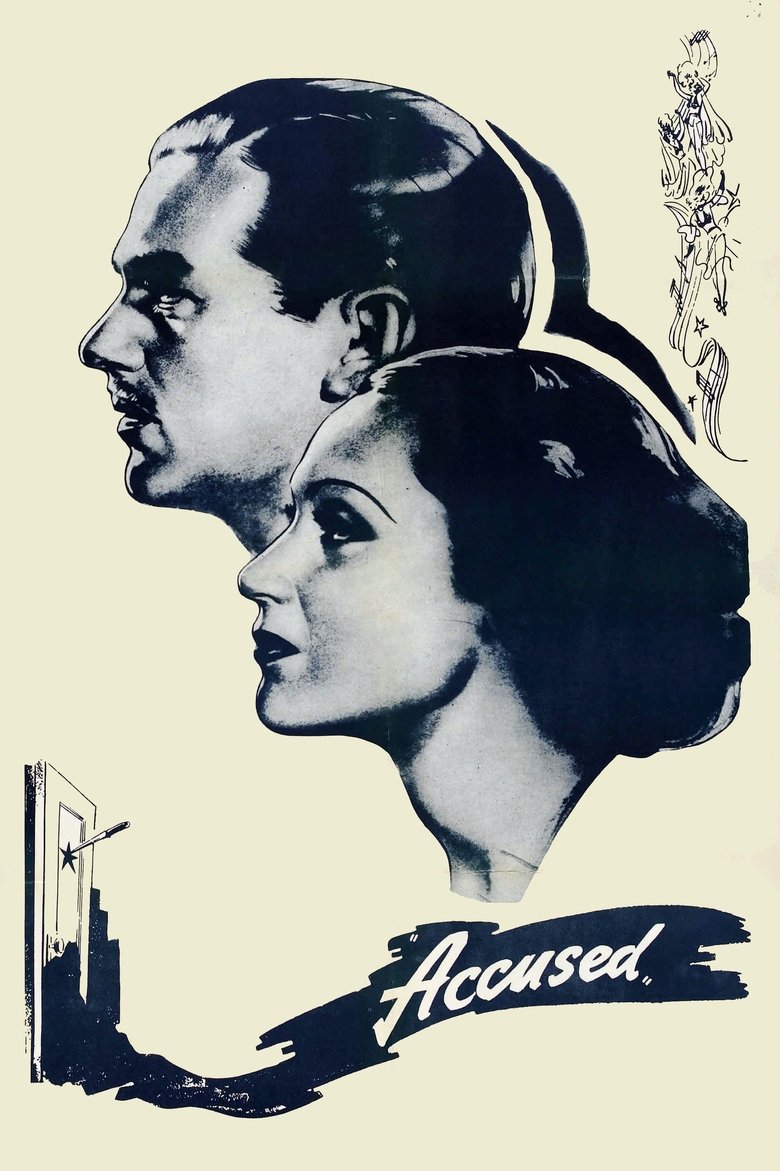
In the glittering, transient world of a Paris nightclub, Tony Seymour – an American entertainer played by Douglas Fairbanks Jr. – is married to Gaby, a performer of considerable allure portrayed by Dolores del Río. Their partnership, professional and personal, is strained from within: Eugene Roget, a wealthy and possessive admirer played by Basil Sydney, exerts a claim on Gaby that predates her marriage and refuses to lapse. When Roget is found dead, Tony stands as the most plausible suspect, and the machinery of French justice begins to turn against him.
As the investigation tightens, the film distributes guilt and motive across a wider circle. Yvette Delange, played by Florence Desmond, and the vivid supporting presence of Googie Withers as Ninette Duval complicate the moral ledger, each carrying knowledge that could either condemn Tony or redirect suspicion elsewhere. The courtroom becomes the film's central arena, a formal space in which performance – the same currency the characters trade in nightly on stage – is redeployed as a matter of life and liberty. Gaby must decide how much of the truth she is prepared to expose.
Accused belongs to a strand of British noir that draws on Continental settings to introduce an element of legal and cultural foreignness – a world in which the protagonists cannot rely on familiar rules. The film works as a courtroom procedural and as a study in marital concealment, placing its characters in a situation where love and self-preservation pull in incompatible directions. It is a film less concerned with who committed the crime than with what the characters are willing to sacrifice to survive the verdict.
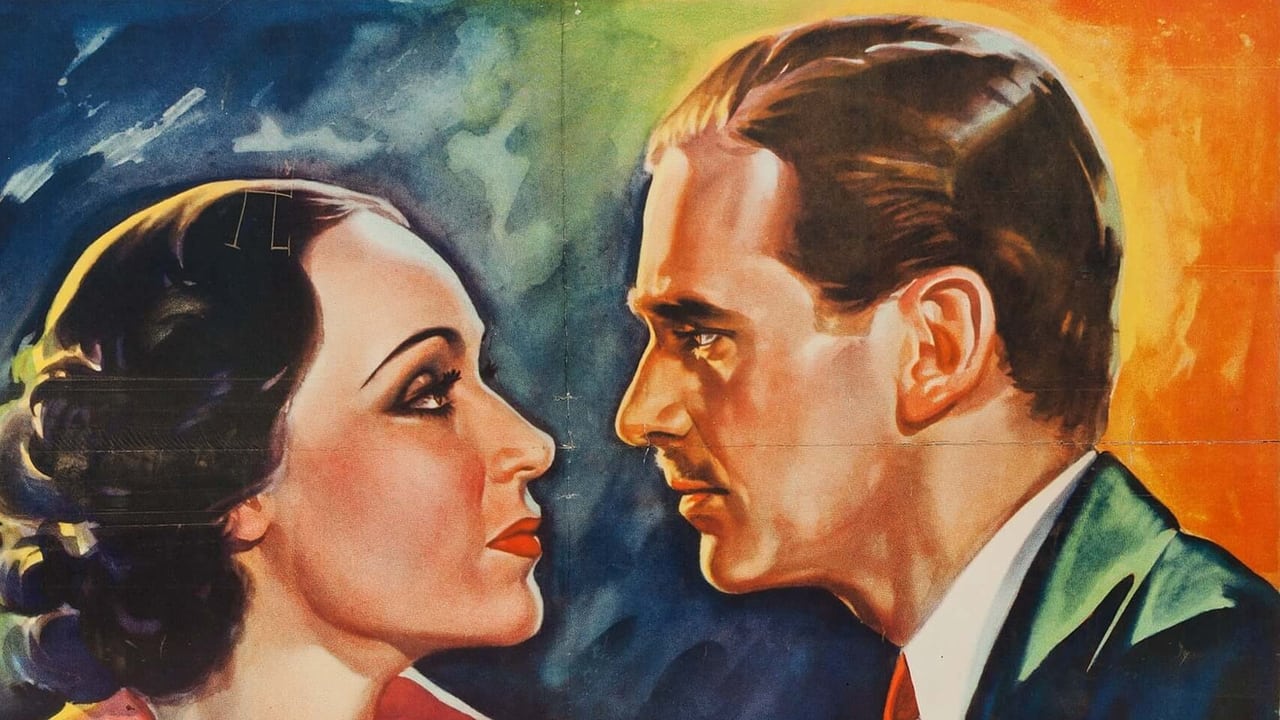
Accused arrived in 1936 at a moment when British studios were actively testing the conventions of American crime cinema against European settings and personnel. Thornton Freeland's direction is functional rather than visionary, but the casting is sufficiently weighted to sustain interest: del Río brings a guarded intensity to Gaby that the script only partially earns, and Fairbanks carries the requisite tension of a man watching the evidence arrange itself against him. The film's real curiosity is its courtroom architecture, which frames guilt as a theatrical problem as much as a judicial one – the cabaret stage and the dock become morally equivalent spaces where truth is managed rather than disclosed. Basil Sydney's Roget is the kind of possessive, monied antagonist who functions in these films as the price a woman pays for an earlier life. What Accused reveals about its era is a particular British ambivalence toward Continental mores: Paris stands in for moral opacity, a place where marriages fray and crimes go unpunished unless forced into the light of a formal proceeding.
– Classic Noir
Victor Arménise frames Gaby in the witness box with a compositional restraint that separates her from the surrounding legal architecture. The camera holds at a slight low angle, enough to invest her with precarious authority without fully resolving whether she is victim or strategist. Light falls across one side of her face, leaving the other in partial shadow – a division that the film has been building toward across its entire runtime. The prosecuting counsel enters from the edge of the frame, and Arménise cuts between close-ups with a rhythm that mimics the compression of cross-examination itself.
What the scene discloses is the film's central argument: that Gaby's intelligence – suppressed through the narrative in favor of vulnerability – is finally the only instrument capable of altering the outcome. The courtroom is the site where private knowledge becomes public currency, and where the character who has had the least formal power is revealed to hold the most dangerous information. The scene does not resolve the moral question of what Gaby chooses to do; it simply demonstrates the cost of having known too much from the beginning.
Victor Arménise's cinematography on Accused operates within the constraints of a studio-bound British production but draws deliberately on the visual idiom of Continental crime cinema. His lighting setups favor isolated key sources that carve figures out of ambient darkness rather than flooding interiors with even illumination – a choice that lends moral ambiguity to scenes that the script risks making too explicit. In the nightclub sequences, Arménise uses backlight to render del Río's figure as simultaneously present and elusive, a visual correlative for Gaby's position throughout the narrative. The courtroom scenes shift the grammar: flatter, more institutional light that strips the characters of the atmospheric protection they have enjoyed in the cabaret world, exposing them to a juridical clarity that functions as its own form of violence. Arménise does not indulge deep-focus experiments or expressionist distortion, but his shadow work in transitional scenes – corridors, anterooms, thresholds – demonstrates a consistent understanding of how spatial darkness can carry the film's moral logic without requiring dialogue to do so.
Public domain prints of Accused have circulated via the Internet Archive and represent the most accessible route to the film, though print quality is variable.
TubiFreeTubi has carried pre-war British titles in this bracket; availability is subject to rotation and should be confirmed before seeking.
KanopyFree with library cardKanopy's classic British holdings are inconsistent for 1930s titles, but the platform is worth checking through a participating public library.